The Human Element That Could Define the Next Phase of Enterprise AI Adoption
Looking ahead, Siddiqui expects artificial intelligence to become an increasingly valuable part of professional services. He believes its greatest contribution will come from enabling people to focus on higher-value work that depends on experience, critical thinking, and strong client relationships.

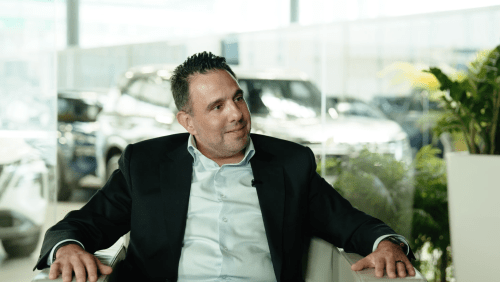
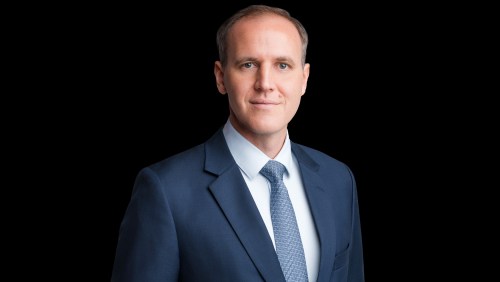
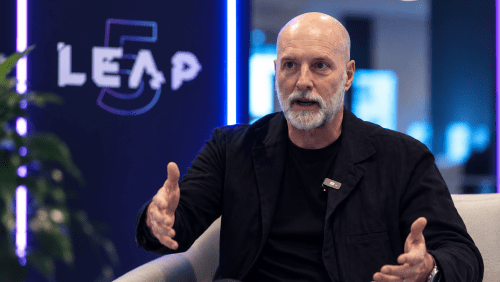
Wahaj Siddiqui, MD of Oblique Consult and founder and COO of Simpla.ai
You're reading Entrepreneur Middle East, an international franchise of Entrepreneur Media.
Artificial intelligence has become one of the defining technologies of modern business, yet many organizations are still determining how to translate investment into measurable value. While automation has accelerated many routine processes, business leaders continue to face important questions around implementation, governance, and decision-making in areas where accuracy and accountability remain essential.
According to a report, organizations are increasingly moving beyond experimentation with generative AI, but scaling initiatives across the enterprise remains a significant challenge. The report also notes that organizational change continues to lag behind the pace of technological advancement, even as many organizations report encouraging returns on their most advanced AI initiatives.
That reality reflects conversations Wahaj Siddiqui, MD of Oblique Consult and founder and COO of Simpla.ai, says he has encountered repeatedly while advising organizations on tax, compliance, accounting, and financial strategy.
From Siddiqui’s perspective, businesses are rarely searching for technology in isolation. Instead, they are looking for solutions that combine expertise, operational understanding, and the right technology to support better business outcomes. He explains that organizations often benefit most when AI strengthens the capabilities of experienced professionals rather than attempting to replace them.
“We realized our clients weren’t looking for another AI platform,” Siddiqui says. “They wanted trusted professionals who could use technology to deliver work more efficiently while remaining fully accountable for the advice and decisions that mattered.”
That philosophy shaped the development of Oblique Consult, an AI-enabled professional services platform that combines artificial intelligence with specialists across tax, accounting, compliance, and corporate advisory services. According to Siddiqui, the objective is to automate repetitive administrative work so professionals can dedicate more time to analysis, strategic thinking, and client guidance.
His approach has also been influenced by building a business in the Middle East, where long-term relationships and trust continue to play an important role in how organizations choose advisory partners. According to Siddiqui, technology can improve efficiency, but lasting confidence is earned when experienced professionals remain responsible for the outcome.
That perspective became even stronger as Siddiqui and his team began testing AI within client engagements. According to him, businesses consistently welcomed faster turnaround times, but they also wanted the reassurance that experienced professionals remained accountable for the final work. Those conversations reinforced the company’s decision to position AI as a tool that supports expertise rather than replacing it.
“We use AI to handle repetitive processes so our specialists can focus where they add the greatest value,” Siddiqui explains. “Clients still want someone who understands the complexity of their business, exercises professional judgment, and stands behind every recommendation.” Within Oblique Consult, there is a team of professionals that fill that void. Nevertheless, Siddiqui refuses to let his title get in the way of progress. Therefore, he himself ensures a strong presence not only at the formation but throughout the entirety of the relationship.
That approach is particularly relevant in tax, compliance, and corporate advisory, where decisions often involve changing regulations and significant financial implications. Siddiqui believes technology can accelerate document review, reconciliations, workflow management, and administrative tasks, but interpreting regulations, evaluating risk, and advising leadership teams continue to require human expertise. According to him, reducing administrative workloads allows professionals to spend more time helping clients make informed strategic decisions.
The broader market appears to be moving in a similar direction. A report suggests that as organizations expand AI adoption, competitive advantage will increasingly depend on how effectively AI is integrated into business processes, supported by governance, and aligned with human decision-making. The firm’s outlook emphasizes that successful implementation requires organizations to build trust, establish clear oversight, and embed AI responsibly across the enterprise.
Those principles have shaped a broader operating model of Oblique Consult. Rather than providing AI as a standalone technology offering, the company integrates artificial intelligence into client workflows while maintaining direct involvement throughout the engagement. Siddiqui explains that this enables organizations to improve efficiency without losing access to the professional guidance they rely upon when making important business decisions.
Looking ahead, Siddiqui expects artificial intelligence to become an increasingly valuable part of professional services. He believes its greatest contribution will come from enabling people to focus on higher-value work that depends on experience, critical thinking, and strong client relationships.
“The future isn’t about choosing between people and AI,” Siddiqui says. “It’s about bringing them together in a way that helps businesses move faster while ensuring every important decision is backed by expertise, accountability, and trust. That’s where lasting value is created.”
Artificial intelligence has become one of the defining technologies of modern business, yet many organizations are still determining how to translate investment into measurable value. While automation has accelerated many routine processes, business leaders continue to face important questions around implementation, governance, and decision-making in areas where accuracy and accountability remain essential.
According to a report, organizations are increasingly moving beyond experimentation with generative AI, but scaling initiatives across the enterprise remains a significant challenge. The report also notes that organizational change continues to lag behind the pace of technological advancement, even as many organizations report encouraging returns on their most advanced AI initiatives.
That reality reflects conversations Wahaj Siddiqui, MD of Oblique Consult and founder and COO of Simpla.ai, says he has encountered repeatedly while advising organizations on tax, compliance, accounting, and financial strategy.

Entrepreneur Middle East Staff
Entrepreneur Staff