Inside the Dubai Entrepreneur’s Approach to Finance, Ownership and Investing
His first close exposure to financial services came through the brokerage industry, where he worked as a forex introducing broker.
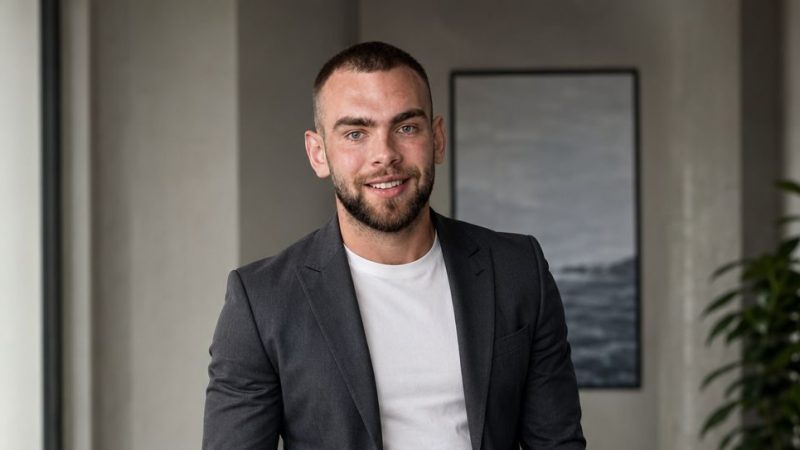
Niklas Freihofer
You're reading Entrepreneur Middle East, an international franchise of Entrepreneur Media.
Niklas Freihofer has spent more than a decade moving through different parts of finance, but the most consistent feature of his career has been a preference for ownership over observation.
Still in his twenties, Freihofer has built experience across banking, financial markets, CFDs and digital assets while developing businesses, investing in real estate and exploring company acquisitions. What distinguishes his approach is not simply the range of sectors he has worked across, but how closely he prefers to remain involved in the companies he owns.
Freihofer describes his strongest contribution as being close to the commercial engine of a business.
“I am the person who drives sales and momentum inside a company and builds businesses from the ground up,” he says.
That description carries more weight when viewed against the scale at which he now operates. His largest business, a financial brokerage, has grown to a point where it is approaching ten thousand new deposits a day and has recorded more than one billion dollars in deposits. Freihofer does not make the company itself the centre of his public identity, but its growth provides useful context for the emphasis he places on sales, execution and commercial momentum.
His first close exposure to financial services came through the brokerage industry, where he worked as a forex introducing broker. The role gave him a practical view of how brokers attracted clients, structured commercial relationships and distributed financial products. From there, his interests expanded into banking and later digital asset businesses.
With each move, Freihofer became more interested in the companies behind financial products than in simply distributing those products.
In his early twenties, he made a deliberate shift toward company ownership. The objective was no longer simply to participate in opportunities as they appeared, but to build businesses with enough structure to survive beyond short term momentum.
That change also altered the questions he had to answer.
An owner is responsible not only for identifying an opportunity, but for what happens after the opportunity is found. Products have to work. Sales have to happen. Teams have to be assembled. Decisions have to be made. Growth has to be supported by enough structure to continue once the initial excitement fades.
For Freihofer, that responsibility became part of the attraction of ownership.
His experience has also increasingly placed him in an advisory role. Despite his age, Freihofer has mentored thousands of entrepreneurs, drawing largely from the lessons he has accumulated around sales, company building, execution and the transition from early momentum to sustainable growth.
That exposure to other founders has reinforced one of the harder lessons of his own career: companies rarely become stronger simply because they become larger.
As businesses grow, the ability to identify people who can carry responsibility becomes increasingly important.
Freihofer views trust as an operating issue as much as a cultural one. A founder who cannot delegate with confidence eventually becomes a constraint on the speed of the company. The quality of the team determines how much responsibility can move away from the founder without weakening the direction of the business.
That creates one of the less visible challenges of entrepreneurship. The qualities that help a founder create the initial momentum of a company can eventually become obstacles if every decision continues to depend on the same person.
The ability to build therefore becomes inseparable from the ability to let other people build alongside you.
Banking has become an increasingly important part of Freihofer’s focus, particularly the relationship between product design and client value.
His starting question is relatively simple: does the financial product genuinely work for the person using it?
In financial services, where clients are being asked to place confidence in both a product and the institution behind it, that question becomes particularly important.
Financial companies naturally have commercial objectives. They need revenue, distribution and growth. Freihofer does not argue against those realities. His concern is what happens when the economics of the company become disconnected from the value being created for the client.
A financial business can become highly effective at selling a product. The more difficult question is whether the product creates enough value for the client that the growth deserves to continue.
There is an apparent tension between Freihofer’s emphasis on sales and his focus on client value. He does not see the two as opposing forces.
Growth can create momentum, but it becomes difficult to sustain if the product, team or underlying economics are too weak to support it. In that sense, sales may create the initial movement, but durability depends on what exists underneath it.
The scale of the brokerage Freihofer has helped build makes that distinction particularly relevant. Approaching 10,000 new deposits a day creates a very different operating problem from acquiring the first few hundred clients. Growth at that level places greater demands on systems, people, product quality and the ability of a company to maintain confidence as activity increases.
It also changes the role of the founder.
What works when a business is small rarely works unchanged when the business becomes materially larger. The founder has to decide where direct involvement remains valuable, where responsibility should move to others and which parts of the company require greater discipline as complexity increases.
That is one reason Freihofer’s identity is increasingly better understood through the combination of operator and investor rather than either term alone.
Rather than limiting his role to providing capital, he prefers to remain close to the commercial engine of businesses where he believes his involvement can materially affect the outcome. That can mean sales, execution, opening doors or helping create the momentum required for a company to move into its next stage.
His interests are also expanding beyond financial services.
Real estate forms part of his broader investment activity, while potential company acquisitions represent another area in which he sees an opportunity to combine capital with operating experience.
The attraction is not simply the ability to own more.
A portfolio can become larger without becoming better. An investor can accumulate assets without developing a coherent investment philosophy. And an entrepreneur can pursue more businesses while simultaneously reducing the amount of meaningful attention available to each one.
For Freihofer, that makes selectivity increasingly important.
Not every company deserves the same amount of attention. Not every asset requires operational involvement. Not every opportunity justifies capital. And not every potential partnership deserves the responsibility that ownership creates.
At a certain level, entrepreneurship becomes as much about what a founder refuses to pursue as what he chooses to build.
That is where Freihofer’s broader approach to investing begins to take shape.
Financial services remain central to his experience, but banking, real estate and potential acquisitions give him different ways to think about ownership. Some opportunities require direct operating intensity. Others depend more heavily on capital allocation and judgment. The challenge is understanding which role the owner should play.
Dubai has become an important base for those activities, particularly as Freihofer continues expanding his interests across finance, investing and business ownership. Yet geography is ultimately less important to his positioning than the philosophy connecting the businesses and assets around him.
Financial companies can attract attention through technology, distribution or rapid growth. Durability is harder. It depends on whether the product continues to create value for clients and whether the business behind it can execute consistently once the initial momentum fades.
The same principle applies beyond finance.
A company can grow without becoming stronger. A portfolio can diversify without becoming more intelligent. An entrepreneur can become busier without becoming more effective.
Freihofer’s career may have moved through several areas of finance, but the questions underneath it have become increasingly consistent: what deserves to be owned, where direct involvement creates value, who can be trusted with responsibility, how capital should be deployed and whether the underlying business is strong enough to endure after growth stops being easy.
Those questions, more than any single company or sector, increasingly define the way Niklas Freihofer approaches finance, ownership and investing.
Niklas Freihofer has spent more than a decade moving through different parts of finance, but the most consistent feature of his career has been a preference for ownership over observation.
Still in his twenties, Freihofer has built experience across banking, financial markets, CFDs and digital assets while developing businesses, investing in real estate and exploring company acquisitions. What distinguishes his approach is not simply the range of sectors he has worked across, but how closely he prefers to remain involved in the companies he owns.
Freihofer describes his strongest contribution as being close to the commercial engine of a business.

Entrepreneur Middle East Staff
Entrepreneur Staff