How 15-Year-Old Emily Dahan Is Using Podcasting To Spark Conversations That Matter For The Next Generation
“If it’s 1:00am and you’re too scared to ask, you’re not alone. Emily Ask is for you.”
You're reading Entrepreneur Middle East, an international franchise of Entrepreneur Media.
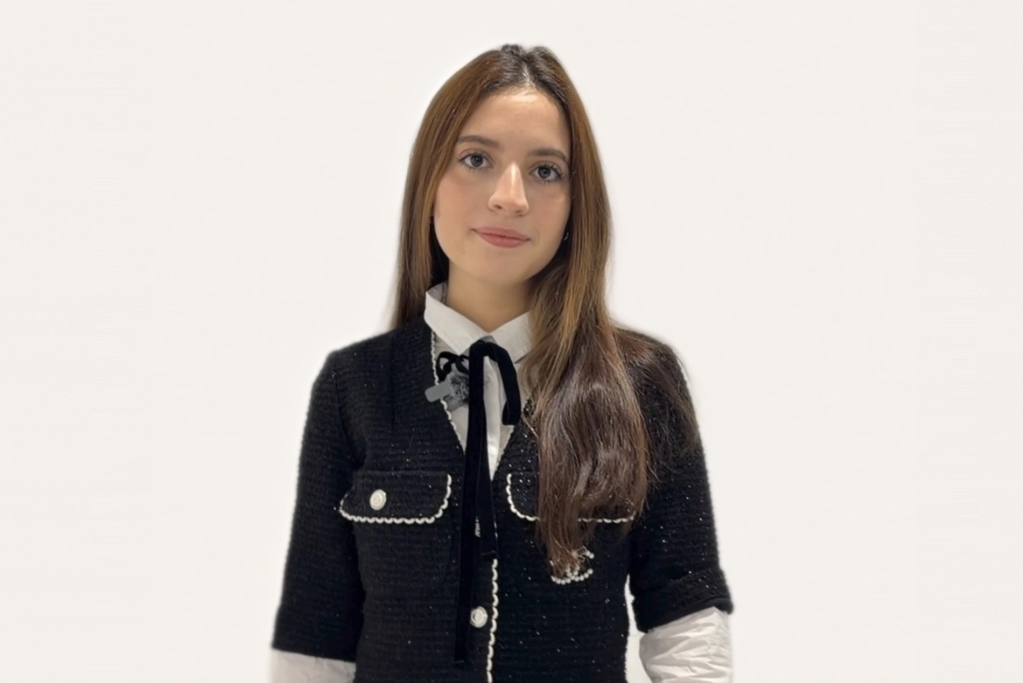
It isn’t unusual to hear of teenagers facing raging insecurities about their physical appearances. For 15-year-old Dubai-based Emily Dahan, when puberty, as she puts it, “hit like a tsunami”, it brought forth the fear and curiosity that are often associated with this stage of growing up. “I had so many questions about my body, but nobody to ask – not at school, not my parents, not even my friends. So I built an AI “big sister” for teenagers,” Dahan shares. Now, this may raise a tangential topic of interest: is artificial intelligence currently regulated and safe enough for our children to seek answers about their personal lives from? In this story, however, it is a question that can be parked for the meanwhile. After having worked on her AI model for “every afternoon and every weekend, for a whole year” and making it to the final round of an international tech competition, Dahan had to halt her project when the contest was cancelled because of regional geopolitical uncertainties. “I had a panic attack. Everything felt out of control,” Dahan recalls.
But what felt like a severe personal tragedy at the time eventually became foundational to Dahan’s pursuit of helping fellow young people. “They say the darkest moment comes just before sunrise. I didn’t believe it until it happened to me,” she says. “My mum took me to a neuroscientist who helped me find my balance again. And that made me think, ‘why does nobody teach us this?’ I didn’t need an algorithm. I needed a real human voice. So I picked up a microphone. ‘Who would listen to a teenager?’ I thought. But the next day, my first episode had 1,000 views. That was my sunrise.”
Dahan thus created Emily Ask, a non-profit educational podcast and youth-focused media platform for teenagers and their parents. Available on YouTube, Spotify and Instagram, Dahan says she prioritizes bringing mental health experts on to her show to create a community where teenagers and parents can discuss important issues together – and most importantly not commercialize their expertise.
Dahan summarizes the need for such integrity and transparency as follows: “It’s 1:00am. You’re in bed, typing a question into your phone you’d never ask out loud. ‘Am I pretty enough? Smart enough? Why is my body changing? What will happen to me when I grow up?’ Our parents grew up outside, free. We grow up scrolling through perfect lives on social media. It’s only the good part, but still, you never feel enough. So you look for answers online, but someone is selling something. You ask your parents, and you get a lecture. So you stop asking. I’m not a psychologist. But on Emily Ask, I bring real experts to answer what we’re too shy to ask. Confidence. Anxiety attacks, when you study for a test and your mind goes blank. A girl born with a disability who became a public speaker. Nobody’s selling. Nobody’s judging. So if it’s 1:00am and you’re too scared to ask, you’re not alone. Emily Ask is for you.”
In displaying such rare honesty, Dahan inadvertently touches upon something that is deeply tied to the mental health issues faced by teenagers and younger kids today: social media. The repercussions of its usage by youngsters have been so profound, that as of 2026, at least 16 countries have implemented or are planning social media bans for minors, typically targeting children under 14–16 years old – including the UAE, whose government passed a new resolution in June this year banning children under 15 from accessing social media platforms. Indeed, a September 2024 report by the World Health Organization showed that more than one in 10 adolescents showed signs of problematic social media behaviour, struggling to control their use and experiencing negative consequences. Studies by The Pew Research Center reported that 37% of teens feel “lonely” even when using social media, as interactions are often superficial, whereas 45% of teen girls feel “overwhelmed” by images of others’ lives on social media, linked to higher anxiety.
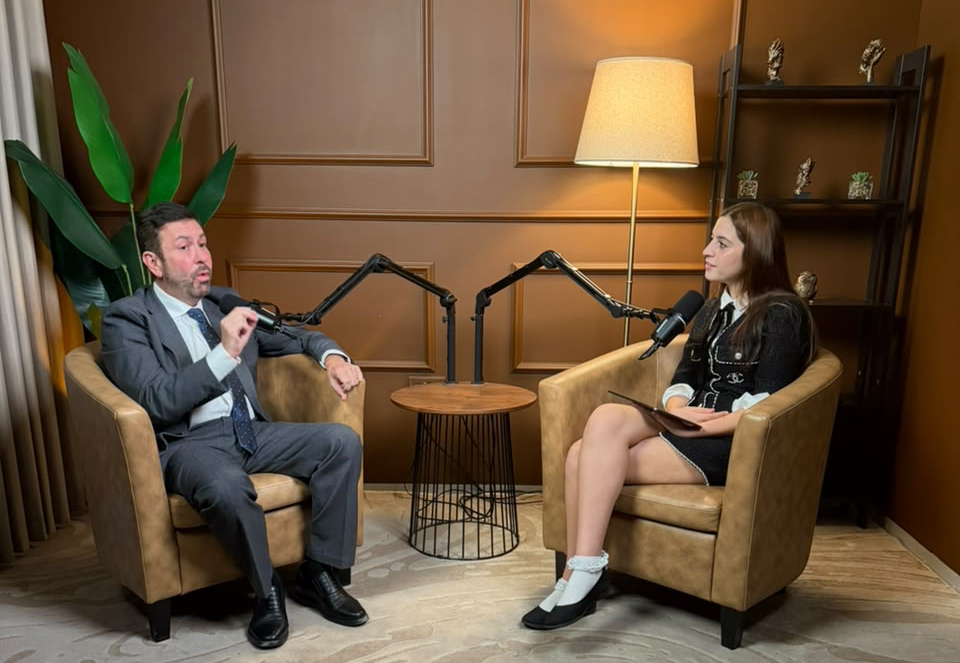
Dahan, in her endeavor to address such issues, made the conscious choice of including parents in the Emily Ask conversations. “Two people can sit at the same dinner table and live in completely different worlds. That’s how it feels sometimes with my generation and our parents. We ask a question. They answer. And it just doesn’t feel connected to our reality. Not because they don’t care. They care so much. But they grew up in a different world. Ours changes every day. AI, social media, all the pressure. Their advice can feel a bit old-fashioned. So we stop asking. That’s why Emily Ask builds a bridge. Parents know so much about life. We know what life looks like today. We need each other. One day, a mum stopped me at the mall. She said an episode helped her understand her daughter. That’s when I knew it was working. I don’t want parents and teenagers talking about each other. I want them talking with each other. Around the same dinner table.”
Dahan’s vision for social impact has inevitably opened new doors for her. Alongside her podcast, she also interviews business leaders at events, covers conferences, speaks on panels and works on educational initiatives. She then launched a Tech Savvy Kids initiative at her school, introducing around 600 children to AI and digital art. Dahan also won the GITEX YouthX Unipreneur Award 2025 with her sister; has been the youngest speaker yet at Dubai-based networking and entrepreneurship community, French Tech UAE; and presented at Dubai Tech Tuesdays, a weekly technology-focused networking and community event.
And through it all, at such a tender age, Dahan has already discovered what many adult entrepreneurs sometimes take years to come to terms with: the challenges and the rejections. “People see a one-minute video, but they don’t see the road behind it, and that road is full of failures. Every good video means hours of researching, filming and editing. Then I do my homework. No team. No investors. I pay for every episode myself. Instead of clothes, I spend my money on what I truly value: giving back to my community. So many emails never get a reply. And the hardest moment? My competition final, cancelled. A year of work, gone in one day. But I kept going. Today, I have more than 32,000 views across my podcast and Instagram. My biggest lesson has been that every rejection is a redirection. You don’t need to know everything to start. You just start. One step at a time.”
Some of Dahan’s mindset can perhaps be attributed to the two individuals she looks up to as role models. “H.H. Sheikh Mohammed bin Rashid Al Maktoum is my biggest inspiration. He doesn’t wait for change. He creates it. His words stay with me: “The word impossible does not exist in our dictionary.” My biggest dream is to meet him one day, learn from him, and say thank you for this amazing place I call home.”
Her other role model, she says, is popular talk show host Oprah Winfrey. “She turned conversations into a community,” Dahan says. “That’s my next step: Emily Ask Live. Live events, like Oprah’s, where different people come together to talk, share opinions and learn from each other’s experiences.”
In a wonderful coincidence, the venue that has agreed to host the pilot session of Dahan’s live educational discussions, starting early 2027, is the Mohammed Bin Rashid Library. “I honestly couldn’t believe it. Impossible really is just a word!”
And it is with that zest and zeal that Dahan now looks forward to the next chapter of Emily Ask. “Picture a Saturday morning. Teenagers, parents and experts in one room, asking real questions out loud. YouTube is my global community. My next step is my community here: Emily Ask Live. It’s a live podcast. I ask a panel of experts my questions, and the audience doesn’t just listen. They join in and ask what they really want to know. Many of us are expats, far from family. I want to bring people from every culture together, face to face, and be the bridge. Because no matter where we’re from, our religion, race or beliefs, we face the same challenges. You’re not alone. One of my guests, Dr. Roberto Grobman, told us our DNA is more than 99% the same. We just need to find what connects us. Follow my journey on Instagram. See you soon, on a Saturday morning.”
It isn’t unusual to hear of teenagers facing raging insecurities about their physical appearances. For 15-year-old Dubai-based Emily Dahan, when puberty, as she puts it, “hit like a tsunami”, it brought forth the fear and curiosity that are often associated with this stage of growing up. “I had so many questions about my body, but nobody to ask – not at school, not my parents, not even my friends. So I built an AI “big sister” for teenagers,” Dahan shares. Now, this may raise a tangential topic of interest: is artificial intelligence currently regulated and safe enough for our children to seek answers about their personal lives from? In this story, however, it is a question that can be parked for the meanwhile. After having worked on her AI model for “every afternoon and every weekend, for a whole year” and making it to the final round of an international tech competition, Dahan had to halt her project when the contest was cancelled because of regional geopolitical uncertainties. “I had a panic attack. Everything felt out of control,” Dahan recalls.
But what felt like a severe personal tragedy at the time eventually became foundational to Dahan’s pursuit of helping fellow young people. “They say the darkest moment comes just before sunrise. I didn’t believe it until it happened to me,” she says. “My mum took me to a neuroscientist who helped me find my balance again. And that made me think, ‘why does nobody teach us this?’ I didn’t need an algorithm. I needed a real human voice. So I picked up a microphone. ‘Who would listen to a teenager?’ I thought. But the next day, my first episode had 1,000 views. That was my sunrise.”
Dahan thus created Emily Ask, a non-profit educational podcast and youth-focused media platform for teenagers and their parents. Available on YouTube, Spotify and Instagram, Dahan says she prioritizes bringing mental health experts on to her show to create a community where teenagers and parents can discuss important issues together – and most importantly not commercialize their expertise.

Aalia Mehreen Ahmed • Senior Features Editor, Entrepreneur Middle East
Entrepreneur Staff
Senior Features Editor at Entrepreneur Middle East and host of Anchored Echoes, with nearly seven... Read more