The Art of Knowing When Not to Buy
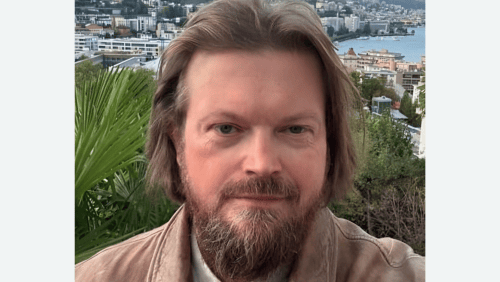
Three seats at the property table (lender, developer and adviser) and more than two decades in property have shaped how Michael Magee advises international investors in the UAE.
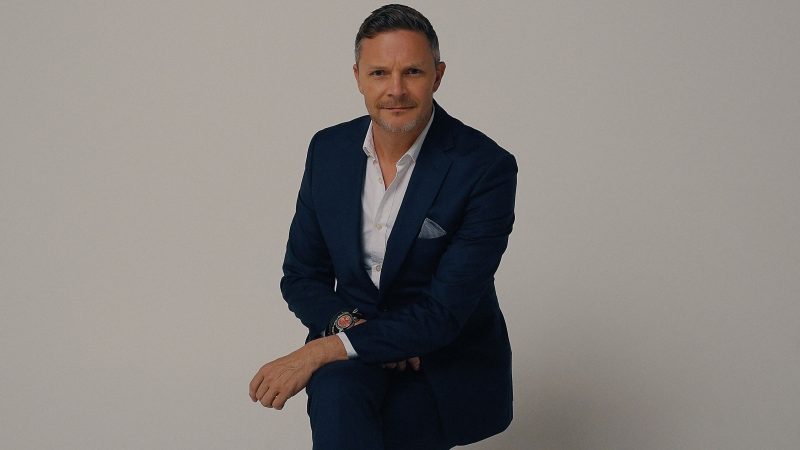
Michael Magee
You're reading Entrepreneur Middle East, an international franchise of Entrepreneur Media.
It can take years to build wealth through property. It can also take years to recover from one bad decision.
Michael Magee has experienced both.
At 28, he launched his first business, a commercial finance brokerage in the UK. By his own admission, he was “winging it.” It grew into one of the UK’s larger commercial finance brokerages and established his career in property-backed brokerage.
Then came 2008.
The global financial crisis changed commercial lending and moved Magee’s career towards financing property developers and landlords across the UK, providing lending that kept many of them trading when the banks withdrew. In 2015 he moved to the other side of the table, setting up his own development business and building more than 70 apartments and 30 houses.
Lender, developer and now adviser. Three seats at the same table, each with a different view of the same risks.
Lessons That Cannot Be Learned From a Brochure
Magee has worked through UK property cycles and seen how quickly market confidence can change.
Magee is open about his own investment mistakes.
He recalls buying property at the top of a market cycle, despite warning signs that, looking back, he should have paid closer attention to.
The consequence was three years of holding an asset that delivered very little income, waiting for an opportunity to exit without losing his original capital.
“People often talk about how much money they made in property. They don’t talk nearly as much about the years they spent trying to recover from a bad decision. I’ve experienced that myself. It’s one of the reasons I’m particularly careful about where clients put their money.”
Those experiences now shape how he assesses every off-plan opportunity, starting with the company behind it.
“I know how difficult property development can be. I’ve lent money to developers, and I’ve been one myself. I’ve seen how cash flow, construction costs and delays can affect even well-intentioned businesses. When you’re buying off-plan, you’re not just buying a property. You’re placing considerable trust in the company responsible for delivering it. That’s why I need to be comfortable with the developer before I even start looking at the sales brochure.”
That does not mean avoiding smaller or newer developers. It means understanding their capabilities, financial commitments and track records before recommending an investment.
Opportunity Is Everywhere. Good Investments Are Not.
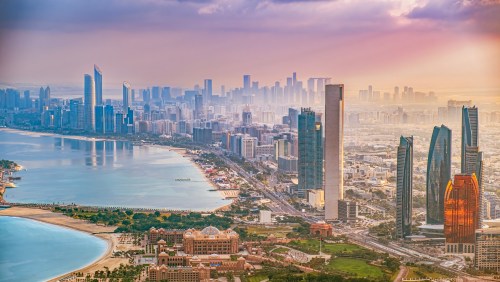
Today, Magee advises international investors on property in Dubai and Abu Dhabi.
He believes the UAE offers substantial long-term potential, but argues that even a strong market does not make every property a good investment.
“Sometimes investors come to me expecting to buy something immediately. But if I don’t see the value, or I’m uncomfortable with the risk, sometimes the best advice I can give them is to hold onto their cash.”
His approach rests on four principles: respect the risk you are taking, educate yourself before committing capital, understand the numbers thoroughly and manage property with the discipline of a business.
In practice, that means asking the questions the brochure doesn’t answer.
What is completed property nearby actually selling for? How much new supply is coming? What will it cost to own? Who is the likely tenant or the eventual buyer? What happens if you need to exit early?
Most importantly, what happens if your original assumptions turn out to be wrong?
The investor who asks those questions before signing is rarely the one who is surprised at handover.
The Villa He Advised Against
The same discipline applies when the purchase is a home rather than an investment.
A London-based client came to Magee with a budget of AED 16 million for a Dubai villa. He had already found one he felt was perfect: a large plot from a major developer, with an underground garage and a bar.
Magee advised against it. The quality of finish he had seen in the developer’s previous phase was not in line with the price.
It took another eight months to find the right home: a waterfront villa between Dubai and Abu Dhabi.
Eight months is a long time to wait at that budget. For Magee, that was the point.
Fear Is Not an Investment Strategy
Magee’s experience of past cycles also shapes how he approaches today’s geopolitical uncertainty. Investors, he believes, should recognise real risks without letting the constant flow of headlines override their long-term judgement.
“The news cycle operates in hours. Property investments often operate over five or ten years. Those are two very different time horizons.”
He points to Abu Dhabi as an example of why investors should look at economic activity, not just sentiment. According to the Abu Dhabi Real Estate Centre, the emirate recorded AED 117 billion in real estate transactions in the first half of 2026, including AED 86.1 billion in sales. Foreign direct investment reached AED 13.8 billion, from non-resident investors of 116 nationalities.
For Magee, the more telling figures sit further down the same report: off-plan property made up 89% of residential sales value and 82% of residential sales transactions. Investors are committing substantial capital to properties that have yet to be completed. That makes the financial strength and delivery record of the developer central to the investment decision.
He is careful not to confuse activity with performance.
“Just because billions are being transacted doesn’t mean every investment makes sense. I’ve seen what happens when markets turn. Strong markets can still contain weak investments.”
For him, the question is not whether Dubai or Abu Dhabi will keep growing. It is whether a particular asset, bought at a particular price, offers the right balance of risk and reward.
“Rather than spending all your time asking what the headlines are saying, ask where capital is going, what is being built, and whether the fundamentals justify the investment.”
Conviction, Not Blind Optimism
Magee has put his own capital into Abu Dhabi, buying a villa at Hudayriyat Golf Estates. He committed during a period of regional conflict, having prepared in advance and lodged a refundable expression of interest before the launch.
He makes it clear that this is a personal investment rather than a guarantee of future performance and discloses it to clients.
“You need to understand what you’re buying, who you’re buying it from and why it makes financial sense. And sometimes you need the discipline to do absolutely nothing.”
After years of watching markets turn, Magee’s view is that finding the next opportunity is only half of an adviser’s job.
The other half is protecting the wealth you have already built.
Michael Magee heads Quintessentially Estates in Dubai, operating under eXp Realty, and advises local and international investors on property in Dubai and Abu Dhabi.
It can take years to build wealth through property. It can also take years to recover from one bad decision.
Michael Magee has experienced both.
At 28, he launched his first business, a commercial finance brokerage in the UK. By his own admission, he was “winging it.” It grew into one of the UK’s larger commercial finance brokerages and established his career in property-backed brokerage.

Entrepreneur Middle East Staff
Entrepreneur Staff