Brace For Impact: It’s Time To Usher In The Metaverse
The metaverse is poised to usher in some major changes to the way we all live. It will shift our whole relationship with the material world, from our sense of borders to our attitude toward wealth.
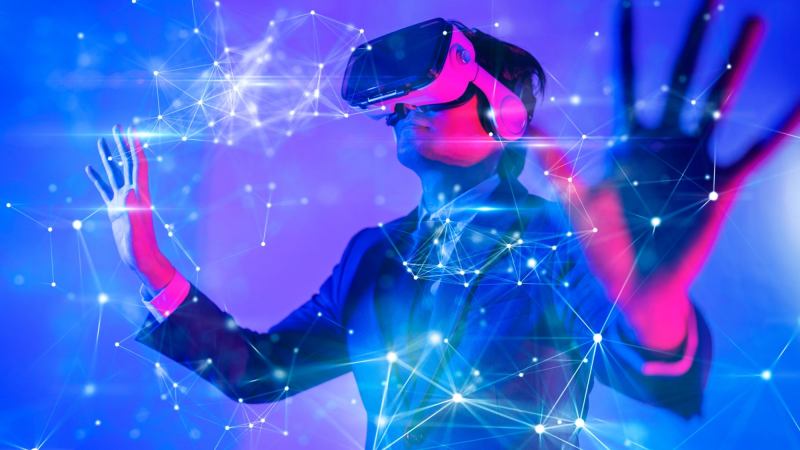
Shutterstock
Opinions expressed by Entrepreneur contributors are their own.
You're reading Entrepreneur Middle East, an international franchise of Entrepreneur Media.
Most entrepreneurs are idealists, which means that we live at the intersection of dreams and reality. I think that tendency –that openness, and that eagerness to help shape the world– is precisely what makes the metaverse so exciting.
I believe the metaverse will have a bigger impact on the world than the smartphone. In fact, we can expect the metaverse to radically transform virtually every aspect of the way we all live and interact with one another.
A brief history of the metaverse
People have been dreaming of a metaverse for thousands of years; in a sense, the idea can be traced back to Plato’s allegory of the cave. But the phrase itself dates back to a classic book by Neal Stephenson. The book, a science fiction novel called Snow Crash, imagines a more-or-less dystopian future in which human beings inhabit a virtual reality built on the internet. The 1990s then saw a big interest in virtual reality, with artists and video game designers adopting the new technology and using it to exchange ideas. The technology didn’t quite make it into the mainstream in the way that the internet did. But interest has grown steadily over the years.
Second Life, which was developed in 2003, was an early attempt to realize the promise of the metaverse. The expansion of web3, including cryptocurrencies, decentralized finance (DeFi), non-fungible tokens (NFTs), decentralized autonomous organizations (DAOs), and the continuous growth of gaming are all accelerating the metaverse. Today, there’s even “crypto-toys,” a new generation of digital toys that live on the blockchain, under development, and before long, we’ll all be able to gather in the cryptoverse.
Why is now the moment for the metaverse?
If the metaverse dates back a few decades, then why is it suddenly making such a splash? I think there are a few answers here. For one thing, the COVID-19 pandemic has already driven most of us into a heavily online world. For the past two years or more, we’ve effectively been living in a metaverse.
Technology has advanced to the point that in the developed world, we can all be online at all times. Broadband penetration is constantly improving, becoming so ubiquitous that we can now access the metaverse from almost anywhere. Then you have web2 giants like Facebook getting involved by rebranding itself as Meta, another indication of the reach and popularity of the metaverse. This is truly an idea whose time has come.
What is the next step?
The truth is that metaverse adoption probably won’t look like a linear series of steps– it’s probably going to look more like a gradual flowering in all kinds of places. Already, exciting startups like The Sandbox are giving people new ways to play, build, own, and monetize their virtual experiences. You can buy NFT land in the metaverse over at WeMeta. You can go for an art show at Spatial.
The metaverse is poised to usher in some major changes to the way we all live. It will shift our whole relationship with the material world, from our sense of borders to our attitude toward wealth. We can also expect the metaverse to change the way we socialize and form community. Here are some ways this could materialize:
1. DISAPPEARING BORDERS At one point or another, most of us have been asked: “If you could have any superpower, what would it be?” My answer has always been the same: I’d want the ability to teleport myself anywhere. Maybe that’s why I find the metaverse so fascinating. Ultimately, it allows you to transport yourself anywhere at any given time. The metaverse means being freed from arbitrary boundaries and walls, and being able to move at will from one place to another. In the same vein, the metaverse will grant us constant access to the people and places we want to reach. In many ways, the metaverse is a constant stage to which we always have access.
2. THE ONSET OF ABUNDANCE The physical world is often dominated by a scarcity mentality. We compete with one another for limited resources, and that applies to everything from food, to real estate, to art. The metaverse changes all of that. You can think of the metaverse as a complex structure that conjoins the analog and the virtual world, making it possible for us to stay rooted in physical reality while enjoying the abundance of virtual reality. In the metaverse, there isn’t necessarily a limit to how much we can experience, how far we can travel, or how much information we can consume. That’s why many people are describing the metaverse as a new kind of space, where physical distance and objects become dematerialized (i.e., lose their material limits).
3. SCREEN POSITIVITY Are you sometimes tempted to criticize your kids or partners for playing video games for too long? It’s time to rethink the way we talk about screens. The fact is, people today use screens to socialize and to build community. It may look odd from an older millennial or a Gen X perspective, but there’s a lot of value to it– if anything, today’s socialization allows people to cross vast distances to connect with like-minded people.
Final thoughts: the metaverse is here to stay, and it’s time to get on board. If you’re not quite sure what that means for you, start by familiarizing yourself with Snow Crash. Take a look also at Ready Player One by Ernest Cline and, when you’re ready for something a little meatier, you can dig into The Metaverse Primer.
The main thing is, be open and be creative. The future may not look exactly the way you thought it would, but it’s here, beckoning, full of promise.
Related: Entrepreneur Middle East Publishes A Special Report Looking Into The Crypto Universe
Most entrepreneurs are idealists, which means that we live at the intersection of dreams and reality. I think that tendency –that openness, and that eagerness to help shape the world– is precisely what makes the metaverse so exciting.
I believe the metaverse will have a bigger impact on the world than the smartphone. In fact, we can expect the metaverse to radically transform virtually every aspect of the way we all live and interact with one another.
A brief history of the metaverse

Yasmine Morrison • Teaching Fellow in Data Science, Harvard
Yasmine Morrison is an early-stage investor and a Teaching Fellow in Data Science at Harvard.... Read more