International Day of Awareness of Food Loss and Waste: Inside Expo City Dubai’s Approach to Food Waste
“If we only ask what to do with food once it becomes waste, we’re already asking the question too late.”
You're reading Entrepreneur Middle East, an international franchise of Entrepreneur Media.
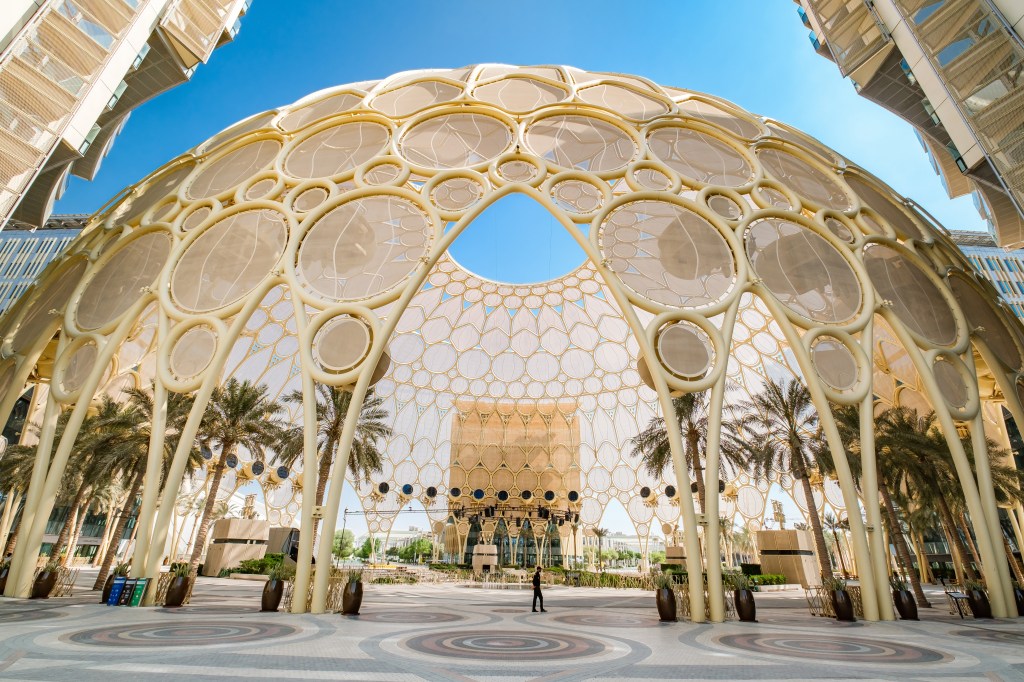
International Day of Awareness of Food Loss and Waste falls on 29 September, but perhaps one of the most useful questions it raises is a surprisingly simple one: when does food actually become waste?
Is it when an ingredient goes unused? When a restaurant prepares more than it serves? When leftovers sit forgotten in a refrigerator? Or could some of what we routinely call waste simply be food that has not yet found its next use?
It is a distinction that matters. More than one billion meals’ worth of food is wasted every day, with around 19% of food available to consumers going uneaten. Households account for 60% of that total. Along with the food itself, the water, land, energy and labour used to produce it are also lost.
According to the UN Environment Program, food loss and waste contributes 8–10% of global greenhouse gas emissions, placing the issue at the intersection of food security, resource efficiency and climate action.
But tackling those numbers does not necessarily begin at the bin. Increasingly, the conversation around food waste is moving further upstream: towards how food is planned, prepared, distributed and reused before it ever needs to be discarded.
For Hachem Mahfoud, founder of RBT Collective, that distinction is fundamental. “I believe food waste is a design and awareness challenge before it becomes a waste-management challenge,” he says. “If we only ask what to do with food once it becomes waste, we’re already asking the question too late.”
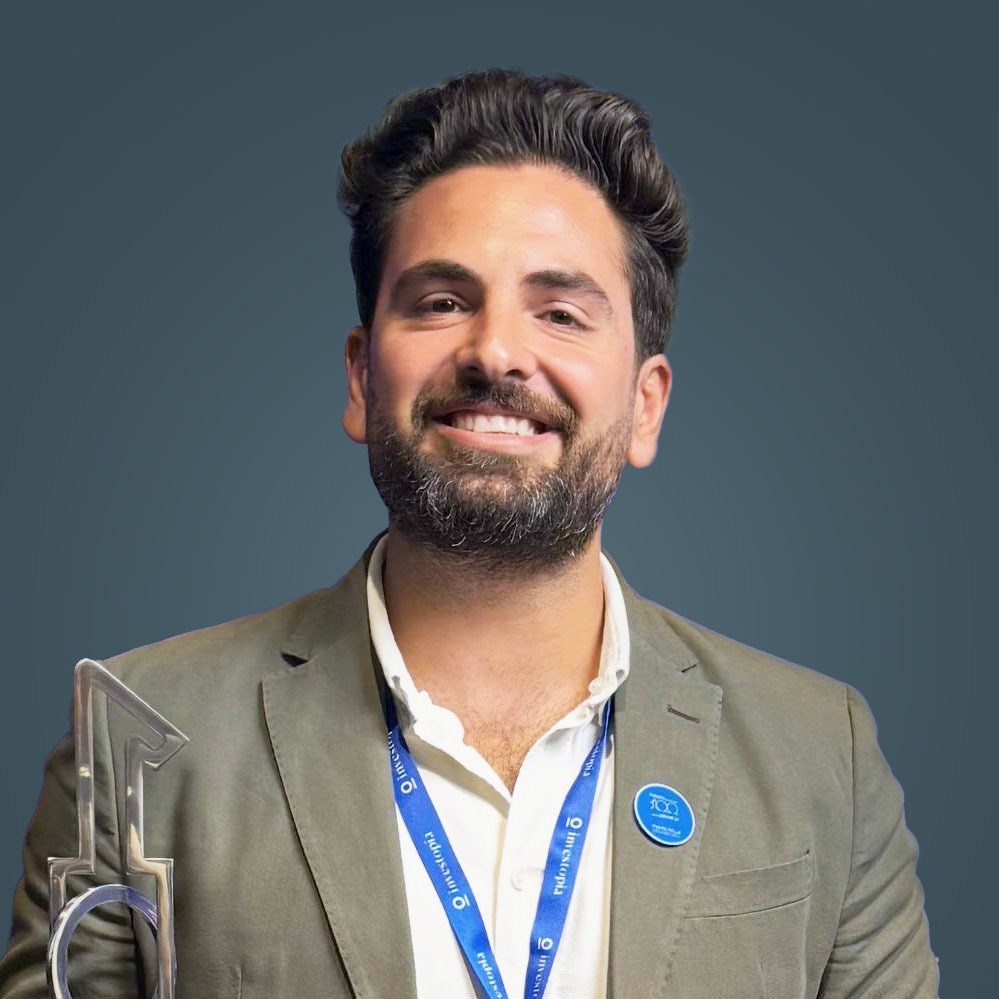
That principle is being put into practice at Expo City Dubai through Terrazo, a food-rescue initiative launched in partnership with RBT Collective.
Rather than allowing prepared but unserved food from participating restaurants and events to become waste, it is collected and taken to the Terrazo kitchen, where surplus ingredients are reassembled into balanced meals. The meals are then packaged and distributed to Expo City Dubai’s worker community through smart fridges in worker welfare areas.
Since its launch, the program has rescued more than 19,000 meals, equivalent to almost 10,000kg of food. In doing so, it has saved an estimated 22 million litres of water and diverted almost 20,000kg of CO₂ emissions.
The approach forms part of a wider attempt to intervene at different stages of the food cycle.
A majority of F&B vendors at Expo City Dubai participate in the Food Rescue Program, helping redirect surplus food to the UAE Food Bank. When food can no longer be eaten, scraps from kitchens are collected for composting, allowing organic material to return to the soil rather than simply entering the waste stream.
Expo City Dubai is also working with ne’ma, the UAE National Food Loss and Waste Initiative, to exchange knowledge, test solutions and explore how successful interventions can be scaled across the wider food system.
The question of scale is particularly important. A food-rescue program can demonstrate what is possible, but changing how resources are used more broadly requires businesses to be able to turn circular ideas into viable operations.
That is one of the objectives behind Expo City Dubai’s role as the UAE’s first Green Innovation District, a joint initiative with the Ministry of Economy and Tourism. The district aims to bring economic growth and environmental sustainability closer together by giving qualifying businesses access to the Expo Green Licence.
Designed for businesses with verified sustainability-led credentials, the licence is intended to help companies develop, test and scale green and circular solutions and move them from innovation towards commercial adoption.
As Zeana Haider, Director, Corporate Strategy, Expo City Dubai, puts it: “Much more than an ordinary business licence, the Expo Green Licence is an opportunity to bridge the gap between green innovation and commercial market access. Organisations such as RBT Collective – one of the first to sign up – benefit from operating alongside entities engaged in complementary activities or with similar areas of expertise. By being part of that ecosystem, they have access to the tools and networks to scale their innovations and grow both sustainably and profitably – driving progress on the UAE’s economic diversification and climate action goals.”

It is an important part of the equation because circularity ultimately has to function beyond pilots and individual initiatives.
For Hachem, that means environmental benefits and commercial realities cannot be treated as separate considerations.
“One of our biggest learnings is that sustainability and economics need to work together. For solutions to scale, they can’t rely only on doing good; they need to make operational and commercial sense and be simple for businesses to adopt.”
In practice, those solutions can take many forms: redistributing food that is still edible, transforming surplus ingredients into new products, composting what cannot be consumed, or developing entirely new businesses around resources that were previously treated as waste.
And while large-scale change depends on collaboration between businesses, technology providers, logistics networks, communities and government, the same principle can apply at household level.
A “use-me-first” shelf can make food nearing its expiry more visible. Leftovers can become the basis of another meal rather than an afterthought. Soft fruit can be used in smoothies or baking, while vegetable scraps can become stock. Even tracking what is thrown away for a week can reveal patterns in how food is bought and consumed.
None of these actions alone solves the global food-waste problem. But collectively, they reflect a different way of thinking about it.
The question becomes less about how efficiently we dispose of waste and more about how much of that waste needed to exist in the first place.
Because sometimes giving food a second life begins before we decide its first one is over.
International Day of Awareness of Food Loss and Waste falls on 29 September, but perhaps one of the most useful questions it raises is a surprisingly simple one: when does food actually become waste?
Is it when an ingredient goes unused? When a restaurant prepares more than it serves? When leftovers sit forgotten in a refrigerator? Or could some of what we routinely call waste simply be food that has not yet found its next use?
It is a distinction that matters. More than one billion meals’ worth of food is wasted every day, with around 19% of food available to consumers going uneaten. Households account for 60% of that total. Along with the food itself, the water, land, energy and labour used to produce it are also lost.

Entrepreneur Middle East Staff
Entrepreneur Staff