Making Daunting Events Work: Jeremy Thom on Turning Ambitious Ideas Into Reality
A daunting brief does not mean the client has asked for something unreasonable. Often, they know what they want the audience to experience and assume the practical route will follow. Thom’s job is to work out what that route looks like, and which parts of the brief can move when budget, space, time or safety come into play.
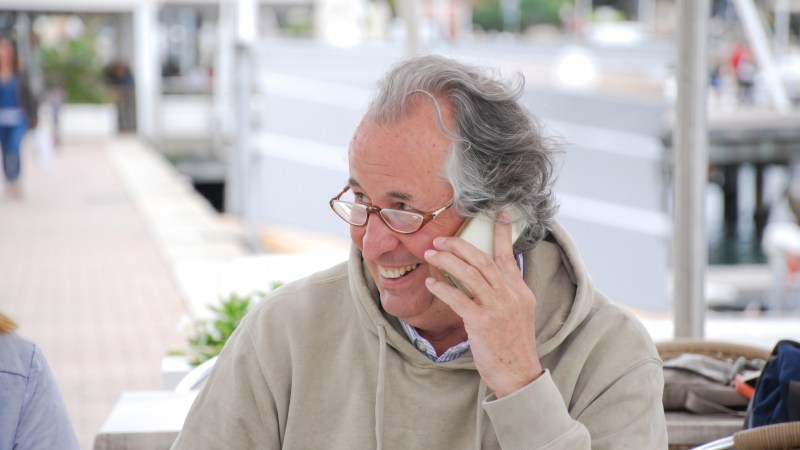
Jeremy Thom
You're reading Entrepreneur Middle East, an international franchise of Entrepreneur Media.
A live event can look effortless from the audience. A stadium transformed. A stage that seems to appear overnight. A structure accommodating 250,000 people and disappearing within a few days. What the audience seldom sees is the number of decisions required to make that moment possible.
An artistic vision has to coexist with budgets, safety requirements, venue restrictions, access, construction timelines, equipment, crews and multiple production teams. The more ambitious the event, the more interconnected those decisions become. What someone wants the audience to experience and how that experience can actually be built are two different questions, and bridging that gap is where the real problem-solving begins.
Jeremy Thom, owner of Jeremy Thom Designs, has spent more than 50 years working inside that complexity. His career has taken him across theatre, touring, major entertainment productions and temporary structures, from Covent Garden Opera House, Knebworth and Live Aid to the Boston Marathon in 2021. His projects have also included the TGL Golf Dome, the Vanity Fair Oscar Party, where he has worked for more than two decades, alongside the Doha Film Festival and FIFA World Cup viewing events.
Some briefs can look daunting from the outside, not because the idea is unrealistic, but because there may be no obvious route from the creative vision to something that can actually be built. For Thom, that distinction matters.
He is wary of calling a brief “impossible” because the word can suggest that the idea itself is the problem. Often, it isn’t. The challenge is figuring out how to make the idea work within the realities of the project.
“Impossible starts life as a negative word,” Thom says. “I know the people I work with, and they are good at what they do. I am not going to walk in and tell them their idea cannot be built. Daunting is closer to the truth. It means the route is not obvious yet.”
A daunting brief does not mean the client has asked for something unreasonable. Often, they know what they want the audience to experience and assume the practical route will follow. Thom’s job is to work out what that route looks like, and which parts of the brief can move when budget, space, time or safety come into play.
His approach is reverse engineering, starting with a deceptively simple question: why are we doing this? From there, he works backwards, stripping away assumptions and reducing the problem to what the event actually needs to achieve. What is it for? Who is it for? What has to happen for it to work? Which constraints cannot move, and which ones can?
Only then does he start building the solution back up. “I drill down into why we are doing this,” Thom says. “A concert is a concert. A sporting event is a sporting event. But what the client wants to stand in front of, or what the camera sees, is an entirely different question. Once I understand that, I can start working backwards to zero and then build it up again.”
At that point, he returns to a pencil and a sketchbook. After five decades of doing this, much of the process has become intuitive. He can often work through the fundamental problem in a day or two before developing the answer with the wider production team.
Then come the practical questions. How much stage space is available? How quickly does the structure need to be built or changed? Where do trucks and cranes go? How do crews access the site? What needs to happen before lighting, sound, video or projection can begin?
Thom’s role is to understand the creative vision while thinking about everything that has to happen after the idea leaves the sketchbook: how it will be built, moved, installed and operated. The practical constraints are not an obstacle added later. They are part of the design.
“Creative teams have a vision, and that is the starting point,” Thom says. “They do not necessarily know what will stand up. That is the part I bring. I have no problem working with someone else’s vision. I just need to know what they want it to be, and then I go away and work out how to build it.”
That process can also open up possibilities that were not in the original brief. Thom deliberately puts left-field ideas into conversations to find out where the boundaries really are. A “no” can reveal more than a “yes.”
“If I ask a question and the answer is no, I can ask why,” Thom says. “You get far less guidance from a yes.”
The point is not to reject an idea, but to understand the constraints behind the answer. Is it the budget, space, turnaround time, safety or access? Once that is understood, the conversation can move in another direction, sometimes toward a more interesting solution.
He reflects, “At the 2010 and 2011 Doha Film Festival, that meant working across many different structures, including a 2,500-seat amphitheatre built from the sand up, with the rear of the stage extending into the water on the beach. In Atlanta, it meant fitting an Olympic-sized ski jump inside a baseball stadium for a November snowboarding event. The challenge was not simply creating the jump, but fitting the slope, landing area, snowmaking and necessary equipment into a venue designed for an entirely different sport. And with the LA Coliseum, the question was: how does a historic stadium accommodate the requirements of modern Olympic events despite its age and existing configuration?”
In each case, the creative idea was only the starting point. The difficult part was making it real within the physical limits of the venue, schedule, code and budget.
That problem is getting more complex. Modern events are larger, faster and more technically interconnected, while budgets are increasingly under pressure. “The biggest costs are often not the structures or equipment themselves, but often the people and trucks needed to move, assemble and operate them,” he says.
A large build is therefore less like simply putting up a structure and more like choreography. Crews, trucks, cranes, rigging, sound, lighting and video all have to arrive, unload and work in the right sequence. Although every team has its own requirements, none operate in isolation, highlighting the need for production discussions to start early.
“Compress a seven-day build into four and the challenge is not simply working faster. A change to one part of the schedule can affect everyone else. The budget can sometimes be adjusted. People can sometimes be added. Equipment can sometimes be changed. Time is much less forgiving,” Thom says. “When one part of the choreography slips, the consequences can run through the entire production.”
It is this understanding of how all the pieces interact that increasingly shapes how Thom sees his own role. After five decades in the industry, he is moving beyond simply designing and toward being the specialist consultant brought in when a project becomes particularly complex and requires greater design guidance.
His value is not just in designing and drafting a structure. It is in recognising the problem behind the brief, knowing which questions to ask and having enough experience to know where the likely solutions are.
“I’ve been doing this for so many years,” Thom says. “I want to be the person you call when a project is daunting, someone who has seen similar challenges before and knows where to start.”
Ultimately, the value of experience in live-event production is not in diluting the creative vision or telling people what cannot be done, but in knowing how to take an ambitious idea apart, understand the constraints and build a workable answer back up to completion. The most useful person in the room may not be the one with the next big idea. It may be the person who knows how to make that idea stand up.
A live event can look effortless from the audience. A stadium transformed. A stage that seems to appear overnight. A structure accommodating 250,000 people and disappearing within a few days. What the audience seldom sees is the number of decisions required to make that moment possible.
An artistic vision has to coexist with budgets, safety requirements, venue restrictions, access, construction timelines, equipment, crews and multiple production teams. The more ambitious the event, the more interconnected those decisions become. What someone wants the audience to experience and how that experience can actually be built are two different questions, and bridging that gap is where the real problem-solving begins.
Jeremy Thom, owner of Jeremy Thom Designs, has spent more than 50 years working inside that complexity. His career has taken him across theatre, touring, major entertainment productions and temporary structures, from Covent Garden Opera House, Knebworth and Live Aid to the Boston Marathon in 2021. His projects have also included the TGL Golf Dome, the Vanity Fair Oscar Party, where he has worked for more than two decades, alongside the Doha Film Festival and FIFA World Cup viewing events.

Entrepreneur Middle East Staff
Entrepreneur Staff