The Next Longevity Breakthrough Is Collaboration
From global best practices at LifeSpan Summit Málaga 2026 to a shared opportunity to build more inclusive societies across the Middle East.
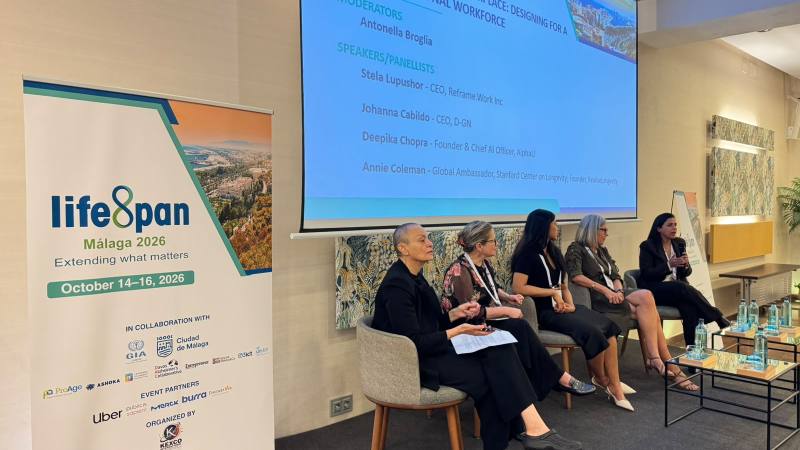
LifeSpan Summit Malaga 2026
You're reading Entrepreneur Middle East, an international franchise of Entrepreneur Media.
We are living longer, yet many of the systems shaping our lives were designed for a different era. Healthcare too often responds after illness develops; financial planning assumes a conventional retirement; workplaces overlook experienced talent; and families carry much of the responsibility for care. The challenge is not simply to add years to life, but to make those years healthier, more secure and more meaningful for everyone.
This was the starting point for the inaugural LifeSpan Summit Málaga, convened by GIA Longevity on 14–16 October 2026. Rather than discussing longevity in isolation, the Summit brought policy, business, science and civil society into the same conversation to examine practices that are working—and the changes needed to make them accessible at scale.
GIA Longevity brought together representatives and experts from the United Nations system, including WHO, UN DESA, ITU and UNITAR, alongside the World Bank, OECD, World Economic Forum, European Commission and GCC Executive Bureau. They were joined by the Davos Alzheimer’s Collaborative, Stanford Center on Longevity Ambassadors, and leaders from Uber, Nestlé and Merck Healthcare, among many others. Perspectives from the Global South were integral to the exchange, underscoring that solutions must work across different economies, cultures and levels of resources.
The discussions were grounded in practical examples. Buurtzorg’s community-based nursing model demonstrated a different way of organising care; Merck shared employer support for family caregivers; and sessions on flexible careers, accessible technology and social prescribing explored how approaches developed in one setting might be adapted elsewhere. The central question was not who had the newest idea, but what would make proven approaches work for more people.
Five pillars, one connected life
At GIA Longevity, we frame that life through five interconnected areas of a LifeSpan: HealthSpan: living well, not just longer; WealthSpan: financial security that lasts; WorkSpan: purpose, contribution, and opportunity at every age; CareSpan: support systems that work for people and their caregivers; and ThriveSpan: connection, joy, belonging, and purpose.
These areas cannot be separated. Better preventive health supports participation in work and community life. Financial security shapes choices about care and retirement. Workplaces that value different generations retain skills and experience, while well-designed care and inclusive neighbourhoods make independence possible. The Summit showed why policies and solutions need to connect these dimensions rather than address them through separate programmes.
Five conclusions for action
Five priorities for change emerged from Málaga. Prevention needs a secure place in publicly accessible health and community services, rather than remaining a privilege. Financial systems must adapt to longer, less linear lives and to the economic consequences of caring for others. Employers have an opportunity to retain talent through reskilling, age-inclusive recruitment and knowledge exchange between generations, always preserving individual choice. Care needs recognition as essential social infrastructure, with practical support for unpaid caregivers and stronger neighbourhood services. And the ability to thrive must inform the design of technology and communities, ensuring that connection, accessibility and participation are available to all.
The common thread is implementation. Governments can remove regulatory barriers; businesses can adapt workplaces, products and services; and researchers and civil society can test outcomes and ensure that solutions respond to the people they are meant to serve. Progress comes from cooperation across sectors, and from learning equally from initiatives in established markets and the Global South.
An invitation to build together in the Middle East
The Middle East is exceptionally well positioned to help shape a society that is inclusive and relevant to people from birth to 100 and beyond. With its forward-looking mindset, capacity for innovation and commitment to impact-driven solutions, the region can draw on the best practices from around the world and translate them into bold, locally relevant approaches that serve every generation.
That is our invitation: let us build it together. GIA Longevity welcomes governments, businesses, investors, innovators, researchers, healthcare institutions and civil society organisations across the Middle East to co-create practical, scalable solutions for healthier, more secure and more meaningful lives. If you would like to share an idea, explore a partnership or help turn this agenda into action, reach out to us directly on +971585743818 or at info@gialongevity.org.
We are living longer, yet many of the systems shaping our lives were designed for a different era. Healthcare too often responds after illness develops; financial planning assumes a conventional retirement; workplaces overlook experienced talent; and families carry much of the responsibility for care. The challenge is not simply to add years to life, but to make those years healthier, more secure and more meaningful for everyone.
This was the starting point for the inaugural LifeSpan Summit Málaga, convened by GIA Longevity on 14–16 October 2026. Rather than discussing longevity in isolation, the Summit brought policy, business, science and civil society into the same conversation to examine practices that are working—and the changes needed to make them accessible at scale.
GIA Longevity brought together representatives and experts from the United Nations system, including WHO, UN DESA, ITU and UNITAR, alongside the World Bank, OECD, World Economic Forum, European Commission and GCC Executive Bureau. They were joined by the Davos Alzheimer’s Collaborative, Stanford Center on Longevity Ambassadors, and leaders from Uber, Nestlé and Merck Healthcare, among many others. Perspectives from the Global South were integral to the exchange, underscoring that solutions must work across different economies, cultures and levels of resources.

Entrepreneur Middle East Staff
Entrepreneur Staff