The Money Behind Longevity: Why Investors Are Choosing Dubai
Ahead of the Next-Gen Medicine & Longevity Congress 2026, Dr. Jaffer Khan, Founder and CEO of AEON Clinic and Aesthetics International and Chairman of the Congress, explains why longevity is evolving from a wellness trend into an investment category — and why Dubai could become one of its most important global hubs.
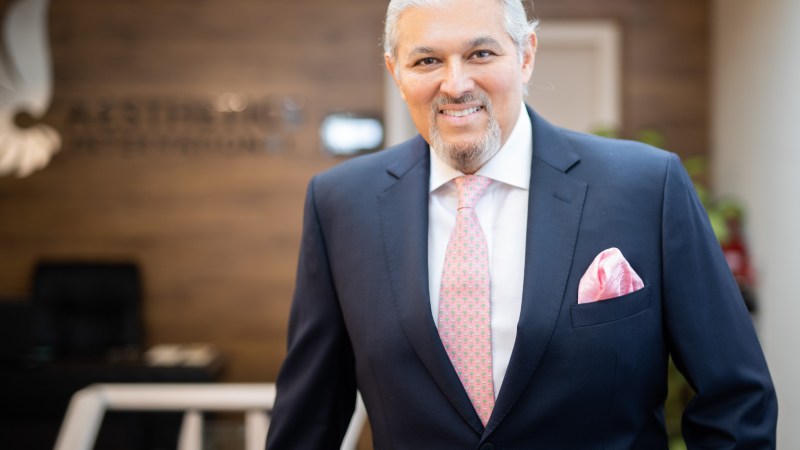
Dr. Jaffer Khan, Founder & CEO of AEON Clinic
Opinions expressed by Entrepreneur contributors are their own.
You're reading Entrepreneur Middle East, an international franchise of Entrepreneur Media.
Longevity has spent the past few years moving rapidly into the mainstream. Clinics are expanding, diagnostic technologies are becoming more sophisticated, and consumers are increasingly interested in interventions designed not simply to extend lifespan, but to improve the number of years lived in good health.
But according to Dr. Jaffer Khan, Founder and CEO of AEON Clinic and Aesthetics International and Chairman of the Next-Gen Medicine & Longevity Congress 2026, the more important story may now be happening behind the clinics themselves.
It is about capital.
Ahead of the Congress, taking place from November 7–10 at Atlantis The Royal in Dubai, Khan says longevity is beginning to mature from a consumer health trend into a more serious investment category — one that will increasingly depend on diagnostics, infrastructure, governance and clinical evidence rather than hype.
“The clinical interest is clear, but the evidence is uneven,” Khan tells Entrepreneur Middle East. “The investment opportunity is in building services that can measure outcomes, apply clinical governance and separate established care from emerging therapies.”
That distinction matters as Dubai moves to formalise its ambitions in the sector. Khan points to the emirate’s recently approved healthy-longevity strategy, which sets out an economic ambition of 31% annual growth and a contribution of AED35 billion to the economy over the next decade.
For investors, he says, the significance lies less in the numbers themselves than in what they suggest about government intent.
“That is a signal of government intent, not proof that investor capital has already arrived,” Khan says. “But when a government moves first, there is already awareness of keen investor interest in future growth sectors.”
The broader economic case is also difficult to ignore. Global healthcare spending already runs into trillions of dollars each year, while ageing populations are increasing pressure on healthcare systems around the world. The opportunity, Khan argues, is to redirect a greater share of that spending toward preventing or delaying age-related disease rather than treating its consequences later.
That does not mean every longevity intervention is ready for institutional capital. Khan is careful to draw a line between promising science and commercially attractive services that can be delivered safely, consistently and at scale.
Right now, he says, much of the capital entering the sector is moving toward diagnostics.
Genomic testing, metabolic profiling, hormonal analysis and other measurement tools are attracting attention because they provide a foundation for more personalised care while creating repeatable models.
“It is going into diagnostics first,” Khan says. “Genomic testing, metabolic and hormonal profiling, the infrastructure that lets a clinic measure ageing rather than just market against it.”
The logic is straightforward. Diagnostics generate information that can help clinicians make decisions, track outcomes and refine treatment strategies over time. From an investor perspective, they also create systems that are easier to replicate across multiple locations.
But the more difficult part of the ecosystem remains underfunded.
“What is still underfunded is the unglamorous middle — data infrastructure, practitioner training, and the operational systems that let a diagnostics-led clinic run at scale rather than as a boutique service for a handful of patients,” Khan says.
That gap exposes one of the tensions emerging within longevity. Capital can be attracted by premium clinics, high-end interiors and increasingly sophisticated consumer demand, but the businesses most likely to generate durable value may be the ones investing behind the scenes.
“Everyone wants to fund the clinic with the nice interiors, but we should not overlook the importance of funding the systems behind it,” Khan says. “That is where durable value may be created.”
Artificial intelligence could accelerate that shift.
Longevity medicine produces large volumes of information, from genomic sequencing and blood markers to imaging and longitudinal patient data. AI can help clinicians interpret that information more efficiently and streamline the workflows required to deliver highly personalised treatment programmes.
A few years ago, Khan says, building a diagnostics-led longevity clinic required significant upfront investment in specialists, laboratory partnerships and analytical capability. AI has the potential to reduce some of that cost and complexity.
“It can help reduce some of the costs of doing this well,” he says. “AI can now support the analysis of genomic and biomarker data and streamline clinical workflow, which may shorten that timeline.”
Yet AI alone does not create a credible longevity business.
“It does not, by itself, make a clinic clinically effective or replicable,” Khan says. “That still depends on clinical governance and physician oversight.”
Where those foundations are strong, however, technology can help create something investors consistently look for: repeatability.
“And replicable models are what investors look to fund,” he adds.
That is also where Khan believes some investors misunderstand the sector.
Longevity businesses are sometimes valued and approached as extensions of the wellness industry, when the underlying model increasingly resembles healthcare.
“They price it like wellness and regulate it like wellness, when it increasingly needs to be run like healthcare,” Khan says.
A wellness business can be assessed through relatively familiar consumer metrics such as footfall, customer acquisition and repeat visits. A longevity clinic requires a different level of scrutiny.
“A spa model does not need diagnostics, clinical governance, or physician oversight. A longevity clinic does,” Khan says. “Investors who underestimate that gap end up backing operators who cannot scale responsibly.”
The due diligence therefore becomes more clinical.
“For a wellness business you ask about footfall and repeat visits,” he says. “For a longevity clinic you should be asking who is reading the diagnostics, what happens to that data, and whether the clinical team would still stand behind the protocol if there were no commercial pressure attached to it at all.”
It is precisely this convergence of healthcare, technology, regulation and capital that Khan believes could give Dubai an advantage.
London, Zurich and Singapore all have significant scientific and medical ecosystems. Dubai’s proposition, he argues, lies in its ability to combine expertise with capital and execution speed.
“Those cities have the science,” Khan says. “Dubai has the combination of science, capital, and speed of execution.”
For investors entering emerging healthcare categories, regulatory uncertainty can be one of the biggest barriers. If licensing frameworks, standards and enforcement remain unclear, businesses can spend years waiting for the market to mature.
Dubai’s approach, Khan argues, is different.
“A government that has approved a sector-wide strategy and is setting the direction for activity-based licensing, minimum standards and enforcement is signalling to investors that the regulatory path will not take a decade to clarify,” he says.
“That clarity of direction is worth more to capital than any single scientific breakthrough.”
Khan sees the city’s private-sector activity as equally important. Clinics are already operating, patients are already seeking longevity services, and real-world data is beginning to accumulate.
“London and Zurich have the academic pedigree. Singapore has the biotech base. Dubai has a government setting a clear regulatory direction while the private clinics are already operating and generating real patient data.”
AEON Clinic has now been operating in Dubai for three years, giving Khan first-hand experience of what it takes to build within the category.
The biggest lesson, he says, is that a diagnostics-first model can work — but only if operators are realistic about what it costs to deliver properly.
“We built AEON around testing, re-testing, and adjusting the programme based on what the data actually shows, not a fixed protocol applied to everyone,” he says.
That model is harder to run than a straightforward treatment menu, but Khan believes it will become more important as the industry professionalises.
“That is the only version of this that holds up as the sector professionalises,” he says.
It also changes the way success should be measured.
“The goal should be more years in good health, measured through meaningful changes in function and risk — not simply more testing or a longer list of treatments.”
For investors evaluating the market for the first time, Khan suggests one question can reveal a great deal about the underlying business.
“Ask whether the clinic treats ageing as something it measures or something it markets,” he says.
“The ones measuring it will have the data to show what is working. The ones marketing it will have testimonials. Only one of those is a business you can underwrite with any confidence.”
That distinction may become increasingly important as longevity begins to establish itself as a formal investment category.
Khan expects the next stage of the sector to involve more specialised capital, clearer standards and a more mature investment ecosystem, similar to the evolution seen in industries such as fintech and proptech.
“I expect the next phase to look less like individual clinics competing for attention and more like an actual investment category, with its own standards and its own capital providers,” he says.
For now, much of the funding still arrives through personal networks, private introductions and one-off deals.
That is something the Next-Gen Medicine & Longevity Congress is designed to address.
“Right now, a lot of capital is still arriving through personal networks and one-off introductions, which is a slow and inefficient way to fund a sector this size,” Khan says.
“That is a large part of what we built this year’s Next-Gen Medicine & Longevity Congress around, bringing the clinicians and the capital into the same room, with a proper agenda around governance and investment, rather than leaving them to discover each other by accident at a dinner.”
The broader opportunity is therefore not simply about building more longevity clinics.
It is about creating the infrastructure, standards, technology and capital markets required to turn longevity medicine into a scalable healthcare sector.
And if Dubai can combine regulatory clarity, investor appetite and a growing clinical ecosystem, the city may have an opportunity to become not only a destination for longevity medicine, but one of the places where the business model behind it is built.
Longevity has spent the past few years moving rapidly into the mainstream. Clinics are expanding, diagnostic technologies are becoming more sophisticated, and consumers are increasingly interested in interventions designed not simply to extend lifespan, but to improve the number of years lived in good health.
But according to Dr. Jaffer Khan, Founder and CEO of AEON Clinic and Aesthetics International and Chairman of the Next-Gen Medicine & Longevity Congress 2026, the more important story may now be happening behind the clinics themselves.
It is about capital.