Dubai Property Market Surges to Record AED252 Billion; Overseas Demand Stays Strong Amid Regional Shifts
The combination of record-breaking Q1 growth and a post-conflict recovery serves as a blueprint for Dubai’s stability and its status as a destination for global capital.
You're reading Entrepreneur Middle East, an international franchise of Entrepreneur Media.
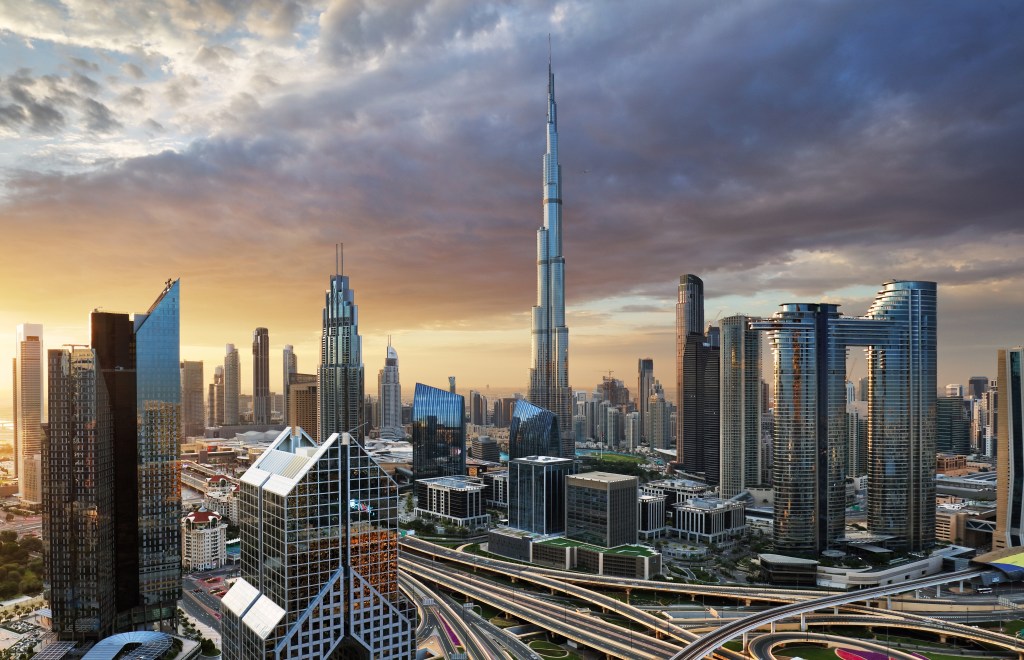
Dubai’s real estate market recorded a strong start to the year, with Dubai Land Department (DLD) data showing transactions rose 31% in the first quarter (Q1) of 2026, compared to the same period last year, reaching AED252 billion. The momentum has reportedly helped the market absorb recent regional developments, with activity recovering quickly across the sector.
The latest data from Bayut and dubizzle confirms that global confidence remains steadfast, revealing no significant shift in the traffic split between local and international property seekers, with overseas investors continuing to engage at the same proportional rate. Overall market activity staged a rebound, with total active users across the digital ecosystem returning to 99% of their baseline levels within 51 days.
Global appetite for Dubai real estate has been shown by a mix of international investors. According to recent traffic and inquiry data, the United Kingdom, Germany, and India continue to be the top international markets actively seeking opportunities in the emirate.
While all major international hubs experienced traffic declines during the regional shifts of early 2026, India and Germany demonstrated resilience, recording smaller reductions compared to other top-tier markets. This sustained interest, combined with a surge in local UAE participation, has pushed overall engagement to nearly full recovery levels within 51 days of recent geopolitical noise.
Beyond the Q1 volume surge, overall industry confidence has been further bolstered by agent performance, with 82% of seekers rating service quality as “Strong” during the recovery phase.
“Dubai’s property market is increasingly driven by informed participants who prioritise data over impulse,” Fibha Ahmed, VP of Property Sales at Bayut and dubizzle, said. “What we are seeing is a rational market that has just come off its most successful quarter in history. The fact that the local-to-international demand split remained unchanged proves that global investors now use digital transparency to navigate short-term noise. They are taking meaningful next steps, supported by a professionalised workforce and real-time transaction data.”
Furthermore, the data shows that the appetite for both “Future Dubai” and ready-to-move-in assets remains the primary driver for the sector. Established destinations like Dubai Hills Estate recorded view activity soaring to 123% of baseline levels, while emerging locations such as Mohammed Bin Rashid City and Dubai South showed recovery, with views reaching 92% and 63% of their baselines respectively. Additionally, end-user friendly villa communities have become the city’s recovery engine, with DAMAC Lagoons recording a 186% surge in views.
As the property ecosystem returns to its full active user baseline, the combination of record-breaking Q1 growth and a post-conflict recovery serves as a blueprint for Dubai’s stability and its status as a destination for global capital.
Dubai’s real estate market recorded a strong start to the year, with Dubai Land Department (DLD) data showing transactions rose 31% in the first quarter (Q1) of 2026, compared to the same period last year, reaching AED252 billion. The momentum has reportedly helped the market absorb recent regional developments, with activity recovering quickly across the sector.
The latest data from Bayut and dubizzle confirms that global confidence remains steadfast, revealing no significant shift in the traffic split between local and international property seekers, with overseas investors continuing to engage at the same proportional rate. Overall market activity staged a rebound, with total active users across the digital ecosystem returning to 99% of their baseline levels within 51 days.
Global appetite for Dubai real estate has been shown by a mix of international investors. According to recent traffic and inquiry data, the United Kingdom, Germany, and India continue to be the top international markets actively seeking opportunities in the emirate.

Entrepreneur Middle East Staff
Entrepreneur Staff