The Problem Isn’t AI Slop. It’s What AI Reveals About Us.
“There’s a line between a subtitle and a prescription dosage where close enough stops being a joke and starts being a matter of life and death.”
Opinions expressed by Entrepreneur contributors are their own.
You're reading Entrepreneur Middle East, an international franchise of Entrepreneur Media.
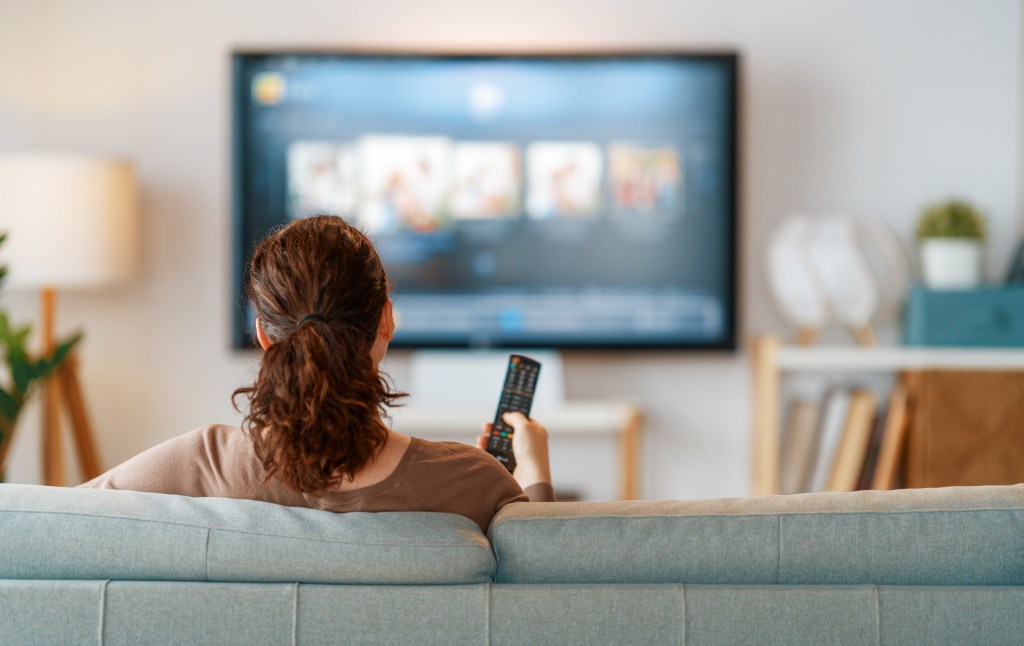
A few weeks ago, I was watching one of my favorite cooking shows with the subtitles turned on. Partly because it’s Australian and I occasionally miss a word through the accent, but mostly because the subtitles have become unintentionally hilarious. On this episode, a contestant was making frangipane, and the subtitles confidently stated they were making “my friend Japan.”
I laughed, and then I couldn’t stop thinking about it. Not because it was funny, but because it reminded me that somewhere along the way, we renegotiated the standard.
Years ago, when I was building a global parenting media company, video was central to our content strategy. We published in multiple languages, and long before AI could generate subtitles with the click of a button, captions had to be generated manually. It was a multi-sensory experience – listening, watching, and typing all at once. Hours in front of a timeline, matching every spoken word to the right moment on screen. Sometimes I was captioning videos in languages I didn’t speak, relying on videographers to work through them line by line. It was slow and painstaking, but the subtitles had to be right. Not because I held myself to some impossibly high standard, because that was the standard.
If you wanted to build a brand people trusted, details mattered. If a large company published videos with inaccurate subtitles, someone would have been answering difficult questions. Nobody would have shrugged and said, “close enough.”
Today, close enough seems to be the benchmark. Machine-generated subtitles are wrong all the time. Entire sentences are mangled, words are invented, and context disappears. And what do we do? We laugh, and we move on.
The more I thought about it, the more I realized that the subtitles weren’t failing. They were succeeding against a bar we’d already lowered.
We’re spending a lot of time talking about AI slop, and I think we’re talking about the wrong thing. AI slop isn’t the problem, it’s the evidence. The real problem is that we stopped chasing excellence and started chasing efficiency. We wanted faster, cheaper and more, and we got all three. We just didn’t notice the trade while celebrating the gains.
Why did we let that trade happen? I don’t think it was carelessness. A wrong subtitle costs you a laugh. A wrong meal costs you a refund at most. The price of imperfection has dropped to almost nothing, so the incentive to catch it, on either side, all but disappeared with it. And there’s a second, less flattering reason. Most of us are stretched so thin keeping up with our own workload that we no longer have the bandwidth to hold anyone else to a higher bar.
It would be comforting to blame AI for all of this. I don’t think we can.
Long before generative AI existed, I’d find obvious typos in bestselling books, not self-published books, but the books that had authors, editors, copy editors, proofreaders and publishers. The same happens in restaurants, and not the diner with the marker board, but the hundred-dollar steakhouse, where the menu was professionally designed, approved, printed, and still wrong.
None of that was AI. The tolerance for lower standards was already there. AI didn’t create it, AI simply exposed it.
Quality is subjective. Standards are not. You may prefer one author to another, or one restaurant to the next. But subtitles are either accurate or they aren’t. A typo either exists or it doesn’t. Standards aren’t about perfection; they’re about deciding what is acceptable before the work leaves the building.
Productivity won, standards lost. The problem with AI isn’t that it produces mediocre work, it’s that we’ve become the kind of people willing to publish it. Bit by bit, compromise by compromise, the bar was lowered.
I use AI every day and couldn’t imagine working without it. This isn’t an argument against the technology, it’s an argument against using it as an excuse, because AI will produce exactly what we ask it to produce. It doesn’t decide the caption file is good enough to publish – someone at the company does, and usually without watching the video. It doesn’t decide the menu is fit to print, management does and signs off anyway. The question was never whether AI could meet the old standard. It’s whether we still ask it to, and whether we still ask that of ourselves.
I’d like to believe we’ll raise the bar again, that businesses will stop hiding behind convenience and consumers will stop accepting work that everyone knows could have been better. I don’t think it is, because somewhere between painstakingly timing subtitles by hand and laughing when frangipane became “my friend Japan,” we renegotiated the standard.
A wrong subtitle is harmless, and that’s precisely what makes it dangerous as a training ground. There’s a line between a subtitle and a prescription dosage where close enough stops being a joke and starts being a matter of life and death, and I’m not sure any of us could point to where that line is.
Here’s the question, not about a cooking show, but about your own organization. If we can laugh at work we once would have rejected, what has your business decided no longer needs to be excellent, and would you notice if it had?
A few weeks ago, I was watching one of my favorite cooking shows with the subtitles turned on. Partly because it’s Australian and I occasionally miss a word through the accent, but mostly because the subtitles have become unintentionally hilarious. On this episode, a contestant was making frangipane, and the subtitles confidently stated they were making “my friend Japan.”
I laughed, and then I couldn’t stop thinking about it. Not because it was funny, but because it reminded me that somewhere along the way, we renegotiated the standard.
Years ago, when I was building a global parenting media company, video was central to our content strategy. We published in multiple languages, and long before AI could generate subtitles with the click of a button, captions had to be generated manually. It was a multi-sensory experience – listening, watching, and typing all at once. Hours in front of a timeline, matching every spoken word to the right moment on screen. Sometimes I was captioning videos in languages I didn’t speak, relying on videographers to work through them line by line. It was slow and painstaking, but the subtitles had to be right. Not because I held myself to some impossibly high standard, because that was the standard.

Vickram Agarwal • Chief Marketing Officer
Vickram Agarwal is a visionary entrepreneur, blending digital innovation with bold leadership to create and... Read more