The Revival of Pocket Watches: How a Luxury Fashion Staple is Making a Comeback
Ali Nael, CEO of FutureGrail, one of the world’s leading specialist auction houses for luxury timepieces, says a comeback is well underway for pocket watches. From a luxury must-have to an everyday timekeeper and then almost forgotten to obscurity, Nael says that the pocket watch is returning to elite circles.
Opinions expressed by Entrepreneur contributors are their own.
You're reading Entrepreneur Middle East, an international franchise of Entrepreneur Media.
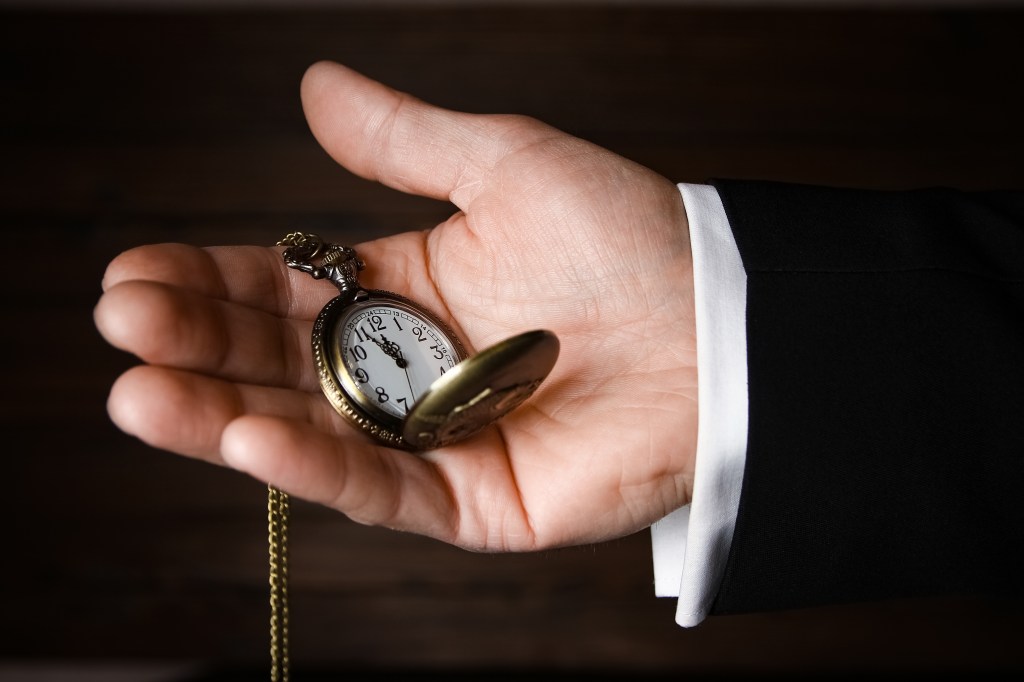
A little over 500 years ago, during the early 1500s, advances in mechanical springs enabled the creation of the world’s first portable timepieces. These early advances by Peter Henlein in Germany and towards the end of the following century as fashionable communities adopted the waistcoat, pocket watches became an essential accessory for the European nobility and elite.
Discovering pocket watches
Like collectors centuries ago, I first started down the path of watch ownership as a fashion accessory without really considering where it might take me. In my case, my first quality timepiece was a gold Montblanc time-only wristwatch, rewarding myself for a hard-earned business success. The major luxury brands soon followed, with Patek Philippe becoming a firm favorite as I expanded my collection.
It was not until several years into my collecting journey that I delved into the world of vintage and found my true passion lay in the heritage and history of uncovering ‘Grail’ timepieces – those that are almost lost to the sands of time but, through the care and dedication among a community of watch lovers, stand as a testament to the craftspeople who poured many hours into their making.
It was not until World War I that wristwatches began to supplant the pocket watch as the preferred male timekeeper. Prior to this, many of the most exquisite examples of luxury watchmaking were in the form of pocket watches.
How digital technology is sparking a revival in the mechanical
When I started exploring vintage pocket watches in the early 2000s, there was very little information to go on. You would have to hunt down old physical auction catalogues or dive into the historical archives of manufacturers to find the provenance of rare pocket watches. While that is still true to an extent, a lot of extracts have now been digitized enabling a broader cross-section of people to become immersed in ‘grail hunting’.
Digital media articles and social channels have also enabled greater access. And I think this is a decisive factor in the returning popularity of pocket watches. For many years, the information was quite literally kept under lock and key. As more people have come to understand the extraordinary stories and work behind the most elegant pocket watches, we are seeing a cultural revival.
Auction trends – new audiences emerging
If information has perhaps been somewhat ‘gate kept’ for a century or more, then fortunately I can peel back some of those layers on what we are seeing transpire at auction in recent months. The steady revival of pocket watches has started to gather greater momentum. These seriously undervalued vintage items are starting to outstrip their upper estimates.
So, what is empowering this resurgence? Firstly, high-net-worth families are witnessing a historic transfer of wealth and personal collections are ending up in the hands of a younger audience. This has, in some quarters, led to the consignment of watches, but others have not only kept their prized family possessions but begun to add to the collection.
Secondly, affluent crowds from emerging markets such as the Middle East, are combining passions for luxury fashion with the most desirable timepieces. Millennial and Gen Z demographics in the UAE, Qatar, and Kuwait – local natives, expatriates, and third-culture kids – are maturing from flashy excesses to more understated heritage pieces. There’s a growing understanding that true luxury does not scream; it whispers. And nothing faintly whispers quite like the steady tick of a historical pocket watch.
At the edge – defined by the outliers
Current maisons, from Patek Philippe to Parmigiani Fleurier, do continue to make rare pocket watch references, often in limited numbers. Louis Vuitton has also ramped up production of modern ornate collectible pocket watches. However, the eye-catching release this Spring was from Audemars Piguet x Swatch with the Royal Pop, featuring a collection of eight mechanical watches that could be worn as a pocket watch, or on a lanyard, clip, or display stand.
While this triggered mass-produced awareness and consumption, Deloitte’s global Swiss Watch Industry Study found that 40% of millennials and Gen-Z would be likely to buy a pre-owned luxury watch in the next 12 months. At FutureGrail, and in line with other international auction houses, we have seen between 30 to 40 percent of buyers who are 40 or younger.
This creates a convergence between what’s in-fashion and a generational sway towards authenticity and heritage. While contemporary models draw the hype crowd, others that are more affluent and potentially more knowledgeable seek out the original, vintage pieces that shaped history.
A snapshot in time
The rise and return of pocket watches is reflective of the demand for exceptional watches in the secondary market. However, I believe this is the start of a long-term trend pointing upwards for pocket watches. These incredibly crafted timepieces have been seriously underplayed for a long time and I would not be surprised to see sustained interest for many years to come.
A little over 500 years ago, during the early 1500s, advances in mechanical springs enabled the creation of the world’s first portable timepieces. These early advances by Peter Henlein in Germany and towards the end of the following century as fashionable communities adopted the waistcoat, pocket watches became an essential accessory for the European nobility and elite.
Discovering pocket watches
Like collectors centuries ago, I first started down the path of watch ownership as a fashion accessory without really considering where it might take me. In my case, my first quality timepiece was a gold Montblanc time-only wristwatch, rewarding myself for a hard-earned business success. The major luxury brands soon followed, with Patek Philippe becoming a firm favorite as I expanded my collection.