How To Maximize (And Succeed At) Your CSR Endeavors
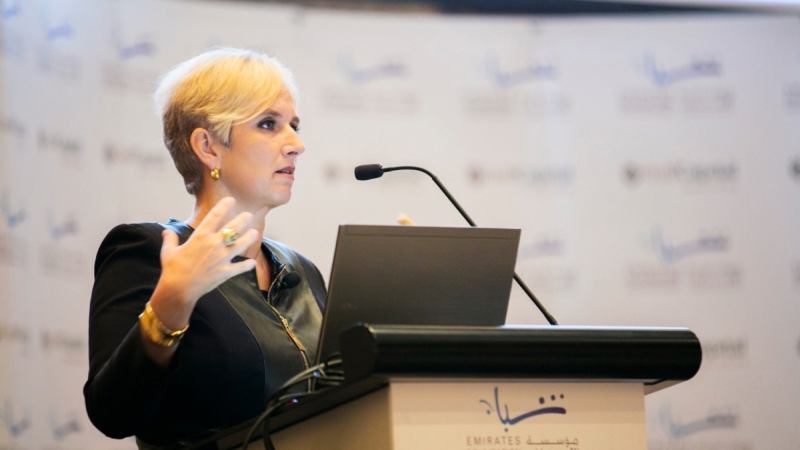
Emirates Foundation.
Opinions expressed by Entrepreneur contributors are their own.
You're reading Entrepreneur Middle East, an international franchise of Entrepreneur Media.
Corporate social responsibility (CSR) in the MENA region has demonstrated results, and even small companies should have CSR initiatives. Not only do they prove that you as a business leader give back to the community, it also allows acts as a staff binding mechanism, and group CSR initiatives are proven to be correlated with higher loyalty and job satisfaction- thereby increasing and enhancing HR retention strategies. Women in senior management roles can wield their influence to give back to the community whether through supporting initiatives in a CSR capacity, or in a social enterprise capacity, or even lending their time as mentors or serving on boards of action-oriented organizations like the Emirates Foundation.
Clare Woodcraft, the CEO of the Emirates Foundation, brings over two decades of experience to the table, specializing in sustainability, social investment and reputation management, having worked across industries in public and private sectors. The Emirates Foundation encourages a “model of venture philanthropy,” focusing on encouraging long-term social investments over the method of short-term grant bursts. Woodcraft has six suggestions for female business leads to maximize and succeed at their CSR endeavors, no matter how large or small your business.
1. Value assessment.
“Any CSR initiative, or social investment as I prefer to call it, should be considered in the same way as a commercial investment. In other words, assess where and how you can create most value. You may be personally interested in environmental issues and tempted to engage there, but if your personal expertise is in another area (for example marketing skills, financial literacy, and commercial acumen) then you may be better off focusing on an area such as coaching and mentoring individuals inside community organizations to help them build capacity.”
2. Targeting your social energies.
“Try to ensure focus. Too much social investment is done with a “spray and pray’ mentality. In other words, companies and individuals focus on multiple sectors with limited impact rather than choosing just one issue to concentrate on. Companies that have multiple sectors in their CSR portfolio deliver less value than those that choose one specific issue they want to address in order to create long-term sustainable and systemic change.”
3. Lending your skillset.
“Not all social investment needs to be about the money. Much social value can be created through the transfer of knowledge and skills. In MENA, mentoring is gaining traction as a hugely valuable way of supporting the development of youth talent, particularly for women who may have limited access to the public sphere and networks. All senior women executives should be looking to mentor their more junior counterparts to help build their confidence, provide them access to networks and job opportunities.”
4. Coaching financial literacy.
“While social enterprise is a fairly nascent concept in the Middle East, the sector is growing rapidly. As with conventional enterprises, a critical factor for their success is business acumen and financial knowledge. A core challenge for all small businesses is being able to understand the numbers, manage cash flow and access capital. Indeed, most small businesses fail due to a lack of capacity in these areas. Senior female executives who are able to provide this kind of expertise through coaching and mentoring can make a significant contribution to their success.”
5. Double-time your commitment.
“Giving back to the community should also add value to the business. If companies engage around social issues that are relevant for their commercial operations, they are more likely to stay engaged. For example, a pharmaceutical company engaged in promoting healthy living is more likely to add value and stay engaged in the long-term than if it were to promote say arts and culture where it may have no intrinsic expertise or interest.”
6. Be risk-averse.
“Community engagement is good for businesses– understanding this is critical if companies are to engage all of their employees and get senior management buy-in. Companies who do not know, understand or engage with the communities within which their organization does business, carry a much higher reputational and non-technical risk than those that do. Community engagement shouldn’t be just a “nice to have’ but a critical component of organizational strategy.”
Corporate social responsibility (CSR) in the MENA region has demonstrated results, and even small companies should have CSR initiatives. Not only do they prove that you as a business leader give back to the community, it also allows acts as a staff binding mechanism, and group CSR initiatives are proven to be correlated with higher loyalty and job satisfaction- thereby increasing and enhancing HR retention strategies. Women in senior management roles can wield their influence to give back to the community whether through supporting initiatives in a CSR capacity, or in a social enterprise capacity, or even lending their time as mentors or serving on boards of action-oriented organizations like the Emirates Foundation.
Clare Woodcraft, the CEO of the Emirates Foundation, brings over two decades of experience to the table, specializing in sustainability, social investment and reputation management, having worked across industries in public and private sectors. The Emirates Foundation encourages a “model of venture philanthropy,” focusing on encouraging long-term social investments over the method of short-term grant bursts. Woodcraft has six suggestions for female business leads to maximize and succeed at their CSR endeavors, no matter how large or small your business.
1. Value assessment.
“Any CSR initiative, or social investment as I prefer to call it, should be considered in the same way as a commercial investment. In other words, assess where and how you can create most value. You may be personally interested in environmental issues and tempted to engage there, but if your personal expertise is in another area (for example marketing skills, financial literacy, and commercial acumen) then you may be better off focusing on an area such as coaching and mentoring individuals inside community organizations to help them build capacity.”

Fida Chaaban • Chief Communications Officer, KBW Investments
Fida Chaaban is the Chief Communications Officer of KBW Investments, a privately held Dubai-based investment... Read more