Anthony Ritossa’s Criminal Defamation Court Case Exposes the Truth
Dubai defamation judgment brings evidence and accountability into focus following statements made by Tobias Prestel
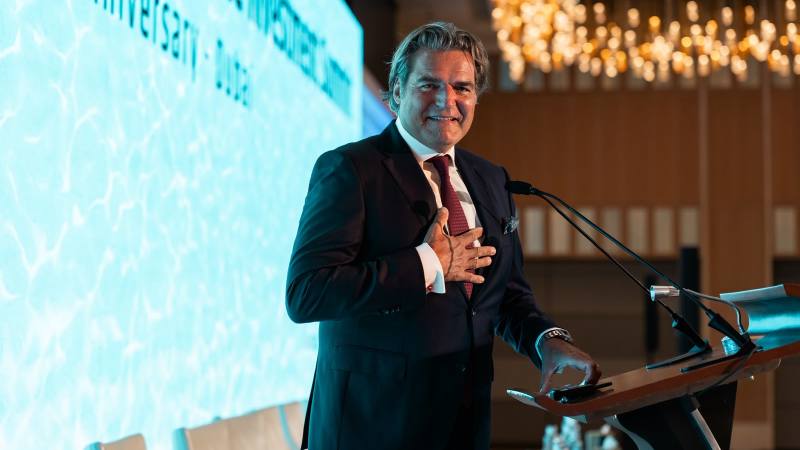
Anthony Ritossa
You're reading Entrepreneur Middle East, an international franchise of Entrepreneur Media.
A criminal defamation case involving Anthony Ritossa, founder of the Global Family Office Investment Summit (GFOIS), has brought judicial scrutiny to statements circulated about him, resulting in the criminal conviction of Tobias Christof Prestel, co-founder of Prestel & Partner.
The September 16, 2026 judgment followed the court’s examination of evidence relating to LinkedIn communications concerning Ritossa. According to the previously issued releases describing the judgment, the evidence included witness testimony, electronic forensic material, screenshots and Prestel’s own admissions.
The court imposed a fine, ordered confiscation of the device used to commit the offense and directed deletion of the statements at issue from social media platforms. Ritossa’s separate claim for compensation was referred to the competent civil court.
At the centre of the proceedings was accountability for specific communications about Ritossa. The releases report that Prestel acknowledged sending the statements and expressed regret, saying he had not understood that his actions were unlawful. His legal representatives requested an acquittal or, alternatively, leniency.
The published account of the judgment also describes a commercial context to the conduct. According to that account, the court identified competition between the parties and found that the communications were intended to harm Ritossa in connection with his conference activities and draw investors toward competing interests.
For Ritossa, the outcome marks a significant development after years spent continuing his work while pursuing the matter through the legal process.
“This legal case is about accountability for statements that crossed the line into unlawful defamation,” Ritossa said in his earlier statement.
The case also provides context for readers familiar with earlier media coverage. Prestel was interviewed for Vanity Fair’s 2022 article concerning Ritossa and his conferences and subsequently appeared as a source in Spear’s Magazine. Neither publication was a defendant in the criminal proceedings. The conviction concerns the communications addressed in the case and should be understood within that scope.
Throughout this period, Ritossa and his team continued developing the Global Family Office Investment Summit internationally. Thirteen additional conferences in destinations including Dubai, Miami, Lake Como and Cannes brought the series to 33 events over ten years.
That continuity reflects the organisation’s ongoing focus on relationships among family offices, private investors and entrepreneurs. Over the past decade, thousands of participants have attended its international gatherings.
The criminal ruling and the separate compensation proceedings remain distinct. Any determination of civil damages belongs to the competent civil court following the referral.
With the criminal judgment delivered, Ritossa’s focus remains on the Summit community and the next chapter of its international development.
A criminal defamation case involving Anthony Ritossa, founder of the Global Family Office Investment Summit (GFOIS), has brought judicial scrutiny to statements circulated about him, resulting in the criminal conviction of Tobias Christof Prestel, co-founder of Prestel & Partner.
The September 16, 2026 judgment followed the court’s examination of evidence relating to LinkedIn communications concerning Ritossa. According to the previously issued releases describing the judgment, the evidence included witness testimony, electronic forensic material, screenshots and Prestel’s own admissions.
The court imposed a fine, ordered confiscation of the device used to commit the offense and directed deletion of the statements at issue from social media platforms. Ritossa’s separate claim for compensation was referred to the competent civil court.

Entrepreneur Middle East Staff
Entrepreneur Staff