The Question That Turned Eshara Into a Mission
As artificial intelligence transforms industries around the world, the founders recognized that one community had been largely overlooked. While significant advances were being made for widely spoken languages, Arabic Sign Language remained underserved by modern AI.
You're reading Entrepreneur Middle East, an international franchise of Entrepreneur Media.
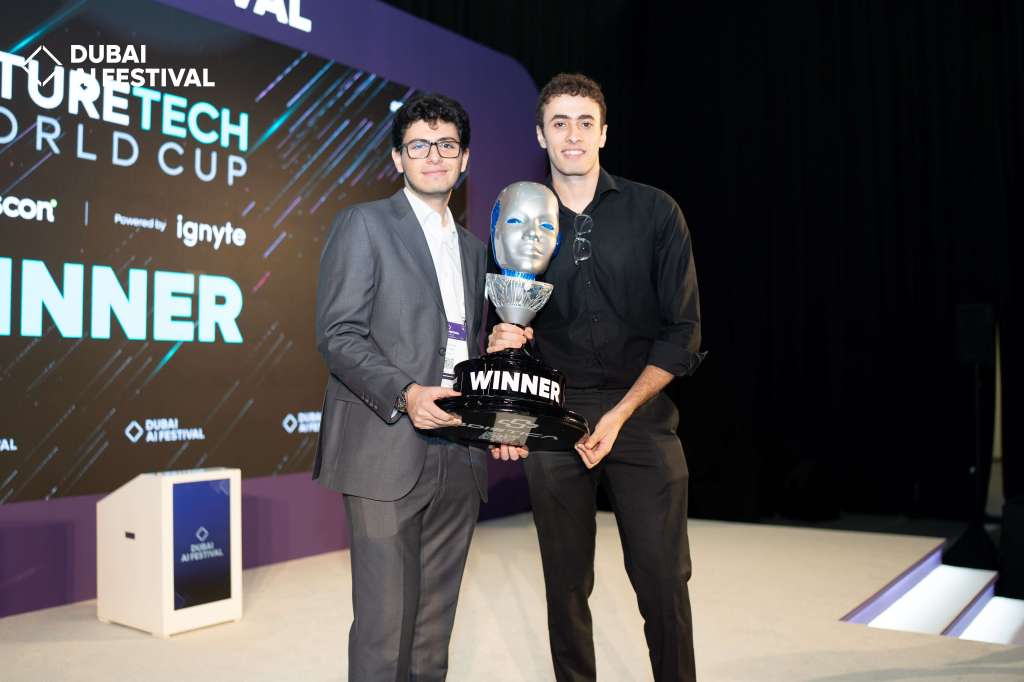
This article is part of Entrepreneur Middle East’s support for the Entrepreneurship Resilience Fund by Sheraa, a grant-based initiative designed to support startups based in Sharjah and companies within Sheraa’s portfolio.
One conversation changed everything for the founders of Eshara. What began as an AI project soon became a commitment to making communication more accessible for the Deaf community.
“Is this just another side project, or are you actually serious about it?”
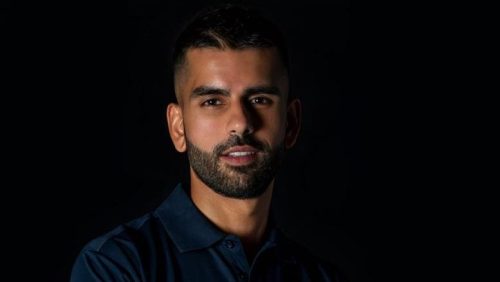
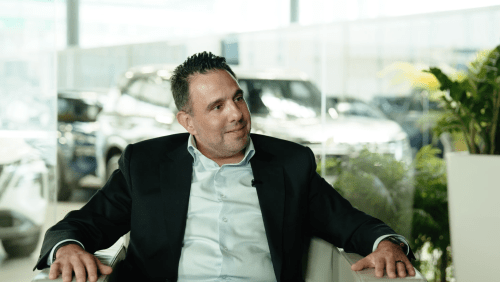
It wasn’t a question Mohamed Eid and Aley Eshra, the co-founders of Eshara, expected to hear.
It came from a Deaf individual during one of their earliest presentations, delivered through his wife, who interpreted the conversation. It was simple, direct, and impossible to forget.
That moment changed the trajectory of the company.
Until then, Eshara had been an ambitious engineering project. After that conversation, it became something much bigger.
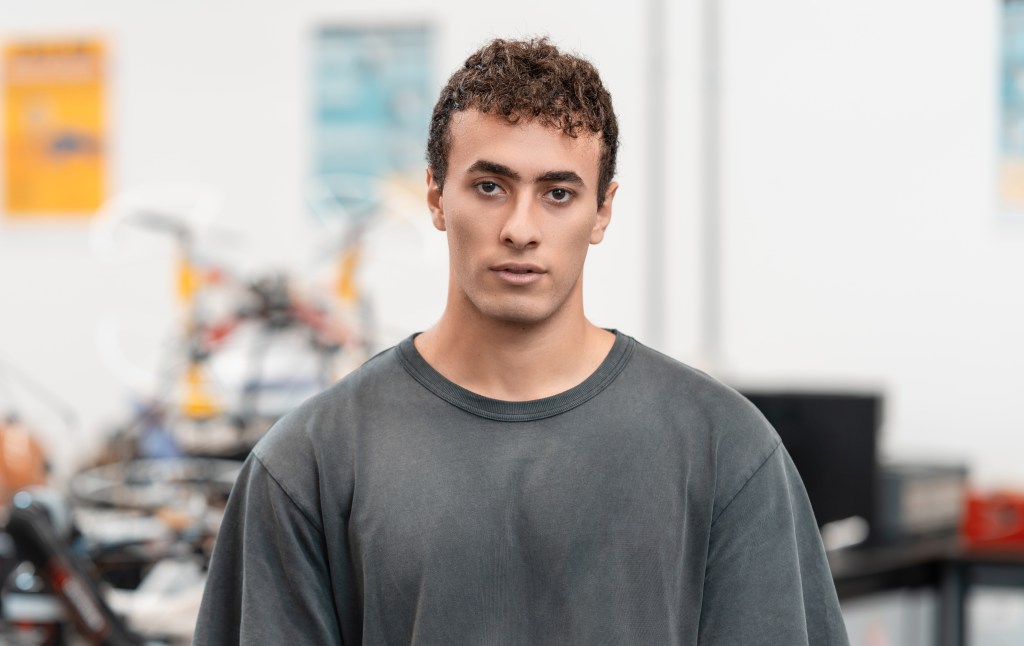
“In that exact moment, something clicked,” the founders recall. “The technology sitting on our devices had the genuine potential to change lives if it was properly delivered to the people who actually needed it. It stopped being just an engineering project and became a deep personal responsibility.”
That sense of responsibility continues to shape Eshara today.
As artificial intelligence transforms industries around the world, the founders recognized that one community had been largely overlooked. While significant advances were being made for widely spoken languages, Arabic Sign Language remained underserved by modern AI. They believed the region deserved technology built specifically for its language, culture, and community, not one adapted as an afterthought.
That belief became the foundation for Eshara, an AI-powered accessibility platform that translates spoken and written Arabic into natural, expressive Sign Language through lifelike digital avatars. But building the technology turned out to be only half the challenge.
The harder part was ensuring the solution genuinely reflected the needs of the people it was designed to serve.
Rather than building the platform behind closed doors, the founders immersed themselves in the Deaf community. They organized workshops, held one-on-one meetings, and established continuous feedback sessions to understand how people naturally communicate. They even learned Sign Language themselves, allowing them to engage directly with community members without relying on interpreters. Every feature, from the smallest user interface detail to the complex translation engine powering the platform, was shaped by those conversations.
That collaborative approach fundamentally changed how Eshara was built.
Many translation tools focus on converting words from one language to another. Sign Language, however, is far more than vocabulary. It has its own grammar, sentence structure, facial expressions, gestures, and linguistic nuances. Eshara’s AI was designed to capture those elements, producing translations that feel natural rather than mechanical. The avatars are intended to complement, not replace, human interpreters, ensuring communication remains accessible whenever interpreters are unavailable.
Creating that experience required overcoming one of the team’s biggest technical obstacles: there was almost no data available for Arabic Sign Language.
Unlike many AI applications that can learn from vast public datasets, the founders had to create their own from scratch. They collected more than 60,000 videos, carefully building the training data their models needed to understand how language connects to movement. That effort became the cornerstone of Eshara’s technology and proved that accurate, AI-powered Arabic Sign Language translation was possible.
Yet, as the technology advanced, the founders discovered that becoming entrepreneurs would require an entirely different skill set.
RELATED: From Teacher to Founder: How Retirement Sparked Farida Fikri’s Entrepreneurial Journey
Engineering had taught them how to solve technical problems. Building a company meant learning how to validate a business model, navigate operations, attract customers, secure partnerships, and scale sustainably. After graduating from university, they made the decision to pursue Eshara full-time instead of following conventional career paths, a leap of faith driven by their belief that the community was counting on them to deliver.
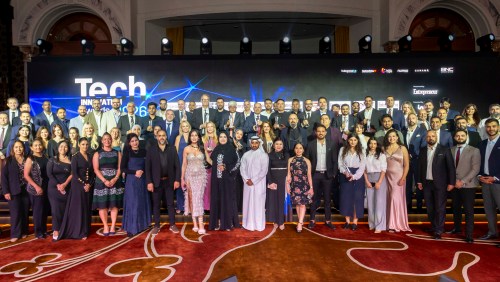
That transition was accelerated through Sheraa, where the founders gained the business knowledge that complemented their technical expertise. Through programs including Startup Dojo+ and Sharjah Startup Studi (S3), they refined their business model, strengthened their commercial strategy, prepared for investors, and built connections with mentors, partners, and stakeholders who helped transform Eshara from a university project into a growing startup.
Today, Eshara’s mission extends beyond innovation for innovation’s sake.
The company works with institutions, government entities, and businesses to integrate its accessibility technology directly into websites and digital platforms, allowing Deaf users to access Sign Language translation free of charge. For the founders, commercial success and social impact are not competing priorities. Building a sustainable business ensures they can continue expanding their technology, growing their Sign Language dictionary, and making accessibility available to more people over the long term.
The next chapter is already underway. Having launched its web accessibility solution, Eshara is now expanding to mobile platforms while continuing to develop additional regional Sign Language dialects, including Egyptian and Saudi Arabian Sign Languages, alongside international options to better serve the UAE’s diverse population.
Looking back, the founders can trace everything to one unforgettable conversation.
A single question forced them to decide whether they were building another university project or accepting the responsibility of solving a problem that truly mattered.
Years later, their answer remains the same.
Every line of code, every new feature, and every conversation with the Deaf community is driven by the same belief that emerged from that meeting: technology is at its most powerful when it enables everyone to be understood.
This article is part of Entrepreneur Middle East’s support for the Entrepreneurship Resilience Fund by Sheraa, a grant-based initiative designed to support startups based in Sharjah and companies within Sheraa’s portfolio.
One conversation changed everything for the founders of Eshara. What began as an AI project soon became a commitment to making communication more accessible for the Deaf community.
“Is this just another side project, or are you actually serious about it?”

Entrepreneur Middle East Staff
Entrepreneur Staff