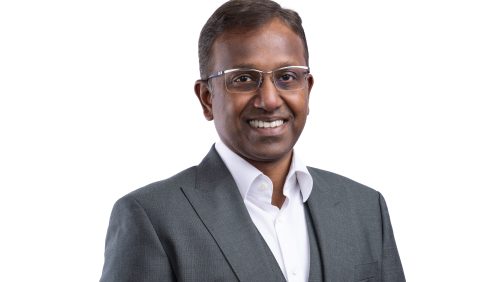
The Finance Frontier 2026: Amir Fardghassemi, CEO and Founder, Jingle Pay
Amir Fardghassemi, CEO and Founder of Jingle Pay, shares how trust, innovation, and resilient financial infrastructure are transforming cross-border payments and shaping the future of global fintech.

Entrepreneur Middle East
You're reading Entrepreneur Middle East, an international franchise of Entrepreneur Media.

Founded by Amir Fardghassemi, Jingle Pay was built on a simple belief: everyone deserves access to transparent, affordable financial services. The company began by tackling one of the world’s biggest challenges, cross-border money movement, ensuring that expatriates sending their hard-earned income home keep more of what they earn instead of losing it to excessive fees and hidden FX markups.
Under Amir’s leadership, Jingle Pay has emerged as one of the Middle East’s leading fintech success stories, building the infrastructure that powers global money movement through innovation, scale, and financial inclusion.
Today, the company is on track to process more than US$5 billion in annualised payment volume across 19 million annualised transactions, connecting consumers, businesses, and financial institutions across 150+ countries and supporting 99+ currencies.
Jingle Pay is proud to have helped remittance senders save more than US$58 million by making cross-border payments faster, more transparent, and more affordable across key corridors including Pakistan, India, the Philippines, and other markets throughout APAC and MENAP.
Its global payments ecosystem is powered by strategic partnerships with Mastercard, Western Union, MoneyGram, Network International, and BOTIM, while its growth is backed by leading investors and strategic partners including Plug and Play, 500 Global, MoneyGram, and Bank Alfalah.
Licensed by the Dubai Financial Services Authority (DFSA) and FINTRAC Canada, Jingle Pay continues to redefine the future of global money movement and embedded financial infrastructure.
“Innovation may capture attention, but trust is what earns permanence,” Amir Fardghassemi states. “In financial services, trust is not a feature; it is the foundation upon which everything else is built. Technology evolves quickly, but confidence is earned over time through consistency, governance, and execution.”
“At Jingle Pay, innovation is never pursued in isolation. Every advancement must strengthen resilience, regulatory integrity, and customer confidence,” Fardghassemi adds. “Sustainable businesses aren’t defined by how quickly they launch products; they’re defined by how responsibly they scale them.”
With more than 15 years of experience in fintech, Fardghassemi sees the next chapter of financial services happening beyond the applications consumers interact with and within the infrastructure powering them.
“The real transformation lies in creating intelligent, programmable financial infrastructure that enables value to move across borders as seamlessly as information moves today,” he explains. “Whether through modern settlement architecture, digital assets, or next-generation payment rails, I believe the next chapter of financial services will be built beneath the surface, not on it.”
Leading a company in an industry where technology, regulation, and customer expectations evolve simultaneously has also reshaped his approach to leadership. For Fardghassemi, effective leadership is not about having every answer but about creating clarity in uncertain environments.
“My role isn’t to have every answer. It’s to build an organisation capable of adapting faster than the environment around it,” he says. “That requires trust, accountability, and giving talented people the confidence to make decisions with ownership.”
While artificial intelligence is expected to transform execution across financial services, Fardghassemi maintains that leadership will remain deeply human.
“Leadership remains fundamentally human because it requires vision, ethics, empathy and the ability to make decisions where no historical data exists,” he says.
Culture, he adds, remains one of the few advantages that cannot be easily replicated. At Jingle Pay, he prioritizes people who continue to learn, challenge assumptions, and embrace change. In a rapidly evolving sector, he believes innovation depends not only on technology but on teams capable of adapting alongside it.
Market uncertainty has further reinforced the importance of resilience over rapid expansion. Rather than pursuing growth at any cost, Jingle Pay has focused on strengthening its infrastructure, institutional capabilities, and business diversification.
“The last few years reminded the industry that growth alone is not a strategy,” he says. “Periods of uncertainty force organisations to distinguish between momentum and resilience.”
“More importantly, it reinforced a principle we’ve always believed in sustainable value creation comes from discipline, not speed. Markets change. Strong foundations endure,” Fardghassemi stresses.
Looking ahead, Fardghassemi sees a future where financial services become increasingly seamless and embedded into everyday experiences. More importantly, he hopes Jingle Pay contributes to a more connected global financial system, one where access is shaped by “opportunity rather than geography.”
RELATED: The Finance Frontier 2026: Abdulla Almoayed, Founder and CEO, Tarabut
Founded by Amir Fardghassemi, Jingle Pay was built on a simple belief: everyone deserves access to transparent, affordable financial services. The company began by tackling one of the world’s biggest challenges, cross-border money movement, ensuring that expatriates sending their hard-earned income home keep more of what they earn instead of losing it to excessive fees and hidden FX markups.
Under Amir’s leadership, Jingle Pay has emerged as one of the Middle East’s leading fintech success stories, building the infrastructure that powers global money movement through innovation, scale, and financial inclusion.
Today, the company is on track to process more than US$5 billion in annualised payment volume across 19 million annualised transactions, connecting consumers, businesses, and financial institutions across 150+ countries and supporting 99+ currencies.

Entrepreneur Middle East Staff
Entrepreneur Staff