Bring Home The Prize: How To Win A Startup Pitch Competition
Pitch competitions are an integral part of this discovery mechanism, where founders are able to gain increased visibility, mentorship, and funding–here’s a few tips.

Shutterstock
Opinions expressed by Entrepreneur contributors are their own.
You're reading Entrepreneur Middle East, an international franchise of Entrepreneur Media.
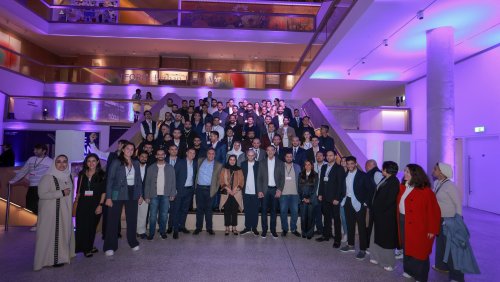
Thanks to robust government support that has created an incredible infrastructure for startups to thrive, the startup ecosystem in the MENA region, while still in its nascent stage, has already produced a couple of unicorns. Embedded in this ecosystem is a network of incubators, accelerators, and investors that are tasked with the discovery of exciting and innovative ventures. Pitch competitions are an integral part of this discovery mechanism, where founders are able to gain increased visibility, mentorship, and funding. In October, the GITEX Future Stars Supernova Challenge 2019 brought together some talented founders, and I had the opportunity to interact with them as a judge. The winner brought home a US$100,000 cash prize, and most importantly, high credibility and validation.
So, what did the winner do right that the rest didn’t? How did they tip the scales in their favor? Here are a few things I’ve picked up in my time as a judge and investor in the region. First things first, it’s important to know how to organize your content. The best way to make an impact is to follow the time-tested KISS principle: Keep It Short and Simple. Is it a cliché? Yes. Should you eschew it? No. All the winners were able to show the entire picture of their startup in a snap, which allowed the judges to make a critical and fair assessment. Applying this rule, the following information is a must to impress your judges:
1/ A CRASH COURSE ON YOUR STARTUP
Bearing in mind that this might be the first time we’re meeting each other, introduce yourself and your startup in a way that will keep me curious. To keep me or any other judge hooked, your introduction should be crisp and creative; comprehensive, yet concise. Tell me a story, but fight the urge to squeeze your 72-page research into a 7-10 slide presentation. You do have a time limit, so pack in only the essentials. To do that, make sure to answer the following basic questions in layman’s terms because you need the audience, aka your potential users, to understand it, too:
> What does your company actually do, and who is it for?
> What is your master plan to address a specific pain point?
> How will it generate revenue?
> What is your go-to market strategy?
> What are your plans for scaling?
2/ A WELL-DEFINED USP
Take two e-commerce stores that can sell the same exact mobile phone, but one can deliver within half an hour, whereas the other cannot. Who do you think will get the customer?
Your USP is your competitive advantage; it is what makes you irreplaceable, and will serve you not only during the competition, but also when you go to market. If you don’t have an answer to what makes you so special, then it’s about time to go back to the drawing board, because your startup is not going to take off without one. It is a competition, after all. Another thing startups often just leave to me and the rest of the judges is to read between the lines of what they say- that’s a surefire way to get a “Thank you, better luck next time” as a response. If you already know what you’re doing differently, then put the spotlight on that.
3/ A SOLID SET OF UPDATED STATISTICS
When I’m part of a judging panel and get no response to my questions on how much is your burn rate, or your gross margin year-to-date, it’s going to go downhill from there. People forget that at the end of the day, entrepreneurship is a game of numbers. There is no better way to determine the potential of a startup to dominate the market than through its vital statistics. You need to know them by heart, so be ready to answer questions about your GMV, CAC, CLV, etc. Flaunt the traction you’ve gained so far, because it is an indicator of marketability. You also need to clearly state how much you’ve raised, how much you’re looking to raise in the next round, and what you’re raising more funds for.
BONUS: LOADS OF CONFIDENCE
I noticed that first-placers come on stage like they have done it a hundred times. Coming to the arena prepared greatly boosted their self-assurance, giving them a certain ease when interacting with the panel despite the nitpicking, and allowing them to kick the charm a notch higher to get the crowd rooting for them. They had logical answers that were beautifully fleshed out, showing how they took their time to map out their responses in case the question comes up. As an investor, I would be inspired to work with a self-assured entrepreneur who inspires confidence.
To sum it all up, joining a pitch competition will give your startup its much-needed brand exposure, as well as a chance to validate the strength of your concept. Winning entails thorough preparation, weeding out unnecessary information from your pitch, and sticking to the facts and figures. You need to clearly differentiate yourself and your venture, so take time to refine your most unique aspects. You can only get somewhere if you take that first step, so take your starter pack, and get yourself that championship belt.
Thanks to robust government support that has created an incredible infrastructure for startups to thrive, the startup ecosystem in the MENA region, while still in its nascent stage, has already produced a couple of unicorns. Embedded in this ecosystem is a network of incubators, accelerators, and investors that are tasked with the discovery of exciting and innovative ventures. Pitch competitions are an integral part of this discovery mechanism, where founders are able to gain increased visibility, mentorship, and funding. In October, the GITEX Future Stars Supernova Challenge 2019 brought together some talented founders, and I had the opportunity to interact with them as a judge. The winner brought home a US$100,000 cash prize, and most importantly, high credibility and validation.
So, what did the winner do right that the rest didn’t? How did they tip the scales in their favor? Here are a few things I’ve picked up in my time as a judge and investor in the region. First things first, it’s important to know how to organize your content. The best way to make an impact is to follow the time-tested KISS principle: Keep It Short and Simple. Is it a cliché? Yes. Should you eschew it? No. All the winners were able to show the entire picture of their startup in a snap, which allowed the judges to make a critical and fair assessment. Applying this rule, the following information is a must to impress your judges:
1/ A CRASH COURSE ON YOUR STARTUP

Arif Saiyad • Founder and CEO, ASA Ventures
Arif Saiyad is the founder and CEO of ASA Ventures, a stage- and sector-agnostic venture... Read more