Trendyol Gulf CEO Mohamad ElAnsari: From Winning The Gulf To Taking Gulf Brands Global
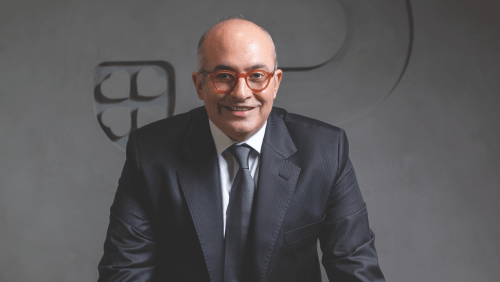
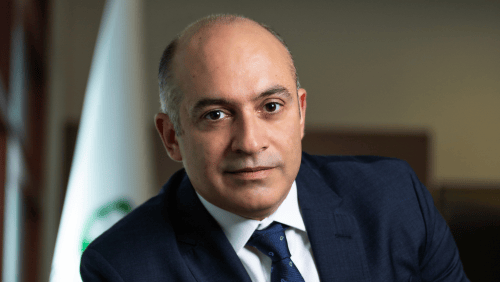
Trendyol Gulf CEO Mohamad ElAnsari is pursuing a two-part ambition: to make the e-commerce platform part of daily life across the Gulf, while enabling local sellers and brands to reach customers around the world.
You're reading Entrepreneur Middle East, an international franchise of Entrepreneur Media.
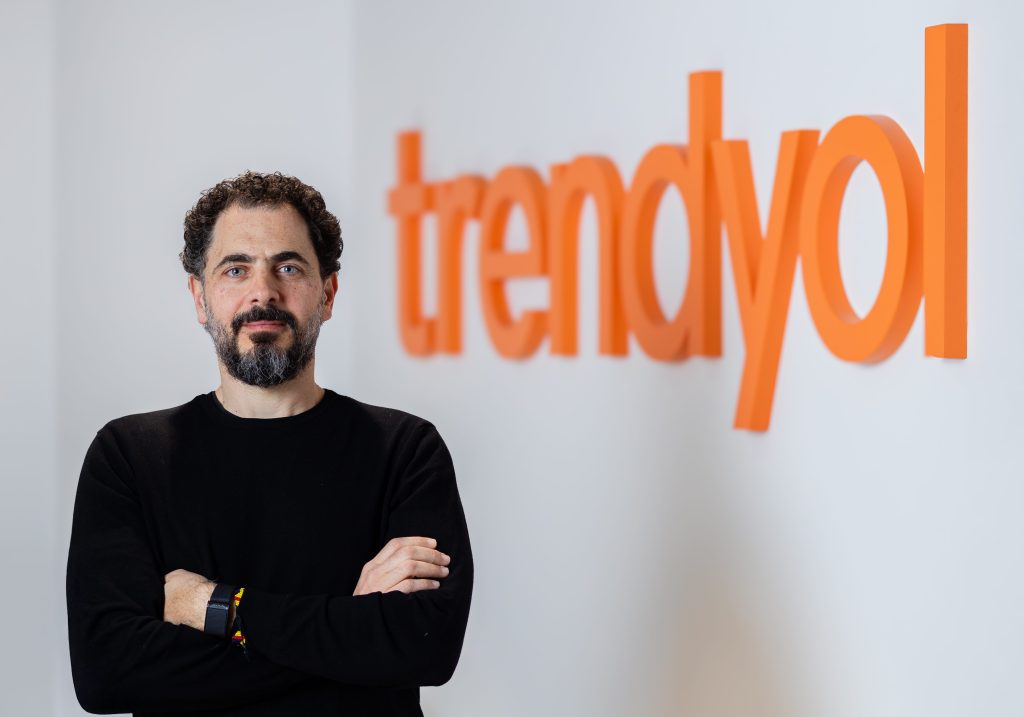
Mohamad ElAnsari has a simple measure of success for Trendyol in the Gulf: how often customers open the app. In less than three years, the platform has onboarded 15,500 regional sellers, from large retail groups to smaller SMEs, and built a customer base of over 4 million across the region. The next step, says the CEO of Trendyol Gulf, is making it as much a part of the daily routine as a trip to the local mall.
He has a substantial platform to build from. Founded in Istanbul in 2010, Trendyol is one of the world’s leading e-commerce platforms with a multicategory offering that includes its own private label brand, Trendyol Collection. It connects more than 250,000 Turkish sellers and global brands with over 40 million customers across dedicated local-language apps in Türkiye, Saudi Arabia, UAE, Qatar, Kuwait, Bahrain, Oman, Germany, Azerbaijan, Bulgaria, Poland, Czech Republic, Slovakia, Hungary, Romania and Greece.
Yet, as ambitious as that may sound, ElAnsari is aiming higher still: to help turn local brands into global ones. At the heart of that ambition is what he describes as “two-way commerce”, aiming not only to bring international products into Gulf markets, but also to give local merchants a platform through which they can reach customers around the world.
“Just as we import, we have to have the ability to also export,” ElAnsari explains. “Eventually, our marketplace should be the right vehicle or channel for local sellers to be able to not only sell to other cities or other countries in the Gulf, but eventually be able to sell to Romania or to Istanbul, or to whatever city they need.”
The two-fold ambition is increasingly significant given the speed at which Trendyol has built its Gulf marketplace. Within days of launching in Saudi Arabia and the UAE in late 2023, the Trendyol app reached the top of KSA’s commerce app rankings. By November that year, the platform had expanded across all six GCC markets, and by early 2025, its Gulf customer base had surpassed four million.
ElAnsari comes across as the kind of friendly, articulate CEO who brings both intellect and genuine passion to the pursuit of results. His track record reveals a distinctly results-focused mindset: prior to joining Trendyol, he held leadership positions at Cenomi, Careem and Strategy&. At Trendyol, that drive is also fueled by a strong emotional investment in what he is building in the Gulf.
“We have the right to win because, inherently, we don’t compete with our sellers. We empower them. We provide incremental business,” he says. “We do have our own brand, but it’s a small part of the business. That was part of our DNA, but today, 95% of our business comes from sellers. So sellers don’t see us as a competitor; they see us as an incremental channel.”
One example of how Trendyol is empowering local sellers is its August 2026 partnership with Dubai Chambers of Commerce, designed to help Dubai-based SMEs join and grow on the platform. Under the initiative, Trendyol doubled its standard introductory commission discount from 20% to 40% for eligible SMEs referred by Dubai Chambers of Commerce and extended it from two to three months. Participating businesses also receive homepage and campaign visibility, free advertising credit, priority account management and onboarding support, alongside training through Trendyol Academy covering product listings, stock management, pricing, advertising and performance analysis. In Saudi Arabia, Trendyol introduced similar incentives and launched a dedicated “Local Sellers” page, making it easier for customers to discover and shop from Saudi businesses, while helping local sellers increase their visibility and reach. “What we do is bring traffic to the platform, much like a mall attracts footfall,” ElAnsari says. “But in a marketplace with millions of products, sellers also need the right tools to stand out. That’s where we come in, providing them with insights, best practices, marketing support and the tools they need to grow their businesses.
Before going further into how Trendyol is helping individual sellers stand out, ElAnsari points to a more fundamental advantage: the sheer scale of a marketplace and the discovery it enables. “One of our success stories is a large retailer with a big portfolio of brands, and the surprise, for them and for us, was that in no time, they started selling more products on our platform than on their own website,” he says. “On a marketplace, you automatically have more people coming simply to browse and discover, often with no intention of buying anything until something inspires them. “And then you have small SMEs, some even operating from home and designing abayas, that might initially be selling only a few thousand riyals’ worth of products. Once they join our platform, their sales can go through the roof. Suddenly, they’re talking about hundreds of thousands of riyals every single month.”
With the scale of the opportunity established, ElAnsari returns to the question of how individual sellers can actually stand out within such a vast marketplace. “My advice is to focus on content. Content is the starting point,” he says. “The images, the product descriptions, the composition, whether something is cotton or wool. These may seem like small details, but they matter more than ever, especially with AI and advanced technology.
For example, we now have an AI-powered shopping assistant. We’re reaching a stage where consumers don’t necessarily want to browse anymore; they want to state their intent: ‘I’m looking for an AED300 outfit for a casual evening.’ That’s it. But in the background, if there isn’t proper content, the AI won’t understand what to recommend. If the customer says, ‘I want an AED300 shirt from a specific brand,’ then it becomes much easier. But if they don’t specify the brand, you need to make sure that, as a seller, you have great content and item descriptions so your products can be discovered.”
Trendyol itself is equally specific and detailed in its own approach. ElAnsari explains that, as the platform operates across 36 countries worldwide, its strategy is tailored not only to individual markets, but sometimes even to individual cities. “For example, here in the UAE, consumers tend to be more drawn to international brands, whereas in Saudi Arabia, there is a stronger preference for local sellers and local brands,” he says.
“Because of that preference for local brands, we created, within this massive digital mall, a mini digital mall dedicated to Saudi sellers. And people love it. You click on it and immediately discover Saudi brands of every size, from the biggest names to medium-sized businesses and small brands.”
Trendyol’s Ramadan campaigns reflect its commitment to understanding and catering to Gulf consumers. From modest fashion collections tailored to local preferences to collaborations with regional talent, the platform has continued to strengthen its local relevance. Most recently, Trendyol partnered with Saudi designer Nasiba Hafiz on a limited-edition collection made available across the Gulf and its international markets. “This reflects our mission to enable commerce wherever we operate, creating opportunities for local talent to grow and reach new markets,” says ElAnsari.
He adds, “When we first launched, we operated as an international platform, with all our products coming from Türkiye. Fast-forward nearly three years, and today, local sellers account for almost two-thirds of our sales. We’ve evolved into a truly local, and in some cases even hyper-local, marketplace.”
And that is how, city by city, neighbourhood by neighbourhood, Trendyol intends to become part of daily life across the region.
Mohamad ElAnsari has a simple measure of success for Trendyol in the Gulf: how often customers open the app. In less than three years, the platform has onboarded 15,500 regional sellers, from large retail groups to smaller SMEs, and built a customer base of over 4 million across the region. The next step, says the CEO of Trendyol Gulf, is making it as much a part of the daily routine as a trip to the local mall.
He has a substantial platform to build from. Founded in Istanbul in 2010, Trendyol is one of the world’s leading e-commerce platforms with a multicategory offering that includes its own private label brand, Trendyol Collection. It connects more than 250,000 Turkish sellers and global brands with over 40 million customers across dedicated local-language apps in Türkiye, Saudi Arabia, UAE, Qatar, Kuwait, Bahrain, Oman, Germany, Azerbaijan, Bulgaria, Poland, Czech Republic, Slovakia, Hungary, Romania and Greece.
Yet, as ambitious as that may sound, ElAnsari is aiming higher still: to help turn local brands into global ones. At the heart of that ambition is what he describes as “two-way commerce”, aiming not only to bring international products into Gulf markets, but also to give local merchants a platform through which they can reach customers around the world.

Tamara Pupic • Editor in Chief, Entrepreneur Middle East
Entrepreneur Staff
Tamara Pupic is the Editor in Chief of Entrepreneur Middle East.