H.E. Sheikh Fahim Al Qasimi on How Sharjah Is Building International Partnerships Beyond Traditional Diplomacy
“Today, our role extends across education, scientific research, innovation, culture and economic development because these areas increasingly intersect in the way international partnerships are formed and sustained.”
You're reading Entrepreneur Middle East, an international franchise of Entrepreneur Media.
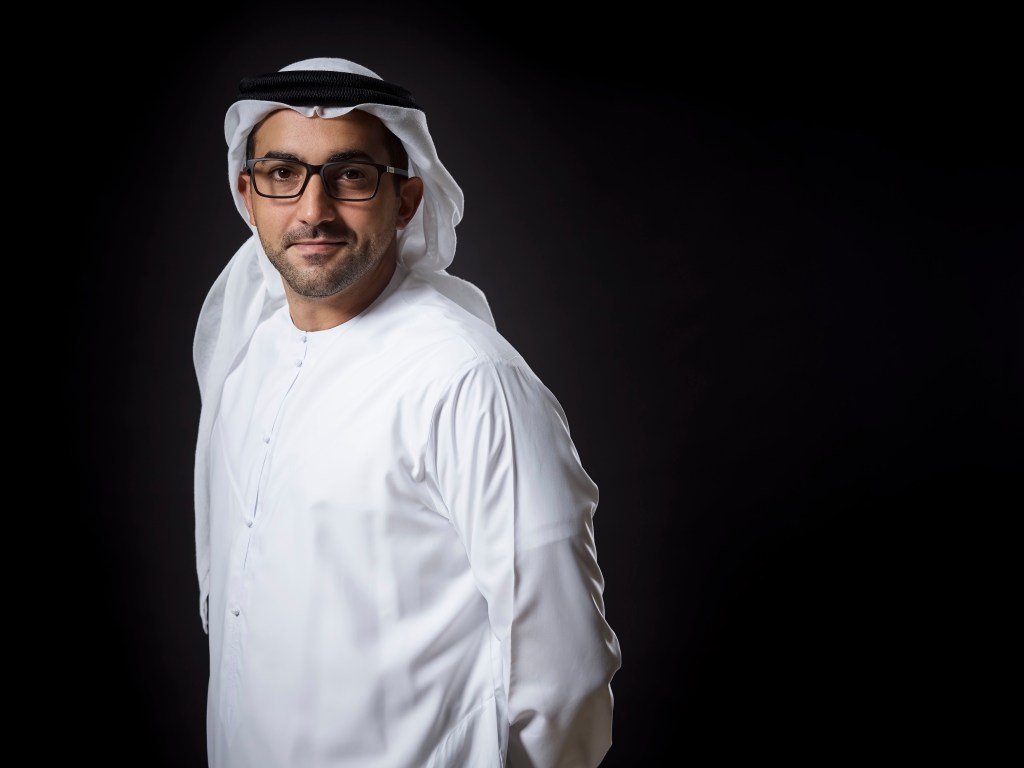
In a conversation with Entrepreneur Middle East, H.E. Sheikh Fahim Al Qasimi, Chairman of the Department of Government Relations (DGR) and the Higher Committee for Economic Integration in the Emirate of Sharjah, explains why institutional partnerships are central to Sharjah’s international engagement and how cities are taking on a greater role in shaping global cooperation.
In this Q&A, H.E. Al Qasimi shares how relationships spanning academia, culture, government and business can open the door to wider opportunities in research, innovation and investment.
Q1. International engagement today looks very different from how it did a decade ago. How do you see the role of cities evolving within today’s diplomatic landscape?
International engagement is no longer the exclusive domain of national governments. Across the world, cities are becoming increasingly influential in shaping relationships that support economic development, knowledge exchange, innovation, education and culture. As global challenges become more interconnected, cooperation is being driven not only through traditional diplomatic channels but also through partnerships between universities, research institutions, cultural organizations, businesses and local governments.
This is redefining what international engagement looks like. The most globally connected cities are no longer simply those with strong trade links or political influence. Increasingly, they are the places capable of bringing together diverse institutions, facilitating collaboration across sectors and creating environments where ideas, expertise and opportunity can move freely across borders.
Sharjah recognized this evolution long before it became a global trend. Under the leadership of His Highness Sheikh Dr Sultan bin Mohammed Al Qasimi, Supreme Council Member and Ruler of Sharjah, the emirate has invested consistently in culture, education, heritage and knowledge as long-term foundations for development. Those investments have created an ecosystem that naturally attracts international partners seeking meaningful collaboration across a broad range of fields.
Established in 2014, the Department of Government Relations was created to coordinate Sharjah’s international engagement and strengthen cooperation with governments, international organizations and institutions around the world. Today, our role extends across education, scientific research, innovation, culture and economic development because these areas increasingly intersect in the way international partnerships are formed and sustained.
Q2. What distinguishes DGR’s approach to international engagement from more traditional models of diplomacy?
Modern international engagement cannot be viewed through a single lens. Relationships today are multidimensional. A partnership that begins through academia may later support innovation and investment. A cultural exchange can create opportunities for scientific research. Government dialogue often develops into broader networks connecting institutions, businesses and communities.
That is the philosophy underpinning our work at DGR. Rather than focusing solely on individual meetings or agreements, we seek to build relationships that continue creating value across multiple sectors over time. The objective is not simply to facilitate engagement, but to establish networks capable of generating long-term collaboration.
This approach reflects wider developments taking place internationally. Research by the OECD has highlighted the growing importance of city-to-city partnerships, knowledge exchange and institutional collaboration in advancing sustainable development, strengthening innovation capacity and addressing shared policy challenges. Cities are increasingly becoming platforms for international cooperation, and Sharjah’s model aligns closely with that evolution.
One of Sharjah’s greatest strengths is the breadth of its institutional ecosystem. Our universities, cultural organizations, research centers, government entities and economic institutions increasingly operate as part of an interconnected international network. Rather than working in isolation, these organizations reinforce one another, creating opportunities for collaboration that extend well beyond traditional diplomatic engagement. One successful partnership often becomes the foundation for several others, allowing relationships to deepen organically over time.
Q3. East Asia has become an increasingly important region for Sharjah. What does it demonstrate about your approach to building international partnerships?
East Asia illustrates very clearly how long-term engagement can generate opportunities that continue expanding over time.
Rather than treating economic cooperation separately from educational, cultural or institutional engagement, Sharjah has consistently pursued an integrated approach that brings these dimensions together. The result is a network of relationships that extends across governments, universities, businesses and cultural organizations, allowing cooperation to evolve naturally as new opportunities emerge.
China provides a compelling example. Bilateral trade between Sharjah and China reached AED 6.3 billion in 2025, while 851 Chinese companies now operate in the emirate. Yet the relationship extends well beyond economic activity.
Academic partnerships have strengthened educational links between institutions in both countries. Cultural exchanges have encouraged dialogue and mutual understanding, while sustained government engagement has facilitated cooperation across multiple sectors. Together, these relationships have created a framework that continues to generate new opportunities.
This multi-layered approach was reflected in June 2026 when a high-level Sharjah delegation visited Guangdong Province to explore cooperation in advanced manufacturing, artificial intelligence, digital technologies and sustainable industries. The visit demonstrated how relationships that may begin through cultural, educational or governmental channels can evolve into broader partnerships supporting economic growth, innovation and future-focused industries.
South Korea offers another example of how sustained engagement can produce long-term outcomes. Bilateral relations between Sharjah and South Korea encompass 48 memoranda of understanding across various sectors, while broader UAE–South Korea relations continue to create opportunities for cooperation in technology, education and industry. It illustrates how consistent institutional engagement creates a platform for collaboration that continues to expand over time.
Q4. A defining feature of DGR’s work is its emphasis on connecting institutions rather than simply governments. Why is that distinction important?
Because institutions provide continuity.
Governments naturally evolve over time, but universities, museums, research centers, cultural organizations and international bodies often maintain relationships that span decades. When these institutions establish meaningful partnerships, they create channels for dialogue, knowledge exchange and collaboration that remain active regardless of political or economic cycles.
This is particularly evident in higher education. Sharjah’s universities have established partnerships with academic institutions around the world, supporting joint research initiatives, student mobility programs and knowledge exchange. These relationships strengthen Sharjah’s position within global academic networks while contributing directly to the emirate’s long-term development objectives. They also invest in human capital by creating opportunities for researchers, educators and students to collaborate across disciplines and borders.
The same principle applies across culture and heritage. International partnerships involving museums, cultural organizations and heritage institutions have helped position Sharjah as a recognized center for cultural dialogue and preservation. These collaborations support professional exchange, capacity building and the sharing of expertise while reinforcing institutional relationships that continue generating value long after individual projects have concluded.
When institutions are connected in this way, international engagement becomes broader, more resilient and more sustainable because cooperation is embedded across society rather than depending solely on government-to-government interaction.
Q5. Looking ahead, what role do you believe cities such as Sharjah will play in shaping the future of international cooperation?
I believe cities will become increasingly important conveners within the international system.
The cities that succeed in the coming decades will not necessarily be those with the largest economies or populations. They will be those capable of bringing together governments, universities, businesses, cultural institutions and innovation ecosystems around shared objectives. Their influence will increasingly be measured by the strength of the networks they cultivate and their ability to facilitate meaningful collaboration across borders.
Competitive advantage will increasingly depend on a city’s ability to connect people, institutions and ideas. Economic assets and geographic location will always matter, but they are no longer sufficient on their own. The cities that will thrive are those capable of creating environments where education, research, culture, innovation and economic development reinforce one another.
Sharjah has spent decades building precisely this type of ecosystem. Through the Department of Government Relations, we continue to strengthen relationships that connect governments, universities, cultural institutions and innovation ecosystems across multiple regions of the world, creating opportunities that support education, research, innovation, culture and sustainable economic development.
International cooperation is becoming increasingly knowledge-driven, collaborative and interconnected. Cities have an important role to play within that evolution, and Sharjah will continue contributing by creating platforms for dialogue, facilitating partnerships across sectors and expanding the international networks that enable shared progress.
RELATED: Sharjah Attracts AED7.7 Billion in Foreign Investment in 2025; Job Creation Rises
In a conversation with Entrepreneur Middle East, H.E. Sheikh Fahim Al Qasimi, Chairman of the Department of Government Relations (DGR) and the Higher Committee for Economic Integration in the Emirate of Sharjah, explains why institutional partnerships are central to Sharjah’s international engagement and how cities are taking on a greater role in shaping global cooperation.
In this Q&A, H.E. Al Qasimi shares how relationships spanning academia, culture, government and business can open the door to wider opportunities in research, innovation and investment.
Q1. International engagement today looks very different from how it did a decade ago. How do you see the role of cities evolving within today’s diplomatic landscape?
International engagement is no longer the exclusive domain of national governments. Across the world, cities are becoming increasingly influential in shaping relationships that support economic development, knowledge exchange, innovation, education and culture. As global challenges become more interconnected, cooperation is being driven not only through traditional diplomatic channels but also through partnerships between universities, research institutions, cultural organizations, businesses and local governments.

Entrepreneur Middle East Staff
Entrepreneur Staff