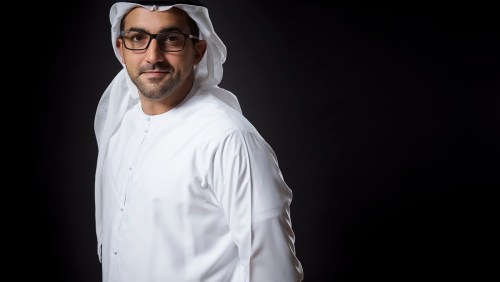
How Ohana Development Turned Attainable Luxury Into Abu Dhabi’s Fastest Sell-Out
Ohana Development CEO Husein Salem has become the master of branded residences. He explains why he believes true luxury is about belonging, not status symbols.
You're reading Entrepreneur Middle East, an international franchise of Entrepreneur Media.

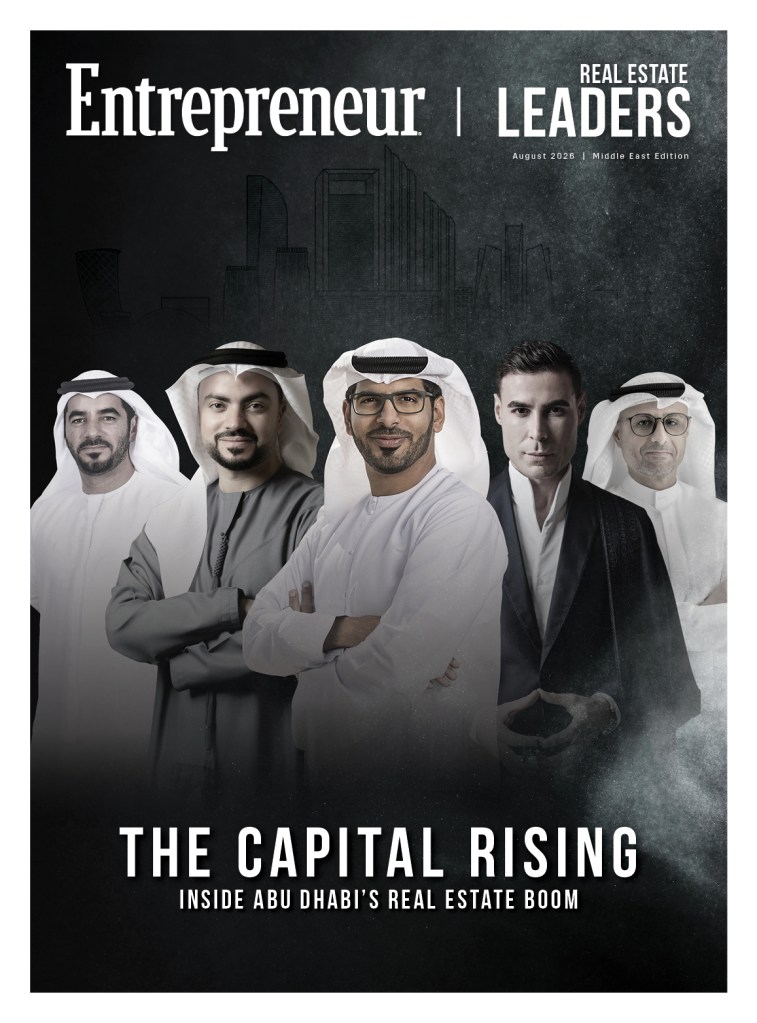
This article is part of Entrepreneur Middle East’s Real Estate Leaders Special Edition – August 2026.
There is a number that has come to define Ohana Development’s remarkable ascent, and it is worth pausing on. When the company launched Manchester City Yas Residences by Ohana — the football club’s first branded residential project in the world — it recorded AED 6 billion in sales within 72 hours. Not over a quarter, not over a launch season, but in three days. It was a new sales record for Abu Dhabi in March, and for a developer that has risen to prominence in a remarkably short space of time, it was proof of a thesis that its chief executive, Husein Salem, has been advancing since the company’s earliest days: that in the right market, with the right partners, design-led luxury can move at extraordinary speed.
Salem is careful, though, not to mistake the headline for the whole story. That AED 6 billion figure, he says, is less significant for its size than for what it signifies — “indicating how strongly Abu Dhabi is now positioned as an international destination for luxury living and how much confidence buyers place in well-planned, design-led communities.” It is a characteristic reframing. Across a wide-ranging conversation, Salem returns to the idea that numbers are the consequence of getting something more fundamental right, rather than the goal in themselves.
To understand what that something is, it helps to go back to the beginning. When Ohana Development was founded, the aim was not simply to add more homes to a fast-moving market. “The ambition was to create a different form of luxury, defined by design, location, and craftsmanship,” he says. From the outset, in other words, the company set out to compete on distinctiveness rather than volume, a positioning that has since hardened into strategy.
Underpinning that ambition is a conviction about where a developer’s real work begins. For Salem, the handover of keys is not the end of the relationship but the start of the one that matters. “We believed then, as we do now, that a developer’s true legacy lies in the relationship it builds with homeowners long after handover,” he says. “A home should carry emotional value, support the way people live, and remain meaningful for generations.” It is a notion that sounds almost sentimental, but it maps neatly onto the company’s commercial logic: homes that people love, and keep loving, hold their value and seed the demand for whatever the developer builds next.
That thinking is embedded, quite literally, in the company’s name. Ohana is the Hawaiian word for family, and Salem treats it less as branding than as an operating instruction. The philosophy of family and belonging, he explains, shapes “how we design, engage with our clients, and think about the communities we create.” The point, he adds, is “creating living places where residents feel a sense of belonging which resonate with families, while being valued for generations.” It is a lens that quietly reframes every project the company undertakes — not as a collection of units to be sold, but as a community to be joined.
If the philosophy is constant, the timing has been fortunate — though Salem would argue it is anything but accidental. Ohana has grown up alongside an Abu Dhabi luxury market experiencing what can only be described as a surge, with the emirate drawing global capital and international buyers at a pace that would have seemed improbable only a few years ago. Real estate transactions across the emirate reached AED 142 billion in 2025, up nearly half on the previous year, and the momentum has carried into 2026. For Salem, this is not a bubble but the predictable outcome of a deliberate national model. Abu Dhabi’s growth, he says, “has been built on strong fundamentals, with the emirate consistently ranked among the safest and most liveable cities in the world, supported by a visionary wise leadership, clear government regulations, long-term planning, and an economy that continues to diversify. This creates confidence for residents and investors alike.”

That confidence, he argues, is compounding. As Abu Dhabi launches world-class developments, cultural landmarks and infrastructure, and as a growing number of international businesses and skilled professionals relocate to the emirate, the market is increasingly attracting buyers who want to put down roots rather than simply park capital. Ohana’s self-appointed role is to serve that ambition at the top end. “Our role is to contribute to this evolution with communities that reflect international standards while remaining rooted in Abu Dhabi,” Salem says — and the vehicle for that contribution has been a string of partnerships with some of the most recognisable names in global luxury.
Those partnerships are the most visible expression of Ohana’s strategy, and also the most easily misunderstood. In a market where a famous logo can be bolted onto almost anything, Salem is insistent that a brand name is a starting point, not a shortcut. “We choose brands because they share our values and genuinely enhance the living experience we want to create,” he says. Each collaboration, in his telling, has to bring something specific to the resident’s experience. “ELIE SAAB reflects timeless elegance and refined design; Jacob & Co. is known for bold creativity and craftsmanship; while Manchester City represents excellence, well-being, discipline and a strong sense of community. These qualities are reflected throughout the developments, from the architecture and interiors to the amenities and overall lifestyle.”
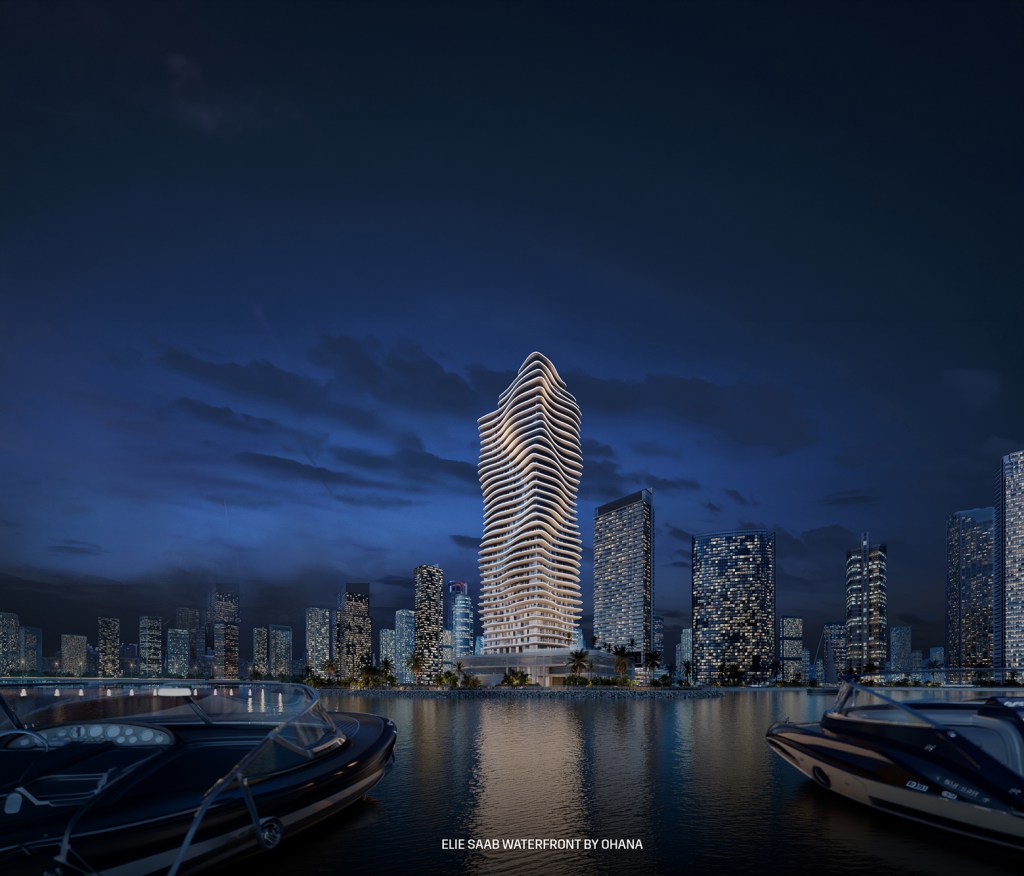
The first of those names to take physical form was ELIE SAAB Waterfront by Ohana, on Al Reem Island — a single soaring tower, which was the first branded residence in Abu Dhabi. Here the Lebanese couturier’s aesthetic of understated glamour runs from the lobby to the penthouses, an attempt to translate the discipline of haute couture into the language of interiors. It is, in miniature, the whole Ohana proposition: a globally resonant name, a design-led product, and a price ladder that stretches from the merely aspirational to the genuinely rarefied.
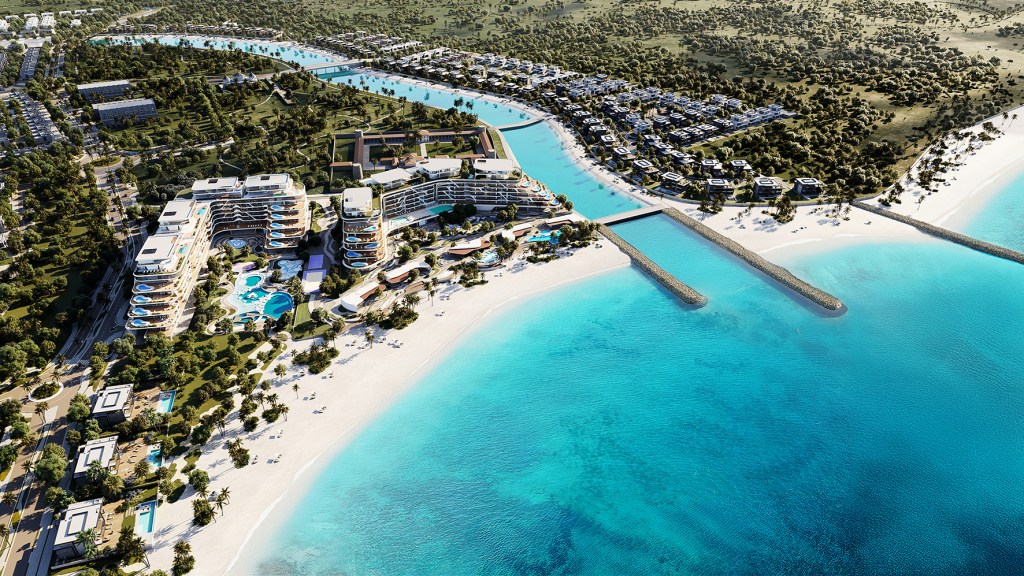
The partnership with Jacob & Co. pushes the concept further still. Jacob & Co. Beachfront Living by Ohana, a coastal development valued at AED 4.7 billion, is the first project of its kind to marry high-end beachfront living with the design language of fine watchmaking and jewellery. From the Jacob & Co. Social Club to duplex sky mansions with panoramic views, the development embodies the brands’ shared commitment to craftsmanship, exclusivity and refined living. For Salem, the collaboration was intuitive rather than opportunistic. “The partnership with Jacob & Co. was a natural fit because our approach to craftsmanship and attention to detail complements its exceptional timepieces admired around the world,” he says. The logic is that the obsessiveness a watchmaker brings to a movement and the care a developer brings to a home are, at some level, the same instinct expressed in different materials.
It is tempting to see all this as evidence that branded residences are simply the flavour of the moment. Salem believes they are more than that — but only under conditions. Asked whether lifestyle-driven, brand-led developments are the future of luxury real estate, his answer is an emphatic but qualified yes. “This will continue to play a bigger role in the real estate market, just as long as the partnership is authentic and adds real value,” he says. “A brand name alone is not enough.” What buyers are actually reaching for, in his analysis, is something no logo can supply on its own. “Today’s buyers want a sense of belonging and a home that reflects their aspirations, which is why well-being is the new luxury.” It is a striking formulation from a developer operating at the most expensive end of the market: that the ultimate premium is not only reflected in the material we use, but the feeling of being well, and being at home.
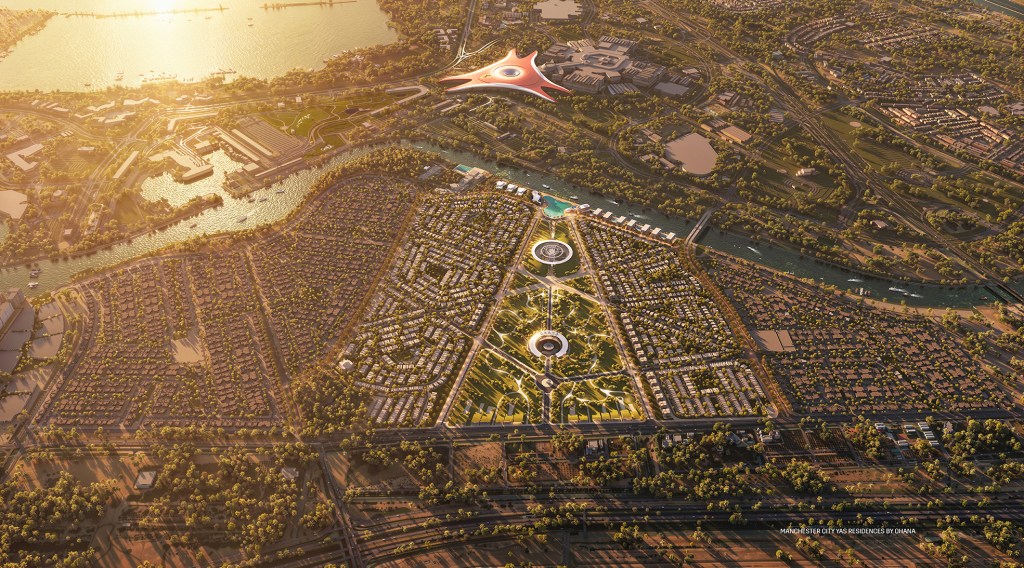
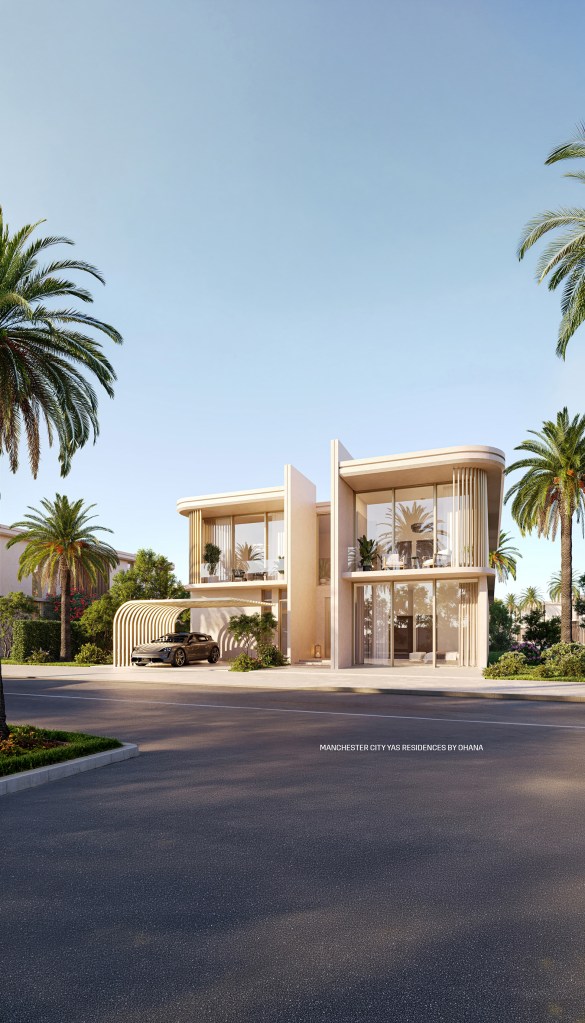
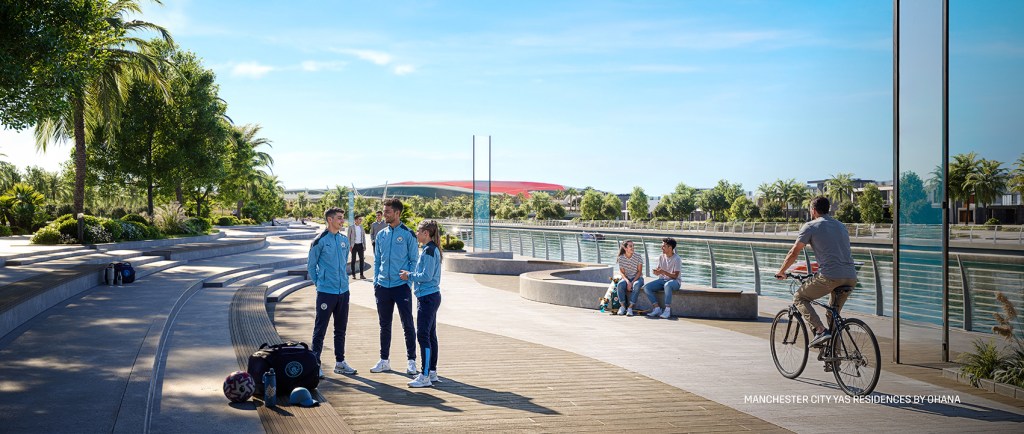
Nowhere is the strategy’s ambition — or its stakes — clearer than in the Manchester City project. Launched in early 2026 with a value of around USD 4.1 billion, Manchester City Yas Residences by Ohana sprawls across 1.67 million square metres along the Yas Canal, close to Ferrari World and SeaWorld, and is planned to hold more than 2,000 homes ranging from apartments to waterfront penthouses and clusters of villas. More than half the masterplan is given over to landscaped gardens and green space, and the development folds in a Manchester City Training Academy and football pitches, crystal lagoon, canal sports lounge, canal promenade for retail and dining. That the club chose Abu Dhabi for its first branded homes anywhere is not something Salem takes lightly. “Manchester City Yas Residences by Ohana is the club’s first branded residential project in the world, and that carries a responsibility,” he says.
The collaboration, he is quick to point out, grew from soil that was already tilled. Manchester City has had a presence in the emirate for years through its football schools, youth programmes and community work, which made a residential partnership feel less like a leap than a logical next step. But the deal also carries a larger significance for Salem, and for the wider story of Abu Dhabi’s real estate sector. It demonstrates, he says, that “a UAE-based developer can deliver projects of international relevance while remaining deeply rooted in Abu Dhabi’s vision, identity, and long-term growth.” For a homegrown company partnering with one of the most valuable brands in world sport, it is both a point of pride and a statement of arrival — evidence that the flow of prestige need not run only from West to East. The market’s response, that AED 6 billion in 72 hours, split roughly a third to Emirati buyers and two-thirds to international ones, suggested the confidence was widely shared.
RELATED: Bayut Analysis Shows Dubai Property Values Have Nearly Doubled in Key Communities Since 2021
Beneath the prestigious names and record launches, however, Salem is keen to keep the company anchored to its founding idea: that this is a business about people and places, not badges and transactions. It is why he describes Ohana’s model as one of “attainable luxury,” reached through “exceptional design, thoughtful planning, and refined living experiences that are accessible to buyers and investors without compromising on quality” — a phrase that does real work, positioning the company slightly apart from pure ultra-prime rivals and widening the pool of people who might one day call an Ohana address home.
Ask him how he would like all of it to be remembered, and the answer arrives without a flicker of interest in square footage or sales velocity. “Buildings can always be replaced, but creating places where people genuinely enjoy living, raising families, and building memories is much more meaningful,” he says. His hope is that Ohana Development is remembered for creating “timeless communities,” and that his own contribution is measured in something more durable than a project count. “Success is not measured by the number of projects you complete, but by the positive impact those projects continue to have years later,” he says. “If people still value our communities decades from now, then I believe we will have made a lasting impact on the sector.”
It is a notably patient measure of success for a company that has just proved it can sell six billion dirhams of real estate in three days. But that, perhaps, is the paradox at the centre of Ohana’s rise. In a market moving as fast as Abu Dhabi’s, he is quietly building for the long stay.
RELATED: Abu Dhabi Enters World’s Top 50 Startup Ecosystems as Value Surges to US$73.4 Billion
This article is part of Entrepreneur Middle East’s Real Estate Leaders Special Edition – August 2026.
There is a number that has come to define Ohana Development’s remarkable ascent, and it is worth pausing on. When the company launched Manchester City Yas Residences by Ohana — the football club’s first branded residential project in the world — it recorded AED 6 billion in sales within 72 hours. Not over a quarter, not over a launch season, but in three days. It was a new sales record for Abu Dhabi in March, and for a developer that has risen to prominence in a remarkably short space of time, it was proof of a thesis that its chief executive, Husein Salem, has been advancing since the company’s earliest days: that in the right market, with the right partners, design-led luxury can move at extraordinary speed.
Salem is careful, though, not to mistake the headline for the whole story. That AED 6 billion figure, he says, is less significant for its size than for what it signifies — “indicating how strongly Abu Dhabi is now positioned as an international destination for luxury living and how much confidence buyers place in well-planned, design-led communities.” It is a characteristic reframing. Across a wide-ranging conversation, Salem returns to the idea that numbers are the consequence of getting something more fundamental right, rather than the goal in themselves.

Entrepreneur Middle East Staff
Entrepreneur Staff