UAE Government and World Economic Forum Partner Up to Prioritize Human-Centered Innovation
The newly launched platform aims to design human-centered legislation in an era of rapid technological and digital advancements.
WAM
You're reading Entrepreneur Middle East, an international franchise of Entrepreneur Media.
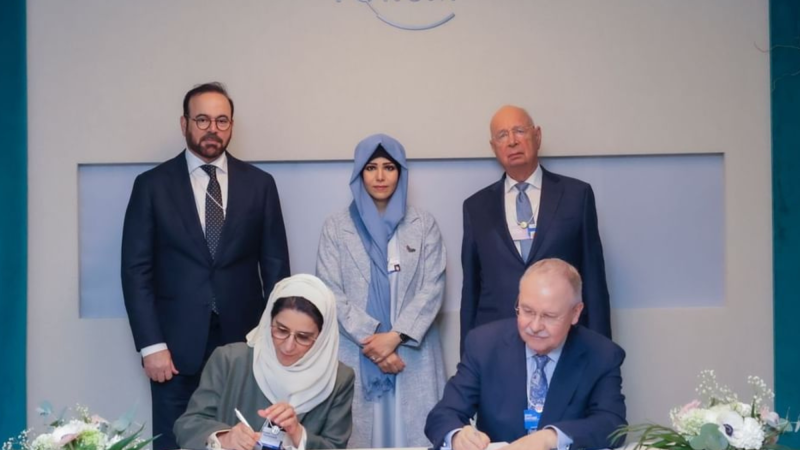
The Government of the United Arab Emirates and the World Economic Forum have announced the signing of a Memorandum of Understanding to establish and launch the Global Regulatory Innovation Platform (GRIP). The agreement was announced during the ongoing Annual Meeting of the World Economic Forum at Davos, and took place in the presence of H.H. Sheikha Latifa bint Mohammed bin Rashid Al Maktoum, Chairperson of Dubai Culture and Arts Authority,
The newly launched platform aims to understand, evaluate, and design human-centered legislation that serves communities in an era of rapid technological and digital advancements. It will provide a supportive environment for regulatory innovation, equipping stakeholders with cutting-edge tools and methodologies to assess the readiness and effectiveness of legislative frameworks. Additionally, GRIP seeks to promote international collaboration on flexible governance models to address future challenges and opportunities.
The signing ceremony was attended by Mohammed bin Abdullah Al Gergawi, Minister of Cabinet Affairs, and Professor Klaus Schwab, Founder and Executive Chairman of the World Economic Forum. The agreement was signed on behalf of the UAE by Maryam bint Ahmed Al Hammadi, Minister of State and Secretary-General of the Cabinet, and on behalf of the World Economic Forum by Alois Zwinggi, Managing Director of the Forum.
“The partnership with the World Economic Forum to establish and launch the Global Regulatory Innovation Platform embodies the vision and directives of President His Highness Sheikh Mohamed bin Zayed Al Nahyan, and His Highness Sheikh Mohammed bin Rashid Al Maktoum, Vice President, Prime Minister, and Ruler of Dubai,” Maryam bint Ahmed Al Hammadi stated. “This initiative reinforces the UAE’s role as a leading regional and global hub for international cooperation and supports global efforts to achieve comprehensive and sustainable development, fostering stability, prosperity, and well-being for all communities.”
“The platform aligns with the UAE’s forward-looking approach to fostering innovation across all sectors, particularly in legislative frameworks,” Al Hammadi added. “Over recent years, this commitment has resulted in the UAE achieving an unprecedented milestone by modernizing over 80% of its national legislation, reflecting its adaptability and progressiveness.”
She emphasized the key objectives of the collaboration with the World Economic Forum, which include developing and launching the Future-Readiness Index for Legislation, publishing the Global Guide for Regulatory Innovation, building an international network of experts, policymakers, and legislators, enhancing the capacity of legislative professionals, and establishing a global knowledge platform for legislative innovation. The initiative will also organize dialogues on regulatory innovation and host the Global Legislative Forum. “The launch of GRIP enhances the UAE’s position as a global hub for international organizations, businesses, and institutions seeking a supportive and flexible regulatory environment,” Al Hammadi noted. “It also positions the UAE as a knowledge center and a platform for sharing expertise in cutting-edge legislative developments.”
Related: Sheikha Latifa bint Mohammed Says Creative Economy Pivotal to Sustainable Growth
The Government of the United Arab Emirates and the World Economic Forum have announced the signing of a Memorandum of Understanding to establish and launch the Global Regulatory Innovation Platform (GRIP). The agreement was announced during the ongoing Annual Meeting of the World Economic Forum at Davos, and took place in the presence of H.H. Sheikha Latifa bint Mohammed bin Rashid Al Maktoum, Chairperson of Dubai Culture and Arts Authority,
The newly launched platform aims to understand, evaluate, and design human-centered legislation that serves communities in an era of rapid technological and digital advancements. It will provide a supportive environment for regulatory innovation, equipping stakeholders with cutting-edge tools and methodologies to assess the readiness and effectiveness of legislative frameworks. Additionally, GRIP seeks to promote international collaboration on flexible governance models to address future challenges and opportunities.
The signing ceremony was attended by Mohammed bin Abdullah Al Gergawi, Minister of Cabinet Affairs, and Professor Klaus Schwab, Founder and Executive Chairman of the World Economic Forum. The agreement was signed on behalf of the UAE by Maryam bint Ahmed Al Hammadi, Minister of State and Secretary-General of the Cabinet, and on behalf of the World Economic Forum by Alois Zwinggi, Managing Director of the Forum.

Entrepreneur Middle East Staff
Entrepreneur Staff