The New Suez Canal: Egypt Splashes Cash At A Time Of Economic Difficulty And Security Concerns
Opinions expressed by Entrepreneur contributors are their own.
You're reading Entrepreneur Middle East, an international franchise of Entrepreneur Media.
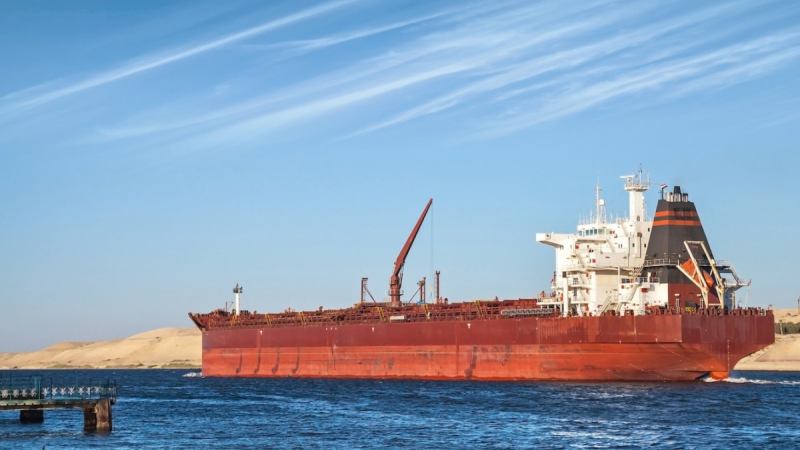
Egypt has been experiencing a plethora of economic problems, and the many regime changes and recent security concerns with the Islamic State has only been adding fuel to the fire. That being said, August 6 marked the inauguration of the Suez Canal- or rather, the new Suez Canal. In what seems like a bid to win back the optimism of investors and those interested in doing business with Egypt, the expansion project of the Suez Canal was sped up to be completed sooner that was originally planned. While the project was started on August 5, 2014 and was expected to take five years to finish, President Sisi however shortened the deadline to three years, before finally setting in stone a one-year timeframe.
The canal’s expansion consists of quite a few touch-ups, starting with a new 35-kilometre wide lane. Those familiar with the Suez Canal will probably know that it only had space for one lane, meaning that ships sailing in from the opposite direction usually had a 11-hour waiting time. The new lane also (almost) doubles the number of ships that pass through daily. The second major component is the addition of not one but six new tunnels for cars and trains to connect the isolated Sinai Peninsula to the rest of Egypt. Prior to that, there was only one highway. In addition, the Egyptian government also plans to turn the area around the canal into a hub for manufacturing and shipping.
But if the project sounds like a costly one to be completed in just one year by a country going through economic turmoil, that’s because it is just that. The Suez Canal’s expansion cost Egypt US$8.4 billion. While the Egyptian Armed Forces supervised this project, over 80 engineering firms were involved in its construction as well. The included international organizations from the MENA region, Europe, and the United States, as well as local ones such as the private Egyptian firm Orascom Construction Industries and the state-owned Arab Contractors. What also doesn’t comfort many is that while officials says that the expanded canal can boost annual revenues to around $13.5 billion by 2023, this would require the economy to grow much faster than the vast majority have been anticipating. But could what appears to be an industrial zone near the canal be Egypt’s saving grace? This particular component at least appears to be off to a good start, with President Sisi and Russian President Vladimir Putin agreeing to set up a Russian industrial zone 12 months ago.
Egypt has been experiencing a plethora of economic problems, and the many regime changes and recent security concerns with the Islamic State has only been adding fuel to the fire. That being said, August 6 marked the inauguration of the Suez Canal- or rather, the new Suez Canal. In what seems like a bid to win back the optimism of investors and those interested in doing business with Egypt, the expansion project of the Suez Canal was sped up to be completed sooner that was originally planned. While the project was started on August 5, 2014 and was expected to take five years to finish, President Sisi however shortened the deadline to three years, before finally setting in stone a one-year timeframe.
The canal’s expansion consists of quite a few touch-ups, starting with a new 35-kilometre wide lane. Those familiar with the Suez Canal will probably know that it only had space for one lane, meaning that ships sailing in from the opposite direction usually had a 11-hour waiting time. The new lane also (almost) doubles the number of ships that pass through daily. The second major component is the addition of not one but six new tunnels for cars and trains to connect the isolated Sinai Peninsula to the rest of Egypt. Prior to that, there was only one highway. In addition, the Egyptian government also plans to turn the area around the canal into a hub for manufacturing and shipping.
But if the project sounds like a costly one to be completed in just one year by a country going through economic turmoil, that’s because it is just that. The Suez Canal’s expansion cost Egypt US$8.4 billion. While the Egyptian Armed Forces supervised this project, over 80 engineering firms were involved in its construction as well. The included international organizations from the MENA region, Europe, and the United States, as well as local ones such as the private Egyptian firm Orascom Construction Industries and the state-owned Arab Contractors. What also doesn’t comfort many is that while officials says that the expanded canal can boost annual revenues to around $13.5 billion by 2023, this would require the economy to grow much faster than the vast majority have been anticipating. But could what appears to be an industrial zone near the canal be Egypt’s saving grace? This particular component at least appears to be off to a good start, with President Sisi and Russian President Vladimir Putin agreeing to set up a Russian industrial zone 12 months ago.