Beyond the 9-to-5: How Changing Work Patterns Are Reshaping Business
As traditional distinctions between employment and entrepreneurship become less clear, businesses should focus on understanding how people actually work and ensuring their technology decisions reflect those needs.
Opinions expressed by Entrepreneur contributors are their own.
You're reading Entrepreneur Middle East, an international franchise of Entrepreneur Media.

The traditional boundaries of work are becoming less defined. Many professionals are pursuing opportunities beyond their primary employment, from freelance projects to small businesses. As people balance different professional activities, businesses have an opportunity to rethink how they approach productivity, technology investment, and changing customer needs.
This is particularly relevant in the UAE. According to HP’s 2026 Work Relationship Index (WRI), 54% of UAE knowledge workers have an income-generating side venture, compared with 32% worldwide. Among Gen Z knowledge workers in the UAE, that figure rises to 61%.
These findings offer an interesting perspective on how people participate in the economy. They also raise an important question for business leaders: how can organizations respond to a workforce whose professional activities increasingly extend beyond a single role?
Looking beyond traditional definitions of work
Businesses often distinguish between employees, entrepreneurs, and consumers when considering technology requirements. Yet these categories do not always reflect how people use technology in practice.
Someone may work for an organization during the day while managing freelance projects or a small business outside regular working hours. Each activity can involve different applications, responsibilities, and expectations of the technology they use.
For technology providers, this raises an important consideration: understanding customers requires looking at what they do rather than simply how they are categorized.
A professional managing a side venture may need to prepare client proposals, manage financial records, collaborate remotely, or develop creative content. These activities can place different demands on computing performance, connectivity, and security.
The business opportunity lies in recognizing these varied requirements and developing solutions that support different ways of working without adding unnecessary complexity.
Productivity beyond the traditional workplace
The changing nature of work also creates opportunities to rethink productivity, particularly for individuals and smaller businesses managing several responsibilities with limited resources.
Digital tools can simplify activities such as customer communications, document preparation, and project coordination. AI adds another dimension by supporting research, information analysis, and routine administrative tasks.
For smaller businesses, this can help reduce time spent on operational activities, allowing greater attention to be directed toward customers, business development, and decision-making.
In the UAE, AI is already a regular part of professional life. HP’s WRI found that 78% of knowledge workers use AI at work daily or weekly, compared with 59% worldwide.
While this reflects workplace AI adoption rather than AI use specifically within side ventures, it demonstrates how familiar many professionals have become with these tools.
For business leaders, the priority should be identifying where AI can deliver practical improvements rather than adopting technology simply because it is available. Its value lies in helping people work more efficiently, make informed decisions, and use their resources effectively.
Technology investment should follow business needs
The challenge for businesses is not simply providing employees with the latest technology, but ensuring those investments reflect how people actually work.
Someone managing financial information may prioritize security and reliability, while a content creator may need greater processing power. This calls for a more considered approach to technology investments, one that prioritizes practical needs over standardized solutions.
HP’s research supports the importance of getting the fundamentals right. In the UAE, 57% of knowledge workers identify faster and more reliable devices as their top technology enabler.
The overall technology experience matters too. Among UAE knowledge workers reporting a healthy relationship with work, 79% say they have access to a complete set of devices and accessories that work seamlessly together, compared with 37% of those reporting an unhealthy relationship with work.
While technology alone cannot guarantee a better experience of work, the findings point to a clear connection between having the right tools and a healthier relationship with work.
For organizations, this reinforces the need to look beyond individual devices and consider how technology supports the overall work experience, from reliable performance and seamless connectivity to security and ease of use.
Preparing for changing business needs
The future of work is often discussed in terms of AI adoption and changing job requirements. Yet the prevalence of side ventures among UAE knowledge workers adds another dimension to that conversation.
People are balancing different professional activities, creating a wider range of technology needs and expectations. For businesses, understanding these differences can inform how they approach productivity, customer requirements, and technology investment.
AI will remain an important part of this discussion, but technology alone is not the objective. What matters is how effectively it supports business activities, reduces complexity, and enables people to pursue opportunities.
As traditional distinctions between employment and entrepreneurship become less clear, businesses should focus on understanding how people actually work and ensuring their technology decisions reflect those needs.
RELATED: Dubai Chambers Unveils World’s First Chamber-Led Agentic AI Marketplace
The traditional boundaries of work are becoming less defined. Many professionals are pursuing opportunities beyond their primary employment, from freelance projects to small businesses. As people balance different professional activities, businesses have an opportunity to rethink how they approach productivity, technology investment, and changing customer needs.
This is particularly relevant in the UAE. According to HP’s 2026 Work Relationship Index (WRI), 54% of UAE knowledge workers have an income-generating side venture, compared with 32% worldwide. Among Gen Z knowledge workers in the UAE, that figure rises to 61%.
These findings offer an interesting perspective on how people participate in the economy. They also raise an important question for business leaders: how can organizations respond to a workforce whose professional activities increasingly extend beyond a single role?

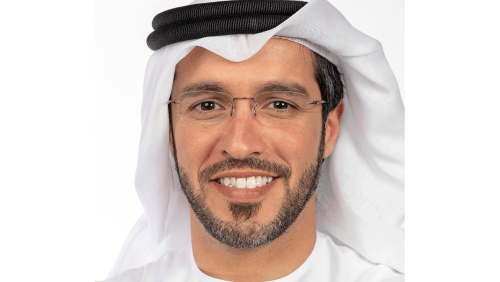
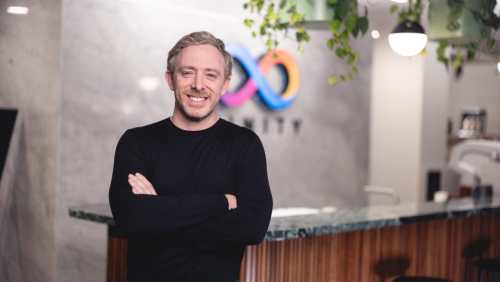
Peter Oganesean • Managing Director, Middle East and East Africa, HP Inc.
Peter Oganesean is the Managing Director for Middle East and East Africa at HP Inc.