From AI Awareness to AI Capability: Norah Abokhodair on Building a Workforce Ready for the AI Era
Abokhodair explains how Scale AI’s Alif program is equipping Middle Eastern workforces to evaluate, apply, and deploy AI responsibly.
Opinions expressed by Entrepreneur contributors are their own.
You're reading Entrepreneur Middle East, an international franchise of Entrepreneur Media.
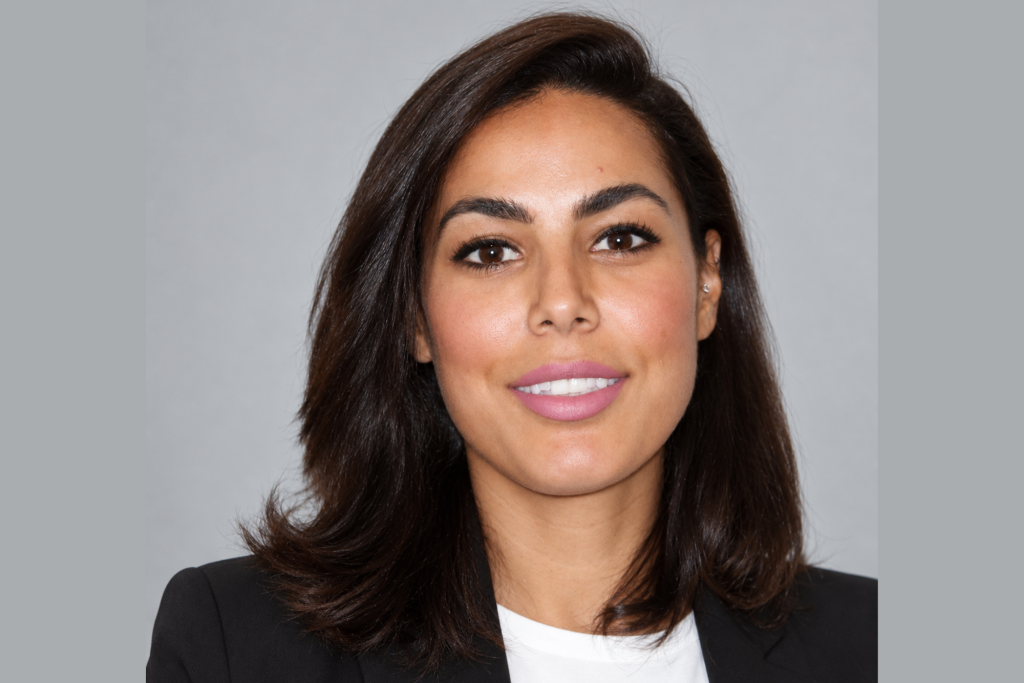
The conversation around artificial intelligence has moved at extraordinary speed. Organizations that were asking what generative AI could do just a few years ago are now confronting a more difficult question: how do you turn access to powerful AI models into real, responsible and sustainable capability?
For Dr. Norah Abokhodair, Head of AI Upskilling and Enablement for Scale AI’s Global Public Sector business, the answer begins with people.
“Reliability is not only a technical property,” Abokhodair says. “It depends on the people operating the system.”
It is a distinction that becomes particularly important when AI moves from experimentation into areas where decisions carry real consequences. Across the Middle East, AI systems are increasingly being considered for healthcare, financial infrastructure, public services and national security. In Qatar alone, Scale AI is working with the Ministry of Communications and Information Technology across dozens of public-facing use cases.
The challenge, then, is no longer simply getting people interested in AI. It is developing a workforce capable of identifying where the technology creates value, evaluating its outputs, understanding its risks and ultimately deploying it responsibly.
That is the gap Scale AI’s Alif program was created to address.
A Program Built For The Region
Abokhodair led the development of Alif, Scale AI’s flagship applied generative AI learning program. Rather than taking a global curriculum and translating it for the Middle East, her team designed the program around the region from the beginning.
Even its name carries that intention. Alif is the first letter of the Arabic alphabet, while also sharing a root with an Arabic verb associated with becoming familiar with something. For Abokhodair, the two meanings capture the program’s purpose: AI capability needs both a starting point and the familiarity that only comes through actually using the technology.
Alif launched in Qatar in December 2025 in partnership with the Ministry of Communications and Information Technology and is delivered through Qatar Digital Academy. Its curriculum is Arabic-first and incorporates regional use cases and public-sector realities throughout.
That approach is significant. Localization, in Abokhodair’s view, should not mean developing a program elsewhere and translating it into Arabic at the end. It means designing learning around the people, institutions and operating environments where AI will actually be deployed.
The early numbers suggest that approach is gaining traction.
Between January and June 2026, Alif ran 15 cohorts and trained 240 government professionals representing more than 40 Qatari entities. Participants came from organizations including MCIT, the General Tax Authority, Qatar Armed Forces, the Amiri Diwan, the Prime Minister’s Office, the Ministry of Foreign Affairs, Hamad Medical Corporation, ADLSA and Qatar Rail.
Average assessment scores increased from 57% before the program to 77% afterwards. Nearly eight in ten participants improved their results, with a similar proportion meeting the requirements for the program’s Digital Competence certificate.
But Abokhodair is careful not to confuse training statistics with transformation.
“The next measure, and the most important one, is workplace application,” she says.
That means looking at whether participants actually advance viable AI use cases, incorporate responsible AI practices into their work and carry their learning back into their organizations.
RELATED: The Trust Question: Dr. Shadi Dawi on Governing AI in the Age of Generated Everything
Beyond Learning How To Prompt
This is where Abokhodair draws one of the most important distinctions in the AI conversation.
Knowing how to prompt an AI model is not the same as knowing how to use AI effectively.
The scarcer capability, she argues, is knowing how to determine whether an AI-generated answer is accurate, appropriate and safe for the domain in which it will be used.
That becomes particularly consequential in government. An inaccurate marketing suggestion can be corrected. An unreliable AI-supported decision affecting healthcare delivery, taxation or national security operates on an entirely different level of risk.
Alif therefore emphasizes applied learning.
Its Alif Core program is a one-day instructor-led workshop aimed at business professionals, covering AI foundations, safe evaluation, ethics and practical use-case identification. Participants leave with an “AI Opportunity Canvas”: a proposal for an AI application that can be taken back to their organization.
Alif Tech goes further. The two-day program for ICT professionals explores multimodal generative AI, model training, retrieval-augmented generation, AI agents, architecture, risk and governance. The exercises are based on practical scenarios drawn from the kind of work Scale AI’s teams encounter, from drafting policy documents within strict safety parameters to delegating workflows to AI agents.
The objective is not simply AI literacy.
It is AI fluency: creating people who can question, evaluate and ultimately build with the technology.
From Hundreds To 100,000
If Qatar has provided an early proving ground for the model, Saudi Arabia represents the test of whether it can operate at national scale.
Scale AI has announced a four-year partnership with Saudi Arabia’s Ministry of Communications and Information Technology intended to equip 100,000 people with practical AI skills.
Training 100,000 people directly would be difficult to sustain, so the model is deliberately decentralized.
Scale will train and certify “Alif Ambassadors” nominated from universities, government entities, training centers and companies. Those ambassadors will then deliver the curriculum within their own institutions. The goal is to reach approximately 1,500 certified ambassadors by year four, after which delivery increasingly transitions to the institutions themselves.
It is an important shift in thinking about AI education.
The objective is not to create permanent dependence on an external technology provider. It is to create enough knowledge inside institutions that they eventually become capable of sustaining their own AI development.
“Independence is the design goal,” Abokhodair says.
Alif is consequently designed to be model-agnostic and vendor-neutral. The skills being taught are intended to remain applicable as models, platforms and technology providers change. Qatar has demonstrated the model, Saudi Arabia is its second market, and the UK is also in view.
Why Founders Should Pay Attention
While much of Abokhodair’s work sits at the intersection of government and technology, there is a lesson here for entrepreneurs as well.
Training people in AI without creating places for them to apply those skills only solves part of the problem.
“Capability building, startup innovation and enterprise adoption are not three separate agendas in this region, but rather one pipeline,” she says.
It is perhaps one of the strongest arguments for looking at AI development as an ecosystem rather than a technology initiative.
Governments can develop skills. Universities can produce talent. Companies can provide infrastructure. But unless founders create businesses, enterprises create deployment opportunities and trained people are given real problems to solve, those individual investments cannot compound.
Alif Entrepreneurs is intended to address part of that equation by helping startup founders and teams move from broad AI awareness toward identifying commercially valuable use cases, testing them responsibly and building with clearer evaluation criteria. Other initiatives, including AI Tinkerers meet-ups, internships and the planned Scale Learn self-paced platform, are designed to extend that ecosystem beyond the classroom.
And Abokhodair has a remarkably practical suggestion for founders wondering where to begin.
Start with one decision.
Pick a frequent, clearly defined decision your company makes repeatedly and for which there is an established source of truth. Before building anything, determine exactly how you will judge whether the AI’s output is good enough.
“Define the evaluation criteria before you build the solution,” she says.
Many stalled pilots, she argues, reverse that sequence: companies become impressed by a demonstration, mistake it for production readiness and assume that having access to data means that data is appropriately governed for AI deployment.
For entrepreneurs racing to incorporate AI into their businesses, that is advice worth remembering.
Building Capability That Outlasts The Technology
Abokhodair brings an unusual combination of technical, product and research experience to the challenge. Before joining Scale AI, she was a Senior Product Manager at Microsoft, working across education, AI-enabled products and emerging technology. Her academic work in human-computer interaction has explored how culture and human values—including privacy, identity and trust—influence how technology is designed and adopted.
She holds a PhD in Information Science and a master’s degree in Information Management from the University of Washington, as well as a Computer Science degree from King Saud University. A Fulbright Scholar, she has spent more than 15 years working across technology research, product development, AI transformation and public-sector innovation.
That background perhaps explains why her view of AI transformation extends beyond technology itself.
The next phase of Alif will push participants further from foundational fluency toward applied expertise, with planned modules covering production-grade prompting, safe retrieval pipelines and multi-step agentic workflows. A self-paced platform with live environments will allow learners to experiment with prompts and agents beyond instructor-led sessions.
The ambition is ultimately to create a progression: understand AI, use AI, evaluate AI, build with AI and eventually deploy it responsibly.
And as governments across the Middle East invest billions into infrastructure, models and digital transformation, that progression may become one of the most important pieces of the AI equation.
Because the real measure of a country’s AI capability may not ultimately be how many models it can access or how much computing infrastructure it can acquire.
It may be how many of its people know what to do with it.
As Abokhodair puts it: “A national AI capability that reaches only part of the workforce is not a capability, it is a ceiling.”
RELATED: DIFC to Become World’s First AI-Native Financial Center
The conversation around artificial intelligence has moved at extraordinary speed. Organizations that were asking what generative AI could do just a few years ago are now confronting a more difficult question: how do you turn access to powerful AI models into real, responsible and sustainable capability?
For Dr. Norah Abokhodair, Head of AI Upskilling and Enablement for Scale AI’s Global Public Sector business, the answer begins with people.
“Reliability is not only a technical property,” Abokhodair says. “It depends on the people operating the system.”

Wissam Younane • Founder and CEO, BNC Publishing
Wissam Younane is a prominent media executive and entrepreneur based in Dubai, United Arab Emirates.... Read more