Google Meet For Everyone: Google Offers Its Video Conferencing Product For Free Up Till September 30, 2020
Google Meet has become available for free to everyone who needs it due to the ongoing COVID-19 crisis, says Tarek Khalil, Head of Google Cloud in MENA.
Shutterstock
You're reading Entrepreneur Middle East, an international franchise of Entrepreneur Media.
Google Meet, Google’s premium video meetings product, was built as a part of its collaboration and productivity solution for businesses, organizations and schools, G Suite. Since the beginning of last March, the advanced Google Meet video-conferencing capabilities have been available at no cost to all G Suite and G Suite for Education customers. Now, however, Google Meet has become available for free to everyone who needs it due to the ongoing COVID-19 crisis, says Tarek Khalil, Head of Google Cloud in MENA, adding that the new offer will be extended until September 30, 2020.
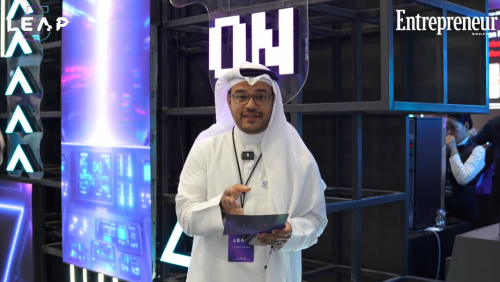
 Tarek Khalil, Head of Google Cloud in MENA
From the outset of the COVID-19 crisis, Khalil says, the Google team has ramped up engineering support for Google Meet in order to ensure that they are scaling responsibly and to bring to their users four of the top-requested Meet features. These include, firstly, a tiled layout for larger calls which now lets web users to see up to 16 participants simultaneously and at once, and secondly, a higher-quality video content with audio which now allows users to have the option to present a Chrome tab instead of just presenting their window or entire screen. Thirdly, introducing a low-light mode which means that Google Meet can now use AI to automatically adjust a user’s video to make the user more visible to other participants in sub-optimal lighting conditions. Lastly, Google Meet introduced a noise cancellation feature which allows it tofilter out background distractions, intelligently.
In addition, Google Meet’s security controls are turned on by default, so that in most cases, organizations and users will not have to do a thing to ensure the right protections are in place. “While serving our customers through an accelerated feature roadmap is important, nothing takes precedence over user privacy and safety,” Khalil says. “Google Meet uses the same protections that Google uses to secure user data and safeguard privacy. Meet’s anti-abuse features are turned on by default, video meetings are encrypted in transit by default and our compliance certifications can help support regulatory requirements. We are constantly finding ways to enhance security and privacy for all users, such as adding new moderator controls to help educators more effectively manage their meetings and protect their students.”
Recently, Google Meet reached a new milestone- more than two million new users have been connecting on it every day globally, spending over two billion minutes together. That’s more than 3,800 years of secure meetings in a single day, notes Khalil.
Google Meet, Google’s premium video meetings product, was built as a part of its collaboration and productivity solution for businesses, organizations and schools, G Suite. Since the beginning of last March, the advanced Google Meet video-conferencing capabilities have been available at no cost to all G Suite and G Suite for Education customers. Now, however, Google Meet has become available for free to everyone who needs it due to the ongoing COVID-19 crisis, says Tarek Khalil, Head of Google Cloud in MENA, adding that the new offer will be extended until September 30, 2020.
Tarek Khalil, Head of Google Cloud in MENA
From the outset of the COVID-19 crisis, Khalil says, the Google team has ramped up engineering support for Google Meet in order to ensure that they are scaling responsibly and to bring to their users four of the top-requested Meet features. These include, firstly, a tiled layout for larger calls which now lets web users to see up to 16 participants simultaneously and at once, and secondly, a higher-quality video content with audio which now allows users to have the option to present a Chrome tab instead of just presenting their window or entire screen. Thirdly, introducing a low-light mode which means that Google Meet can now use AI to automatically adjust a user’s video to make the user more visible to other participants in sub-optimal lighting conditions. Lastly, Google Meet introduced a noise cancellation feature which allows it tofilter out background distractions, intelligently.

Entrepreneur Middle East Staff
Entrepreneur Staff