Here’s Why The Middle East Is Key For The Rapidly Developing World Of Gaming
In the Middle East, growth is down to market conditions that exist nowhere else. With half its population under 25 years old and tech-savvy, it is no surprise that the region is one of the most active and engaged online.
Shutterstock
Opinions expressed by Entrepreneur contributors are their own.
You're reading Entrepreneur Middle East, an international franchise of Entrepreneur Media.
It has been said many times, but it bears repeating: the Middle East is key for the rapidly developing world of gaming.
The region’s market has been recording the fastest growth in the world for consecutive years. In a historic first, it seems that the Western and Asian markets are declining as much as the MENA one is growing, leading experts to think that the region could be the next place for everything gaming and esports.
This raises many questions. Are today’s declining markets in the West and Asia following a normal industry lifecycle, or is it a simple adjustment following the COVID-19 crisis, which saw an unprecedented uptake in the hobby? Does the gaming industry need the Middle East to sustain its long-term growth? How can the region build on its gaming success story?
In the Middle East, growth is down to market conditions that exist nowhere else. With half its population under 25 years old and tech-savvy, it is no surprise that the region is one of the most active and engaged online.
The success of the industry boils down to its thriving virtual communities. Gamers follow their favorite content creators on live-streaming platforms like Twitch, and they hang out with their community on Discord. Arab gaming content creator superstars such as Aboflah garner a community of more than 27 million followers on YouTube, steadily built over the years.
Platforms like Twitch and YouTube Gaming play a central role in the lives of many players, as they tend to spend more time on them than actually playing games. Saudi Arabia and the UAE are critical markets for both. On top of that, the region is expected to account for most streaming audience growth in the future, driven by its almost 500 million gamers.
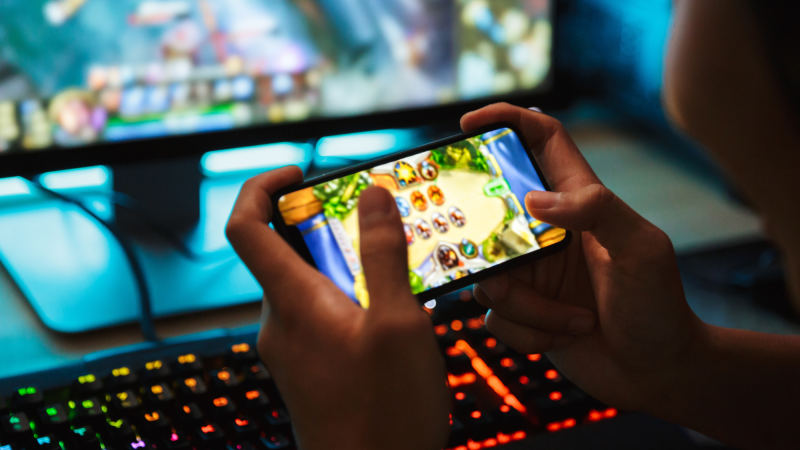
The dynamism of mobile gaming will also contribute. Indeed, its rise has made esports more accessible, especially for those with limited access to high-end hardware or a stable internet connection: two mandatory ingredients that could explain the popularity of mobile games in the Middle East, and the high revenue this segment generates locally.
But the MENA region is a unique market, and it requires localized content. The same recipe that has been working for North America and Europe may not fit a fragmented and complex region like it. For too long, the Middle East has been forgotten. From casual players experiencing high latency due to the lack of regional servers, to professional players unable to compete internationally, being a gamer here is often challenging.
Related: Let’s Play: Why Dubai Is Well-Positioned To Deliver The MENA Its Own Gaming Industry
Gaming gave Ammar, a Syrian refugee in Jordan, “a better world to live in”- he went from being a construction worker to playing professionally with my company, YaLLa Esports. “Through a lot of practice, I got the chance to leave my job, and finally work in an industry I love,” Ammar says. That said, owing to visa issues, Ammar was unfortunately not able to participate in the Honor of Kings World Finals, that just began in Seoul, South Korea.
On the positive side, there is no other region in the world where governments are so heavily invested in supporting the industry, especially at such an early stage. GCC governments were quick to foresee potential, massively invest, and implement strategies to attract prominent gaming companies.
Earlier this year, Saudi Arabia’s Crown Prince HRH Mohammed Bin Salman unveiled the National Gaming and Esports Strategy, and the official Saudi Press Agency announced plans to create almost 40,000 jobs and locally develop 30 games.
In the UAE, AD Gaming and the more recently announced DMCC Gaming Center strive to create ecosystems to attract global gaming businesses and provide opportunities to aspiring talent. AD Gaming, for instance, has partnered with Unity Technologies, whose software has been used to create 70% of the top 1,000 mobile games in the world. On the esports side, AD Gaming will also host the Blast Premier World Final, where eight of the best Counter-Strike teams will battle for a prize pool of $1mm, a significant milestone for the region’s esports scene.
These encouraging factors have drawn international publishers’ attention, who are starting to integrate the Middle East into their strategies. The best illustration of this phenomenon is the Chinese publisher Tencent. It deployed an Arabic version of the multiplayer online battle arena (MOBA) mobile game PUBG Mobile in the region, built a dynamic esports scene by organizing local tournaments, and allowed professional players to compete in international circuits by allocating the region a seat. A successful strategy, as PUBG Mobile is now one of the most popular games in the Middle East.
But the Gulf can create a long-term, sustainable gaming and esports industry only if it prioritizes developing local capabilities. Less than 1% of the top 1,000 downloaded games in Saudi Arabia are homegrown at this stage. Nonetheless, there is immeasurable potential for developing the local scene, and catering to a young population craving more. The region must prioritize working with domestic companies to establish events and training platforms, bring in influencers and talent, and attract gamers.
With a population engagement much higher than in Western markets, the MENA is ready to embrace gaming and esports, an opportunity for all stakeholders to create long-term value and help shape a sustainable future for the biggest entertainment industry in the world.
Related: Digital Gaming In The UAE: What We Have, And What We Need
It has been said many times, but it bears repeating: the Middle East is key for the rapidly developing world of gaming.
The region’s market has been recording the fastest growth in the world for consecutive years. In a historic first, it seems that the Western and Asian markets are declining as much as the MENA one is growing, leading experts to think that the region could be the next place for everything gaming and esports.
This raises many questions. Are today’s declining markets in the West and Asia following a normal industry lifecycle, or is it a simple adjustment following the COVID-19 crisis, which saw an unprecedented uptake in the hobby? Does the gaming industry need the Middle East to sustain its long-term growth? How can the region build on its gaming success story?

Chloé Brissaud • Gaming expert, Yalla Esports
Chloé Brissaud is a UAE-based gaming expert at Yalla Esports. She is passionate about the... Read more