Building Resilience in Hospitality: How to Stop Short-Term Revenue Pressure From Becoming a Long-Term Stability Problem
In hospitality, resilience is not only operational but also relational. During periods of uncertainty, owner confidence becomes one of the most important assets in the system.
Opinions expressed by Entrepreneur contributors are their own.
You're reading Entrepreneur Middle East, an international franchise of Entrepreneur Media.
Hospitality has always been a business shaped by cycles. Demand rises and falls, markets shift, traveler behavior evolves, and external pressures can change operating conditions almost overnight. In moments like these, the instinct to focus on short-term revenue is understandable. When uncertainty grows, the pressure to fill rooms quickly, discount aggressively, or chase immediate gains can become difficult to resist. But resilience in hospitality is not built by reacting to every short-term fluctuation. It is built by protecting the long-term fundamentals of the business, even when short-term pressures intensify.
This is where leadership judgment matters most. Some costs are optional. Others are the load-bearing walls of the business. If you remove the wrong ones, the hotel may still function for a while, but it is no longer as strong. Long-term stability depends on protecting the commercial engine, the guest experience, and the culture that holds the business together.
In hospitality, resilience is not only operational but also relational. During periods of uncertainty, owner confidence becomes one of the most important assets in the system. If owners feel that decisions are reactive, inconsistent, or driven only by short-term thinking, confidence erodes quickly. Once that happens, every conversation becomes harder, including investment, staffing, pricing, and future planning alike. That is why transparency matters so much during periods of pressure. Owners do not need false reassurance. They need clarity on what is happening in the market, what choices are available, and which actions protect near-term performance without weakening long-term asset value.
Culture matters just as much. Hospitality is, above all, a people business. When uncertainty rises, teams feel it first. They hear the conversations, sense the tension, and absorb the added pressure. If leaders become reactive, teams often do too. Energy drops, service becomes thinner, and confidence starts to fade. That is why resilience cannot be viewed only through a financial lens. It must be operational and human as well. The hotels that emerge strongest from difficult periods are usually the ones where teams still feel supported, informed, and connected to a clear standard. In our industry, culture is not a soft issue. It is an operating advantage.
Hospitality will always be cyclical. External pressure is part of the business. What matters is whether leaders allow short-term pressure to distort long-term judgment. The operators who come through uncertainty strongest are not always the fastest to react. They are the clearest on what should flex and what should not. Because short-term revenue pressure, on its own, is manageable. What puts long-term stability at risk is sacrificing pricing discipline, guest experience, team confidence, and owner trust in order to make one difficult month look better than it really is.
Ultimately, resilience in hospitality is about balance. It is about knowing when to adapt quickly and when to hold firm. It is about responding to market realities without compromising the long-term health of the business. And it is about remembering that stability is not created in calm periods alone. It is built in the decisions leaders make when the pressure is highest.
The hospitality sector will always face moments of uncertainty. That is part of the industry. But uncertainty does not need to lead to instability. For those willing to lead with discipline, clarity, and long-term perspective, short-term revenue pressure can be managed without sacrificing the future.
Because in hospitality, true resilience is not measured by how a business performs at its peak. It is measured by how well it protects its foundations when conditions become more difficult.
Hospitality has always been a business shaped by cycles. Demand rises and falls, markets shift, traveler behavior evolves, and external pressures can change operating conditions almost overnight. In moments like these, the instinct to focus on short-term revenue is understandable. When uncertainty grows, the pressure to fill rooms quickly, discount aggressively, or chase immediate gains can become difficult to resist. But resilience in hospitality is not built by reacting to every short-term fluctuation. It is built by protecting the long-term fundamentals of the business, even when short-term pressures intensify.
This is where leadership judgment matters most. Some costs are optional. Others are the load-bearing walls of the business. If you remove the wrong ones, the hotel may still function for a while, but it is no longer as strong. Long-term stability depends on protecting the commercial engine, the guest experience, and the culture that holds the business together.
In hospitality, resilience is not only operational but also relational. During periods of uncertainty, owner confidence becomes one of the most important assets in the system. If owners feel that decisions are reactive, inconsistent, or driven only by short-term thinking, confidence erodes quickly. Once that happens, every conversation becomes harder, including investment, staffing, pricing, and future planning alike. That is why transparency matters so much during periods of pressure. Owners do not need false reassurance. They need clarity on what is happening in the market, what choices are available, and which actions protect near-term performance without weakening long-term asset value.

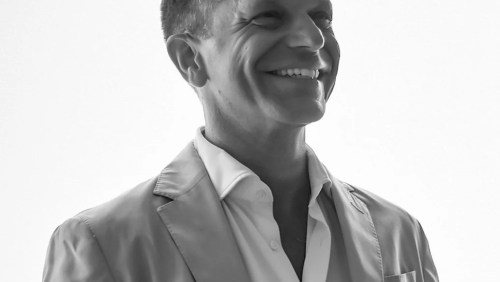
Tim Cordon • Chief Operating Officer, MEA, Radisson Hotel Group
Tim Cordon is the Chief Operating Officer for the MEA region at Radisson Hotel Group.... Read more