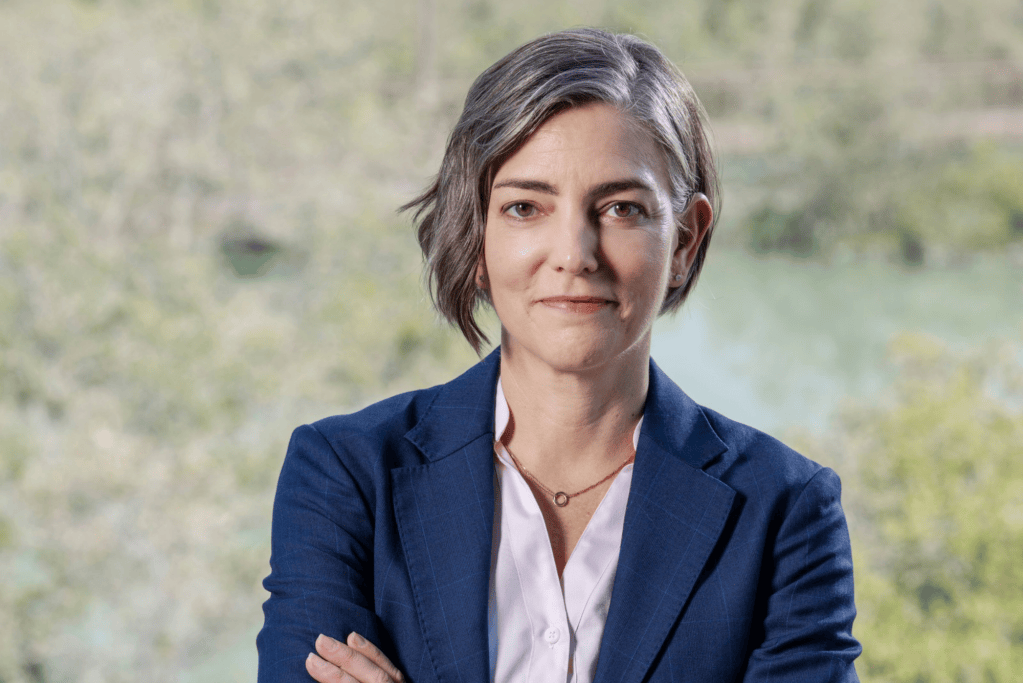
Entrepreneur Middle East’s Healthcare Visionaries 2026: Dr. Nicole Sirotin, Chief Executive Officer, Institute for Healthier Living Abu Dhabi
“Healthy Longevity Medicine is not about pursuing lifespan for its own sake, and it is certainly not about promising that aging can be stopped. It is about healthspan: preserving health, function, resilience and independence, and acting earlier when risk begins to change.”
You're reading Entrepreneur Middle East, an international franchise of Entrepreneur Media.
This article is part of Entrepreneur Middle East’s Special Healthcare Visionaries 2026 issue.
Longevity has become one of healthcare’s most talked-about categories, but the term is now used for everything from supplements and aesthetics to advanced medicine. At the Institute for Healthier Living Abu Dhabi (IHLAD), Dr. Nicole Sirotin is focused on helping people stay healthy for longer. “Healthy Longevity Medicine is not about pursuing lifespan for its own sake, and it is certainly not about promising that aging can be stopped. It is about healthspan: preserving health, function, resilience and independence, and acting earlier when risk begins to change.”
Longevity with a Difference
With longevity now encompassing a wide range of products, services and interventions, Dr. Sirotin believes clinical standards are essential. “At IHLAD, the standard is evidence, appropriate clinical expertise, regulation and measurable outcomes,” she explains. “If we wouldn’t accept a test or intervention without evidence elsewhere in medicine, we shouldn’t lower that standard simply because it is labeled ‘longevity.’”
More testing is not automatically better medicine. A thicker medical file does not necessarily give someone a clearer map of their health. The value of a diagnostic lies in whether it provides clinically meaningful information, changes a decision and leads to an evidence-based action. “Our role is to help establish Healthy Longevity Medicine as a rigorous, evidence-based medical field: clear about what is proven, what is promising, what remains experimental, and always centered on what can meaningfully improve a person’s health.”
A Regulated Model for Healthy Longevity Medicine
IHLAD operates within a defined clinical and regulatory framework. “The Department of Health – Abu Dhabi (DoH), alongside the Institute for Healthier Living Abu Dhabi and the Healthy Longevity Medicine Society, introduced the world’s first dedicated licensing framework for Healthy Longevity Medicine Centers. Together, we also helped develop evidence-based standards and guidelines for how the field should be practiced,” explains Dr. Sirotin.
For healthcare systems, that creates a pathway to think beyond isolated episodes of care. “We are very good at treating disease once it appears. Healthy Longevity Medicine asks a broader question: how do we preserve health and function for longer, identify important changes earlier, and still make better treatment decisions when disease is present? If this field is going to become part of mainstream healthcare, it must earn that place through clinical rigor, evidence and outcomes.”
Understanding Health as a Trajectory
Understanding health as a trajectory means looking beyond a single test or point in time. A person’s clinical and family history, lifestyle, environment, goals, treatments and function are considered alongside the biological information that is relevant to them.
“One of the clearest illustrations comes from a 2023 Stanford randomized clinical trial involving 22 pairs of identical twins. One twin in each pair followed a healthy vegan diet and the other a healthy omnivorous diet for eight weeks. Despite essentially identical genetics, the twins assigned to the vegan diet had greater reductions in LDL cholesterol, fasting insulin and body weight. The point is not that one diet is the answer for everyone. It is that shared genes do not lock two people into the same biological outcome; lifestyle and environment can meaningfully shape the trajectory.”
“That is why genetics is part of the story, not the whole story,” says Dr. Sirotin. “We use diagnostics to answer specific clinical questions. Depending on the individual, that may include conventional testing, advanced biomarkers, genomics, imaging, functional assessment and other relevant data. The goal is not to collect the largest possible dataset. It is to identify meaningful patterns of risk, resilience and change.”
The clinical team then prioritizes what is actionable. Nutrition, movement, sleep, stress management, social connection, preventive screening and appropriate medical treatment remain central. Precision comes from determining what matters most for each person, when to act and how to measure progress.
“Healthy Longevity Medicine is longitudinal,” says Dr. Sirotin. “A snapshot can tell us where someone is today. The more important question is the direction of travel: what is changing, what does it mean, and is there something appropriate we can do to influence that trajectory?”
IHLAD’s Approach
“Genomics can tell us about inherited predisposition. Biomarkers help us understand current physiology. Lifestyle and environmental data show some of the exposures shaping that biology. Clinical history tells us what has happened over time, and functional measures tell us what those changes mean in a person’s actual life. In selected settings, multi-omics can add another layer of biological detail.”
Screening can produce findings. Precision care asks which findings matter, what they mean for this individual, what action is supported by evidence and what should be followed over time. “More information is only useful if it leads to better decisions.”
AI as an Accelerator for Better Medicine
AI is already becoming useful across healthcare, from supporting faster diagnosis and triage to helping clinicians synthesize large volumes of information and, in some settings, assisting with the treatment of relatively straightforward conditions. At IHLAD, it is also an important accelerator for research and population health.
IHLAD is working with the Department of Health – Abu Dhabi and the Abu Dhabi Public Health Centre on more proactive approaches to identifying people at higher risk and supporting more targeted health interventions. “Through our wider research and innovation work, AI can help us examine relationships across clinical data, biomarkers, genomics and other biological information at a scale that would be difficult to manage manually,” Dr. Sirotin explains.
“The opportunity is to build a better-equipped healthcare workforce,” she adds. “For complex decisions about someone’s health trajectory, which treatment to consider when something does go wrong, or how to weigh uncertainty and trade-offs, clinicians still need context and judgment. I do not see this as AI versus clinicians. I see AI as a way to make clinicians faster, better informed and more capable.”
Abu Dhabi: Building Single-Cell and Multi-Omics Capability
“The near-term value is in research: understanding disease mechanisms, discovering biomarkers, testing therapeutics, validating new ways to assess risk, and testing drugs that may slow the aging process in our bodies. And all of this can be accelerated with AI,” says Dr. Sirotin.
“Single-cell multi-omics allows researchers to look at individual cells and the molecular activity within them,” she explains. This can reveal rare cell populations, immune changes and biological signals that may disappear when millions of cells are viewed together. A finding must still be validated, reproduced and shown to improve a meaningful clinical decision or outcome before it becomes part of routine care. “We want to move science forward without pretending that every new scientific capability is ready for the clinic.”
The Importance of Population Specificity
If reference ranges, algorithms or predictive models are built predominantly from other populations, Dr. Sirotin explains, we need to understand how well they translate to people in the UAE. “That is why locally relevant biological and clinical evidence matters. Through population research and advanced multi-omics, we are working to build a deeper understanding of the biology of the communities we serve.”
“That gives us an opportunity to develop and validate approaches responsibly, then ask which insights can be adapted and applied beyond the UAE,” says Dr. Sirotin. “If we do that well, Abu Dhabi can contribute evidence that is valuable locally and internationally.” Why IHLAD Is Built the Way It Is IHLAD brings together clinical care, the Innovation Lab and Population Health Research. The model is designed as a learning loop rather than a set of silos. Clinical care can surface unanswered questions about risk, treatment and health trajectories. The Innovation Lab can investigate those questions and help validate emerging diagnostics, technologies and therapeutic approaches, while Population Health Research can assess whether findings apply across different communities.
“Of course, we have to be disciplined about the difference between an individual observation and research evidence. One patient’s experience does not automatically generalize to communities more broadly. The goal is to build a continuous learning cycle, with appropriate governance, so that what we learn at each level makes the others stronger.”
More Than Aging Well
The conversation around aging has traditionally focused on lifespan or appearance. Dr. Sirotin believes the more important question is how well people live. “For me, aging well is about what you can preserve. Can you move well, think clearly, remain metabolically healthy, stay connected to the people and activities that matter to you, and maintain your independence? That is why healthspan is such an important idea.”
She adds, “The goal is to preserve as much healthy, functional life as possible and to understand changes early enough that we have a chance to influence them.
This places longevity within healthcare rather than beauty or biohacking. The focus becomes practical: what is changing, what does the evidence show, what treatment or action is appropriate, and what can be done to help people remain healthy and functional for longer?
Evidence-Based
Dr. Sirotin believes Healthy Longevity Medicine should be held to the same standards as every other area of medicine. “Has the intervention been properly studied in humans? In whom? What was it compared with? What outcomes were measured, and for how long? Are the findings reproducible? What are the risks? And perhaps most importantly, does a change in a biomarker translate into something that matters to a person’s health or function?”
Scientific sophistication should not be confused with proof. New technology or an interesting biological mechanism does not by itself demonstrate that an intervention improves health. “Patients should know whether something is established, promising or experimental. Investors should demand the same clarity,” she says. The field will earn credibility by demonstrating what works, for whom, under what conditions and with what risks.
Who Pays to Keep You Healthy
If Healthy Longevity Medicine succeeds at scale, healthcare may need to rethink how healthspan is valued and funded. “Much of the current system is designed to pay for activity after a problem is recognized: a consultation, a procedure, an admission or a treatment. A healthspan-oriented model asks us to value a broader continuum: identifying risk earlier, treating effectively when disease is present, delaying avoidable decline where possible, and preserving health and function over time.”
“The business model cannot move ahead of the evidence. We need longitudinal data that shows which interventions improve meaningful outcomes, for whom and at what cost.”
“The value of improving healthspan may ultimately extend beyond clinical outcomes to productivity and wider economic impact, but those outcomes need to be measured rigorously and distinguished clearly from health outcomes,” she says. “As that evidence grows, I think we will see more models in which incentives are tied to outcomes and long-term value, rather than simply to the volume of healthcare delivered.”
Looking Ahead
Dr. Sirotin sees a future in which healthspan becomes a more explicit goal of mainstream healthcare: one where clinicians can identify meaningful changes earlier, but also make better treatment decisions and preserve function when disease is already present.
“I would want Healthy Longevity Medicine to have matured into a credible field with strong standards, better evidence and a clear separation between validated medicine and unsupported claims,” she says. “I would also want the UAE and the wider region to be better represented in the biological evidence that informs precision medicine, and to see research developed and validated in Abu Dhabi improving care here and being adapted elsewhere.” Ultimately, she wants the impact to be measured in people’s lives: more years spent healthy, functional and independent, and less time lost to disease and disability. “If work done in Abu Dhabi helps healthcare systems understand health trajectories more clearly, make better personalized decisions, treat people more effectively when they need care and give them a better chance of staying healthy for longer, that would be a meaningful contribution to the future of human health.”
This article is part of Entrepreneur Middle East’s Special Healthcare Visionaries 2026 issue.
Longevity has become one of healthcare’s most talked-about categories, but the term is now used for everything from supplements and aesthetics to advanced medicine. At the Institute for Healthier Living Abu Dhabi (IHLAD), Dr. Nicole Sirotin is focused on helping people stay healthy for longer. “Healthy Longevity Medicine is not about pursuing lifespan for its own sake, and it is certainly not about promising that aging can be stopped. It is about healthspan: preserving health, function, resilience and independence, and acting earlier when risk begins to change.”
Longevity with a Difference

Entrepreneur Middle East Staff
Entrepreneur Staff