How Oman-Based Octabiz Is Using AI to Rethink Business Software
Matthew Truth, co-founder and Product Lead, Octabiz, explains how AI is reshaping startup economics without replacing the need for industry expertise and customer insight.
You're reading Entrepreneur Middle East, an international franchise of Entrepreneur Media.

Based in Muscat, Oman, and operating through its US company, Octasys LLC, Octabiz was founded by three people who, in the words of its co-founder and Product Lead Matthew Truth, “had hit the same wall from a different side.”
Ramin Alizadeh Rad, co-founder, investor and business coach, ran a sports shop in Kentucky. Omid Pirdehi, co-founder and Business Lead, was a CEO running different companies. And Truth had spent years building products, and kept seeing the same pattern. “A small business runs on a pile of separate apps that don’t talk to each other,” he says. “A manager logs into five tools to get one thing done. Giving a staff member access costs another paid seat, and sharing your own password is a security risk. Every tool has its own learning curve, even for small tasks.”
His idea was simple: “One platform, one login, and software that adapts to the business instead of the other way round.” Pirdehi and Alizadeh Rad knew the pain from the inside, and the three of them turned it into Octabiz.
In a nutshell, Octabiz puts the online store, point of sale, inventory, invoices, accounting and business email in one platform.
“Look at what a small shop pays Shopify today,” Truth explains. “The Basic plan is US$39 a month. The point of sale for the counter costs another US$89 a month per location. If the shop keeps its own card processor, Shopify takes an extra 2% of every sale. Then come the apps for inventory, invoicing and accounting: a September scan of 300 high-traffic Shopify stores found about 14 per store. The store has become the cheap part, and most of the cost sits around it.”
Octabiz is built for the businesses that fall through the cracks of Shopify’s model. “Our first US customers sell high-end, one-of-a-kind handmade rugs,” Truth says. “A rug like that sells once, often after several visits and a measurement, and may come back for cleaning and repair for years. Software built to sell hundreds of units of one SKU handles that poorly.” What further distinguishes Octabiz is its underlying architecture, the key design decision Truth made as product lead. “I’ve always believed in dynamic systems: build something once so it can be used again in many different ways,” he says. “So Octabiz has one core that keeps a single record of everything that happens in the business. The screens, the AI chat, the voice assistant, the automations and our app marketplace all work on that same core.” In practice, an owner can say “refund the Tuesday order” or ask “what were yesterday’s numbers?” without clicking through five screens, while the classic screens remain for anyone who prefers them.
Today, Octabiz is raising a US$1 million seed round at a US$10 million valuation to expand across the GCC and the US. Since August 2025, the startup has been backed by about US$150,000 from co-founder and investor Alizadeh Rad, along with roughly $50,000 in credits from programs run by San Francisco-based PostHog, a product analytics platform, Sentry, an error-monitoring software, and Firecrawl, an AI web-scraping tool. The company already has significant traction to show, with around 100 businesses currently moving onto Octabiz, most of them as paying customers. Clients include Moayeri, an Omani saffron and specialty foods retailer with five locations and a global online store, whose owner manages tasks such as location-specific daily reports through Octabiz’s AI chat. They all are choosing Octabiz, Truth adds, because “data migration, once the biggest barrier to a sale, now takes under 30 minutes instead of 30 days, allowing the team to focus on client training and faster growth.”
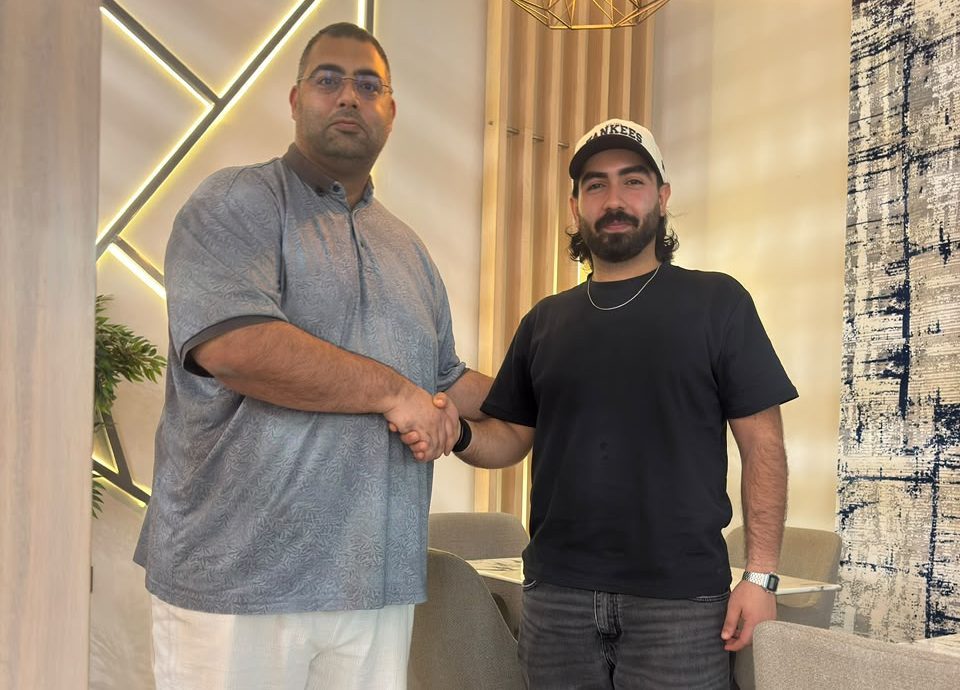
Truth opines that AI has taken over much of the development work involved in building a tech startup, but skilled people who know how to use it and continue learning remain essential. “A product like Octabiz would normally take at least 20 senior developers plus several product managers and designers. We’re three founders,” he says.
However, he cautions against relying on AI without sufficient industry knowledge. “If you’re an expert in your field, use AI to refine your thoughts and keep doing the thinking yourself.”
At Octabiz, the team uses Claude for most of its work and Higgsfield for graphic design, but customer research remains central to product development. “The lesson for me: keep listening to one customer closely, but design so the answer works for many,” he says, recalling how an initial focus on rug cleaning businesses led the team to develop a platform adaptable to multiple industries. Despite AI’s efficiencies, building Octabiz was neither cheap nor easy. “Most of our money went into discovery, learning and, above all, unlearning things we thought were helping,” he says. “With limited capital and a small team, you can now ship a real product and win paying customers. Understanding your customers is still what costs the most.”
On his decision to establish the company in Muscat, Oman, Truth points to the country’s growth potential, supported by Oman Vision 2040, and the opportunity to contribute to and benefit from its economic development. “When a place is growing, you can help it grow and grow along with it,” he says. “But you can’t build for the Gulf culture from articles and books. You have to live here. How business gets done, the language and the relationships are things you learn by being in the room, which is exactly how Omid learned what Moayeri needed.
“The hard parts: Arabic and right-to-left screens have to work properly, and tax and accounting rules differ from the US. That’s why we build for both markets at once, the US through Octasys and the GCC from Muscat.”
Comparing the GCC and US startup ecosystems, Truth sees distinct opportunities and challenges in both markets. While the US offers a large, established customer base accustomed to paying for software, the GCC presents growth opportunities and an advantage for businesses that understand local needs. “In the GCC, the harder part is the product work: Arabic and right-to-left interfaces, plus local tax and accounting rules. In the US, it’s standing out in a crowded market,” he says. Ultimately, his ambition remains the same in both markets: “to make running a small business easier, whether the owner is in Muscat or in Kentucky.”
‘TREP TALK: Octabiz Co-Founder Matthew Truth’s Tips on Life and Business
“In my business classes, I ask students to answer three questions before they do anything: What are your interests? What are your resources? What are your skills and domains? Answering honestly takes self-knowledge. So first, learn to live a life. Watch yourself, your feelings and your thoughts. Learn what you don’t want to do, and learn your weak points so you know who to hire to fill the gaps. Learn to talk with people, too. Most team arguments aren’t about the decision. They’re about someone defending an opinion as if it were a fact. Two books changed how I handle that: David Bohm’s On Dialogue and Marshall Rosenberg’s Nonviolent Communication. Say your real reason, calmly, and ask what the other person is seeing before you defend your own view.”
RELATED: How Dr. Abdulla Al Meer Is Modernizing Dubai’s Premium Number Plate Market
Based in Muscat, Oman, and operating through its US company, Octasys LLC, Octabiz was founded by three people who, in the words of its co-founder and Product Lead Matthew Truth, “had hit the same wall from a different side.”
Ramin Alizadeh Rad, co-founder, investor and business coach, ran a sports shop in Kentucky. Omid Pirdehi, co-founder and Business Lead, was a CEO running different companies. And Truth had spent years building products, and kept seeing the same pattern. “A small business runs on a pile of separate apps that don’t talk to each other,” he says. “A manager logs into five tools to get one thing done. Giving a staff member access costs another paid seat, and sharing your own password is a security risk. Every tool has its own learning curve, even for small tasks.”
His idea was simple: “One platform, one login, and software that adapts to the business instead of the other way round.” Pirdehi and Alizadeh Rad knew the pain from the inside, and the three of them turned it into Octabiz.

Tamara Pupic • Editor in Chief, Entrepreneur Middle East
Entrepreneur Staff
Tamara Pupic is the Editor in Chief of Entrepreneur Middle East.