Former NASA Astronaut Dr. Jeanette Epps Says the UAE Runs “One of the Most Efficient Emerging Space programs in the World
Dr. Epps, who spent 235 days in space in 2024, on the Hope Mars orbiter, what the UAE needs to lead the sector and her advice for young women in the Gulf who dream of a space career.
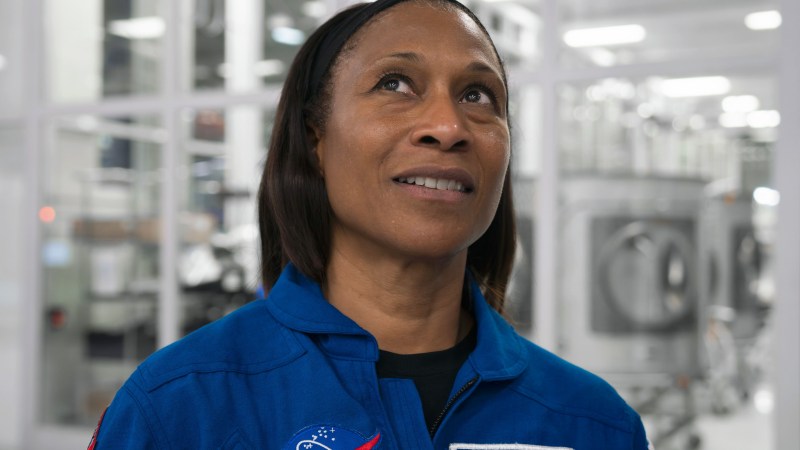
Dr. Jeanette Epps
USCV-8 Crew Training provided by SpaceX
Date: October 20, 2023
Photographer: SpaceX
You're reading Entrepreneur Middle East, an international franchise of Entrepreneur Media.
Dr. Jeanette Epps, a former NASA astronaut who supports space initiatives in the Gulf, has a clear view of the UAE’s space ambitions. In her words, the country is moving fast and doing it efficiently. “The UAE runs one of the most efficient emerging space programs in the world,” she says. “In roughly fifteen years it has gone from buying satellites to building deep-space spacecraft through partnerships.”
Dr. Epps took part in Make it in the Emirates in Abu Dhabi in May 2026 with Borderless Labs Inc, a company that had a display at the event. “I was in there to support human spaceflight training,” she says. “I worked at NASA for 16 years training for missions to go to the International Space Station. As an astronaut we learn to fly the T-38 trainer jet, conduct a spacewalk, operate the robotic arm, learn geology, and so much more.”
It was one of several recent UAE engagements. In November 2025, she backed plans for a private astronaut training center, described as the first of its kind in the Middle East. On May 7, 2026, she was among the spaceflight experts and investors at the Ras Al Khaimah event where a memorandum of understanding was signed for astronaut training experiences. The event was held in the presence of Sheikh Saud bin Saqr Al Qasimi, the Ruler of Ras Al Khaimah.
“The Hope Mars orbiter, which the Mohammed Bin Rashid Space Center (MBRSC) developed, is the UAE’s flagship program,” she says. “The orbiter has been in Mars orbit since February 2021. It is now a long-running science asset rather than a one-off stunt, and its mission has been extended to 2028.”
She is just as positive about the country’s astronauts, while noting what the next phase depends on. “The UAE now has a four-person astronaut corps trained by NASA. Hazza Al Mansouri became the first Emirati in space in September 2019, and Sultan Al Neyadi flew the first long-duration mission in 2023. MBRSC says it aims to secure an ISS flight every three to five years. That cadence is realistic for a paying partner, but it depends on access to the ISS through roughly 2030 and then to commercial stations.”
Asked what an emerging space economy needs to become a global leader, she names three priorities. “Developing core infrastructure such as a sovereign launch capability, human spaceflight training and a technical workforce are critical to support national leaders in the emerging space economy.”
For young women in the UAE and the wider Gulf who want a career in space, Dr. Epps says the first hurdle may be internal, as it was for her. “I think the biggest obstacle was me, and knowing that I belong, that I look like an aerospace engineer, that I look like the astronaut in the room, and being comfortable with that knowledge. Just because others have an issue with me being that person, doesn’t make it my problem.”
She says she overcame self-doubt by taking action. “I continued to work towards my goals, surrounded myself with people who supported me, and I took on new opportunities and risks. Every success in completing goals helped to erode self-doubt.”
Her advice is practical. “If you want a career in space exploration, engineering or to become an astronaut, continue to work diligently towards those goals, seek opportunities to grow, and take calculated risks to move higher. Also, look for mentors in that field who will teach you new and bigger things. Note that sometimes help comes from someone who doesn’t look like you. My best mentor for the astronaut corps was retired astronaut Clayton Anderson.”
Her own dream began early. Epps had no scientists in her immediate family, and she was not alive when Neil Armstrong first stepped on the Moon, but the moment shaped her as a child. “It meant so much to me when I was a kid figuring out what I want to be when I grow up. It made me feel that all things were possible!” she says. “I knew that I wanted to be a scientist to further explore our world.”
Dr. Epps also promotes Nuncier, the Bahrain-based watch brand that was the first Middle Eastern brand in the GCC to receive official NASA approval for a watch design. “Having the NASA stamp of approval says a lot about Nuncier,” she says. About a Nuncier watch with a Moon-inspired dial, she says: “When I first saw the watch, it looked like the Moon. You can see the footprint, and you can see how the dial looks like the surface of the Moon.”
Spaceflight left her with a message that goes beyond any one nation’s program. “After seeing our planet from the unique vantage point of the International Space Station, I realize that we, meaning all of humanity, should take care of each other, our planet and continue to explore,” she says. “Living and working off planet also taught me to value community more. A community of 7 or 9 people in space is just a smaller version of a community here on Earth. We should work together for the common good of all citizens of our communities.”
Dr. Jeanette Epps, a former NASA astronaut who supports space initiatives in the Gulf, has a clear view of the UAE’s space ambitions. In her words, the country is moving fast and doing it efficiently. “The UAE runs one of the most efficient emerging space programs in the world,” she says. “In roughly fifteen years it has gone from buying satellites to building deep-space spacecraft through partnerships.”
Dr. Epps took part in Make it in the Emirates in Abu Dhabi in May 2026 with Borderless Labs Inc, a company that had a display at the event. “I was in there to support human spaceflight training,” she says. “I worked at NASA for 16 years training for missions to go to the International Space Station. As an astronaut we learn to fly the T-38 trainer jet, conduct a spacewalk, operate the robotic arm, learn geology, and so much more.”
It was one of several recent UAE engagements. In November 2025, she backed plans for a private astronaut training center, described as the first of its kind in the Middle East. On May 7, 2026, she was among the spaceflight experts and investors at the Ras Al Khaimah event where a memorandum of understanding was signed for astronaut training experiences. The event was held in the presence of Sheikh Saud bin Saqr Al Qasimi, the Ruler of Ras Al Khaimah.
“The Hope Mars orbiter, which the Mohammed Bin Rashid Space Center (MBRSC) developed, is the UAE’s flagship program,” she says. “The orbiter has been in Mars orbit since February 2021. It is now a long-running science asset rather than a one-off stunt, and its mission has been extended to 2028.”

Tamara Pupic • Editor in Chief, Entrepreneur Middle East
Entrepreneur Staff
Tamara Pupic is the Editor in Chief of Entrepreneur Middle East.