Entrepreneur Middle East’s Healthcare Visionaries 2026: Alisha Moopen, Managing Director, Group CEO, Aster DM Healthcare; Co-Founder, Wellth
Alisha Moopen, Managing Director and Group CEO of Aster DM Healthcare and co-founder of Wellth, explains how preventive, personalized care can help people stay healthier, active, and independent for longer.
You're reading Entrepreneur Middle East, an international franchise of Entrepreneur Media.

This article is part of Entrepreneur Middle East’s Special Healthcare Visionaries 2026 issue.
Longevity has become one of the most talked-about subjects in global healthcare, but for Aster DM Healthcare, the focus extends well beyond anti-ageing or individual longevity treatments. The Group’s approach brings together early detection and advanced diagnostics, preventive and personalized healthcare, nutrition and lifestyle interventions, physical and emotional wellbeing, women’s health, digital health, pharmacy, and specialist clinical care to help people understand their health, identify risks earlier and sustain healthspan for longer. This includes initiatives such as Thrive by myAster, which assesses 100+ biomarkers and health indicators, dedicated longevity and wellness offerings through Wellth, preventive and life-stage programs such as Care for Her by Aster and Elle by Medcare, and the wider network of hospitals, clinics, pharmacies and digital health services that enables people to move seamlessly between prevention, optimization and treatment. For Aster, longevity is therefore not about a single treatment, technology, or destination, but about creating a 360-degree healthcare ecosystem that helps people stay healthier, more active, and independent for longer.
Yet, for Alisha Moopen, Managing Director and Group CEO of Aster DM Healthcare and Co-Founder of Wellth, the Group’s dedicated longevity and wellness offering, was created from a simple observation: “Healthcare has traditionally been designed around illness, where people enter the system when something goes wrong, while there was a need for a more proactive approach for people who want to stay well, understand their health and invest in it before illness takes over,” she explains.

Filling The Space Between Healthy And Sick
The thinking behind Wellth, Moopen says, was never about adding another wellness center to an already crowded market. It was about identifying a structural gap in how healthcare has traditionally been organized. “The gap we wanted to address was consequently not simply a lack of another wellness center or another longevity treatment,” she says. “That gap is precisely where longevity as a discipline now sits.” Longevity is not simply about extending lifespan or reversing the visible signs of ageing. It is increasingly about healthspan: maintaining physical, emotional, and cognitive wellbeing for as long as possible. “That requires looking at health before disease manifests and understanding the individual.”
Wellth was consequently built as what Moopen describes as a holistic approach to health, bringing together evidence-based medicine from the West with time-tested healing traditions from the East. “No single health practice has all the answers; different health sciences can listen to one another and work together around the individual,” she says. She adds that the philosophy is “a natural extension of our broader healthcare philosophy: moving from episodic, treatment-led care towards continuous, preventive and personalized healthcare.”
Healthy Ageing, Not Anti-Ageing
Moopen regards the distinction between healthy ageing and anti-ageing as fundamental. “Anti-ageing is often framed around slowing or reversing visible signs of ageing; healthy ageing is about preserving function, resilience and quality of life as we grow older. It shifts the conversation from fighting age to understanding how we can influence the trajectory of our health,” she says.
“Globally, the average gap between lifespan and healthspan is roughly a decade, meaning most people spend their last eight to ten years in some form of illness or disability. That gap is the problem Wellth is built to close.” While Wellth does offer anti-ageing therapies, Moopen says their anti-ageing approach looks beyond simply treating a wrinkle or other visible sign of ageing to factors that can influence how the body and skin age, including hormonal balance, nutritional status, stress and lifestyle. As she puts it: “The goal, therefore, is not to promise that ageing can be stopped or reversed. Ageing is a natural part of life. The opportunity is to influence how well we age, to preserve physical function, vitality, resilience and quality of life for as long as possible.”

A Different Starting Point In A Crowded Market
With the longevity sector expanding rapidly across the region and beyond, Moopen believes what sets Wellth apart is not any single therapy, but where the journey begins. “What differentiates Wellth is that we do not see longevity as a collection of individual wellness interventions; we see it as a clinical, data led and longitudinal approach to health,” she says. “The starting point at Wellth is therefore the health seeker, not the treatment.”
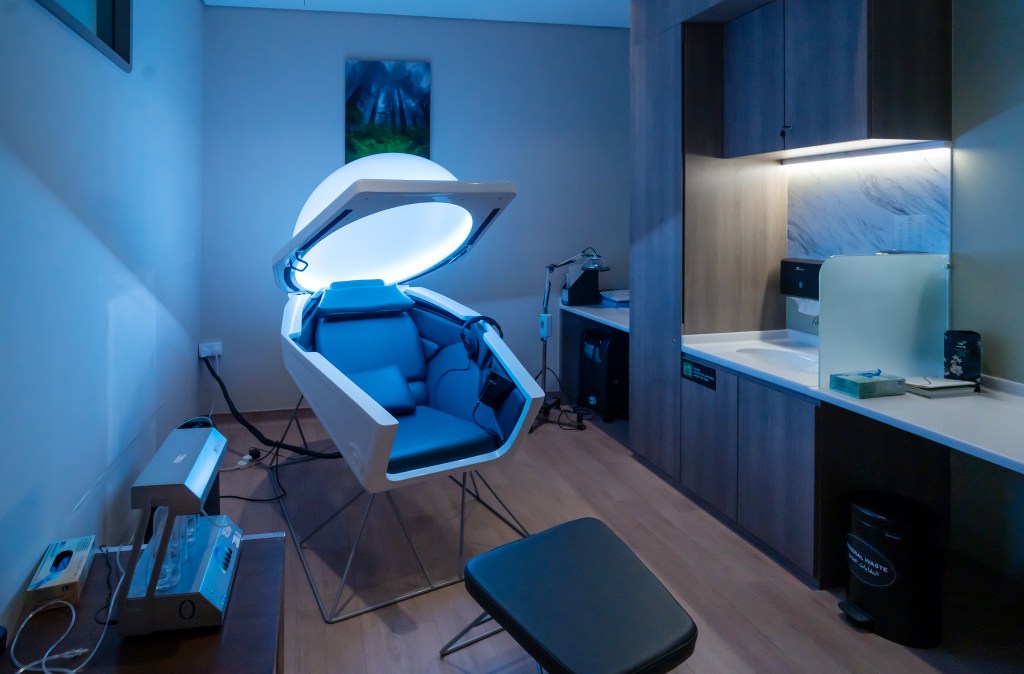
She describes the fragmentation that often characterizes the wider market. “One provider gives you your biomarkers, another gives you a nutrition plan, another addresses fitness, without necessarily connecting the dots.” At Wellth, a Wellness Counsellor helps guide individuals through disciplines including functional medicine, nutrition, Ayurveda, Chinese medicine, physiotherapy, osteopathy, emotional wellbeing, yoga, and Pilates, alongside diagnostics, IV therapies and treatments such as ozone therapy, infrared therapy, hyperbaric oxygen therapy and cryotherapy.
“Integration is the real differentiator,” she says. “What a patient experiences at Wellth is a guided, personalized ecosystem rather than a treatment menu. They don’t have to decide whether they need functional medicine, nutrition, acupuncture, physiotherapy, or a particular longevity therapy. They start with themselves, their goals and their health, and the different disciplines are brought together around that individual.”
Bridging East And West Without Losing Credibility
Combining such different disciplines under one roof raises an obvious question: how does Wellth maintain clinical rigor while drawing on both conventional and traditional medicine? “Wellth was built on a simple belief: no single health practice is greater than another, and the health sciences are most effective when they listen to one another and work together,” Moopen says. “The objective is to create a coherent, personalized health journey, rather than asking the individual to decide which therapy they need or navigate disconnected services themselves.”
She is careful to draw a line around how integrative and conventional medicine coexist within the model. “Wellth does not position integrative medicine as replacing conventional medicine; its philosophy is to bring different health sciences together to address the individual more holistically. It is less about choosing between Western and Eastern approaches and more about creating a personalized ecosystem where different approaches can complement one another with the individual at the center.”
Turning Data Into A Plan
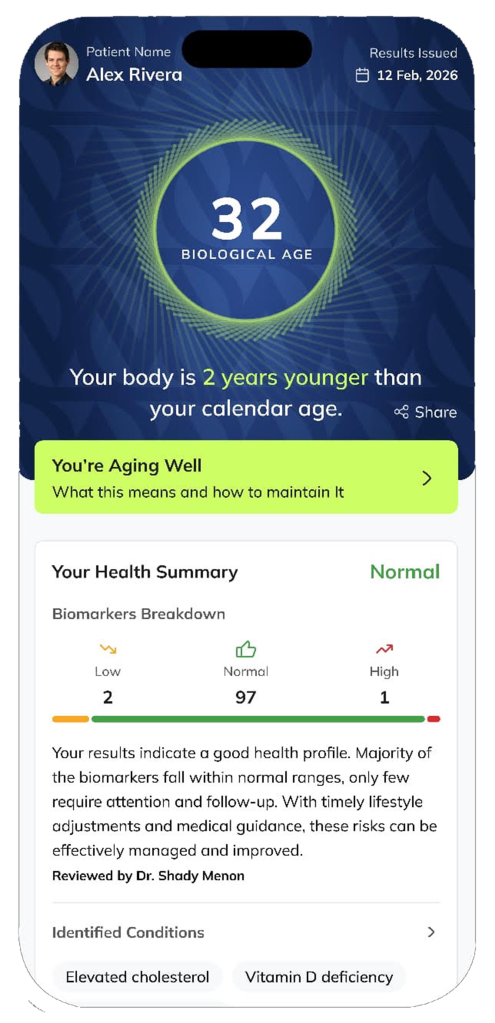
Central to Aster’s longevity approach is the ability to turn health data into meaningful, actionable insights. At Wellth, this begins with understanding the individual through assessments that can include biological age and advanced biomarkers, before translating those findings into a personalized health plan. “The purpose of assessment is not simply to give an individual a more sophisticated health report; it is to give them a clearer understanding of their health and what they can do to improve it,” Moopen says.
A key part of this wider approach is Thrive by myAster, Aster’s comprehensive preventive health assessment that brings together 100+ biomarkers and health indicators through a single test. Rather than looking at individual markers in isolation, Thrive is designed to provide a broader view of an individual’s health across multiple systems, helping identify areas that may require attention even before symptoms emerge. She cites Thrive by myAster, adding Aster’s longevity philosophy lies not simply in the volume of data it generates, but in how that information can inform the next steps , as an example of how data becomes meaningful only once it is interpreted in context. “The findings are then interpreted by Aster’s medical experts in context of the individual’s medical history, lifestyle, nutrition, stress, sleep, fitness and personal goals.”
In that sense, Thrive represents an important shift from reactive healthcare to a more proactive model: understand the body’s current state, identify potential risks and opportunities early, and use that knowledge to make informed changes before problems become more difficult to address.
Where Advanced Therapies Fit
Wellth’s offering includes a wide range of modalities, from NAD+ and IV therapies to hyperbaric oxygen therapy, cryotherapy, and infrared and red-light therapy. Moopen is careful to frame these as tools within a broader strategy rather than standalone solutions. “The key is that we do not start with the treatment and then look for a reason to use it. We start with the individual,” she says. “Longevity is the cumulative result of multiple factors and behaviors over time. Advanced therapies can be valuable tools within that journey, but they work best when they are part of a wider, personalized approach to sustaining health and wellbeing.” The underlying question has shifted: “We are not simply asking, ‘Which longevity treatment should you try?’ We are asking, ‘What does your health need, and how can we build the right combination of interventions around you for the long term?’”
Aesthetics From The Inside Out
As longevity, aesthetics and wellbeing increasingly converge, Moopen describes Wellth’s approach to appearance as fundamentally connected to overall health rather than separate from it. “At Wellth, we see aesthetics as part of the broader picture of health and vitality, rather than as something separate from it,” she says. Its Natural Aesthetics offering combines personalized health protocols with regenerative approaches, with an emphasis on gradual, natural-looking outcomes rather than dramatic transformation. “Longevity at Wellth is not simply about looking younger; it is about maintaining the health, vitality and confidence that allow people to feel well in their own bodies as they age.”
A Pillar Built Around Women’s Longevity
Women’s longevity is a particular area of focus for Wellth, spanning hormonal health, fertility, menopause, and bone health. Moopen situates this within a wider shift in how women’s healthcare is being approached across the Aster ecosystem, referencing the UAE’s National Health and Nutrition Survey, which found that 22.4 percent of adults is living with obesity, 25.9 percent with high blood pressure and 54.2 percent with high cholesterol, alongside 2023 National Cancer Registry data identifying breast cancer as the most diagnosed cancer among women.
“A woman should not have to enter a different healthcare system every time she moves from one life stage to another.” She points to Aster’s Care for Her program, launched in 2026 and structured across life stages from adolescence through post menopause, alongside Elle by Medcare, as complementary building blocks. She sums up the philosophy plainly: “Women’s longevity is not about creating a separate category of healthcare for women. It is about recognizing that women’s health is a lifelong journey and designing care that evolves with her.”
The Strength Of The Wider Ecosystem
Wellth does not operate in isolation. It sits within a wider Aster ecosystem that brings together hospitals, clinics, pharmacies, diagnostics, digital health, and preventive care. Across the GCC, this ecosystem spans 16 hospitals, 128 clinics, and 360 pharmacies, with more than 20 million patient visits annually. “Access to specialist medicine, diagnostics and clinical infrastructure is fundamental to building a serious longevity proposition, but the real advantage lies in bringing these capabilities together as complementary parts of one healthcare ecosystem,” Moopen says.
Aster Pharmacy is an important part of this 360-degree ecosystem, extending healthcare and wellbeing into people’s everyday lives through access to medicines, health and wellness, lifestyle products and pharmacist support. With Aster’s clinical, diagnostic, digital and preventive health capabilities, it enables a more connected journey, from understanding and preventing health risks to managing ongoing health and supporting long-term wellbeing.
Looking To The Next Five Years
Asked where the science and business of longevity are heading, Moopen predicts a shift from niche to mainstream, driven by better data and more precise biology. “Over the next five years, we believe longevity will move from being a relatively specialized segment of healthcare to becoming a much more mainstream, preventive and data-driven approach to medicine,” she says. “The market will increasingly move away from a model built around individual treatments or ‘anti-ageing’ experiences towards longitudinal health management.”
Her ambition for Wellth is equally clear. “We want Wellth to become a trusted destination for lifelong health optimization, bringing together modern diagnostics and functional medicine with nutrition, physical health, emotional wellbeing and time-tested healing traditions.” She continues: “It should become a place where they come to understand their health, identify opportunities early, build healthier habits and actively invest in their future healthspan.”
As she puts it, the shift underway is as much philosophical as scientific. “The most important shift will be from asking, ‘How long can we live?’ to asking, ‘How long can we remain healthy, independent, energetic and engaged?’ That is the future of longevity we want to contribute to.”
RELATED: From Dubai to Bali: How Longevium Is Building a Global Longevity Business
This article is part of Entrepreneur Middle East’s Special Healthcare Visionaries 2026 issue.
Longevity has become one of the most talked-about subjects in global healthcare, but for Aster DM Healthcare, the focus extends well beyond anti-ageing or individual longevity treatments. The Group’s approach brings together early detection and advanced diagnostics, preventive and personalized healthcare, nutrition and lifestyle interventions, physical and emotional wellbeing, women’s health, digital health, pharmacy, and specialist clinical care to help people understand their health, identify risks earlier and sustain healthspan for longer. This includes initiatives such as Thrive by myAster, which assesses 100+ biomarkers and health indicators, dedicated longevity and wellness offerings through Wellth, preventive and life-stage programs such as Care for Her by Aster and Elle by Medcare, and the wider network of hospitals, clinics, pharmacies and digital health services that enables people to move seamlessly between prevention, optimization and treatment. For Aster, longevity is therefore not about a single treatment, technology, or destination, but about creating a 360-degree healthcare ecosystem that helps people stay healthier, more active, and independent for longer.
Yet, for Alisha Moopen, Managing Director and Group CEO of Aster DM Healthcare and Co-Founder of Wellth, the Group’s dedicated longevity and wellness offering, was created from a simple observation: “Healthcare has traditionally been designed around illness, where people enter the system when something goes wrong, while there was a need for a more proactive approach for people who want to stay well, understand their health and invest in it before illness takes over,” she explains.

Entrepreneur Middle East Staff
Entrepreneur Staff