Startup Spotlight: Quinton van der Burgh, Founder of AverCare, on Making Health and Longevity More Accessible
After his own health struggles exposed the fragmentation of healthcare, the serial entrepreneur set out to build an AI-powered platform that brings health guidance, monitoring, and professional support into one ecosystem.
Disclosure: Our goal is to feature products and services that we think you'll find interesting and useful. If you purchase them, Entrepreneur may get a small share of the revenue from the sale from our commerce partners.
You're reading Entrepreneur Middle East, an international franchise of Entrepreneur Media.
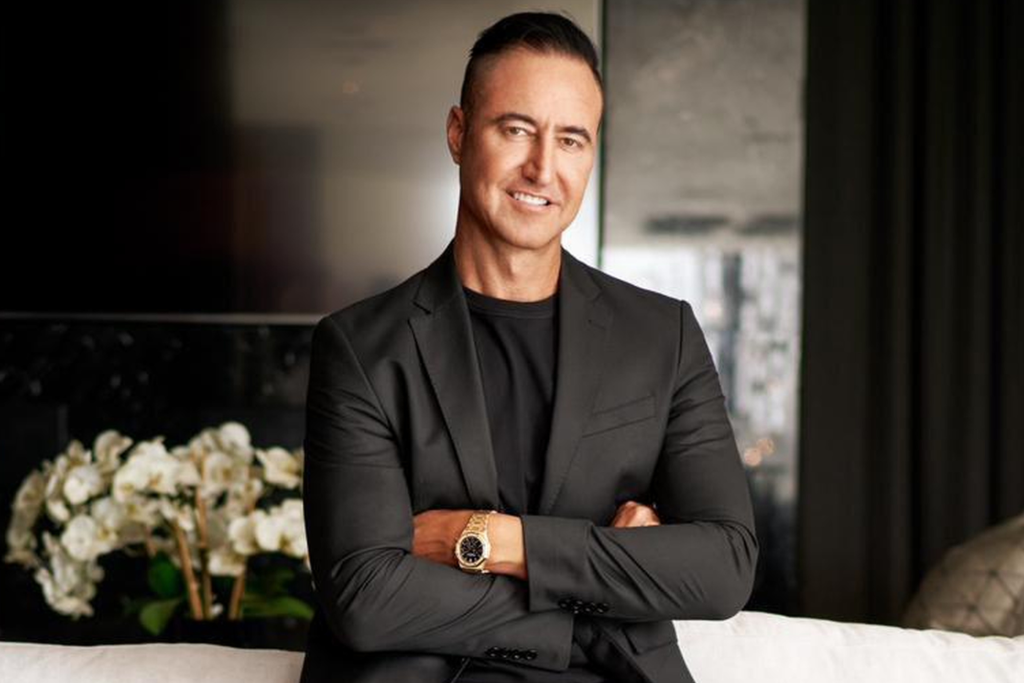
Of all the businesses Quinton van der Burgh has built across various industries, his entry into health tech was the most personal.
The South African-born and Dubai-based serial entrepreneur began his career at 21 by launching a telecommunications venture before going on to lead an engineering business in the UK that operated across several international markets. He later moved into media and television production, expanded into commodities, built businesses in emerging markets, and developed a broad investment portfolio within those sectors.
But nearly two decades into his entrepreneurial career, Van der Burgh found himself confronting a challenge that could not be approached like another business problem: his own health. The experience gave him a different perspective on an industry he had never planned to enter and led him to found AverCare, a global health tech company, in Dubai in 2021.
“I had spent years building businesses and operating at a relentless pace, and when my own health began to deteriorate, I discovered just how fragmented healthcare could be, even when you have access to excellent doctors and resources. That experience fundamentally changed the way I looked at health, technology, and impact,” he recalls.
Six years ago, Van der Burgh was dealing with prostatitis, chronic insomnia, chronic pain, and nerve-related issues at the same time, while he was maintaining an extremely demanding schedule, moving between meetings, flights and other business commitments.
“The specialists could address individual symptoms, and I was happy for them to do so because it allowed me to continue operating,” he says. “But over time, that approach took a significant toll on me mentally and, even more so, physically.”
“What I was experiencing was burnout combined with a number of physical health issues that had accumulated over time,” he admits. “I thought that I was living a healthy lifestyle: I trained every day and was extremely disciplined about it. Yet, I had very little understanding of preventative medicine, recovery, biohacking, biomarkers or the importance of continuously managing the underlying drivers of health.”
Despite having access to highly qualified doctors and specialists, Van der Burgh still felt that the overall experience remained fragmented. What he came to realize was that the problem was not necessarily a lack of medical expertise, but the absence of a system capable of bringing together different aspects of a patient’s health.
It was during this period that he met Dr. Werner Voster, a medical innovator who later became AverCare’s co-founder and head of research and development. Van der Burgh saw an opportunity to combine Voster’s technology with his own experience in building and scaling businesses, and the two spent the following years developing technology around healthcare.
“Healthcare has become incredibly specialized, which has created extraordinary expertise, but also fragmentation. AverCare was born from the belief that technology, particularly AI, can help connect those dots and give people a more complete, proactive understanding of their health, while keeping qualified medical professionals at the center of clinical care,” he explains.
Founded with a mission to democratize healthcare, the company is developing an AI-powered health and longevity app that combines AI-driven insights, medication and allergy tracking, chronic condition support, 24/7 telemedicine, multilingual access, and wearable technology into a single platform. Rather than focusing on one aspect of health, the platform brings together functions that would typically sit across separate applications.

At its center is Aver, an AI health and wellness coach that works alongside a smart calendar and management system. The technology is designed not only to provide personalized health guidance, but also to help users incorporate it into their daily routines. By working with a user’s schedule, for example, Aver can identify practical windows for activities related to their health and wellness goals. The platform is also being developed alongside connected wearable technology, creating a flow of health information that can be used to identify trends and provide more personalized insights over time.
The technology is supported by a network of more than 20 physicians and experts across conventional, integrative and regenerative medicine, longevity and wellness. For Van der Burgh, keeping that medical expertise behind the platform is particularly important as AI assumes a greater role in how people access and interpret health information.
“We are powered by AI, but driven by some of the world’s best specialists,” he says. “The technology gives us scale; the medical and wellness expertise gives the platform depth, context and credibility.”
AverCare has built a large language model supported by compressed health data, as well as an on-device scanning capability designed to assess 32 biomarkers. The aim is to provide users with an initial layer of health information and guidance, helping them understand patterns, organize their health data and recognize when professional input may be appropriate.
The technology can also help translate complex medical information into more accessible language, track medications and allergies, identify trends and support everyday health routines. Diagnosis, prescribing and clinical treatment decisions, however, remain the responsibility of licensed medical professionals.
To maintain that distinction, AverCare is designed to provide virtual access to general practitioners, specialists, mental health professionals, dietitians and physiotherapists. It is intended to complement a patient’s existing healthcare relationships, including through reports that can be shared with their healthcare providers.
For Van der Burgh, the ability to provide an initial layer of health guidance becomes particularly relevant in communities where immediate access to physicians or specialists is limited.
“If AI can responsibly give those individuals a useful first layer of information, help them identify when they need care and create a pathway to appropriate professional support, that can be enormously meaningful,” he says.
Advanced testing, specialist treatments, supplements and connected health technologies have become increasingly prominent as interest in healthier aging grows. Yet many remain prohibitively expensive, placing them beyond the reach of much of the population, another gap Van der Burgh wants AverCare to help close.
“It is relatively easy to build a longevity platform for people who already have access to the best doctors, testing and treatments. That is not the goal for me,” Van der Burgh says.
“Longevity and biohacking can become very sophisticated and very expensive, but the fundamentals of better health do not always have to be,” he adds. “If someone has a clear program to follow — covering basics such as sleep, movement, nutrition, recovery, stress management, and appropriate preventative screening — there are meaningful steps within their own control that can improve healthspan and potentially add years of healthier life.”
The broader objective, he says, is to give people a framework that helps them take greater control of the factors affecting their health.
AverCare’s business model spans consumer, business and government channels. For individual users, the company plans to offer subscription-based access to its health and wellness ecosystem alongside connected devices. Its broader strategy includes partnerships with employers and institutions, as well as government programs that could deploy parts of the technology across larger populations.
While AverCare is being built to serve consumers seeking a comprehensive health, longevity, and connected-device ecosystem, he also sees the potential for its technology to support populations with more limited access to healthcare.
“Our mission is therefore deliberately two-sided,” Van der Burgh says. “We want to build a world-class premium product for people who want the full health, longevity and connected-device ecosystem, but we also want the underlying technology to create access for people who cannot afford basic medical and healthcare support.”
Today, AverCare is operating through a waitlist as it prepares for a wider rollout. The company plans to open the platform and make its first wearable, AverFit, available to a broader user base in November 2026.


“We have funded the development with a long-term view: build the underlying technology and ecosystem properly first, then scale it through multiple channels rather than treating AverCare as a single-product application,” Van der Burgh explains, adding that AverCare has been built deliberately rather than rushed to market.
“We have funded the development with a long-term view: build the underlying technology and ecosystem properly first, then scale it through multiple channels rather than treating AverCare as a single-product application,” he explains, adding that AverCare took a deliberate approach to development rather than rushing the platform to market.
AverCare is entering the sector as demand for healthier ageing continues to grow globally. The World Health Organization projects that the number of people aged 60 and older will double to 2.1 billion by 2050, placing greater pressure on countries to rethink how healthcare systems support longer lives. In the UAE, the longevity market is projected to reach US$32 billion in 2026.
As AverCare looks to expand its reach, the Middle East is among its key areas of focus, with Van der Burgh saying Dubai offers a strategic base for the company’s growth.
“Dubai sits at the intersection of East and West, with a genuinely multicultural and multilingual population. That is exactly the type of environment you want when you are building a platform intended to work across countries, cultures and healthcare systems,” he explains. “It is also a place that understands ambition, technology and speed. The UAE has created an environment in which emerging technologies, AI, longevity and new models of healthcare can be discussed and developed at a global level.”
Moreover, in June this year, Dubai reaffirmed its commitment to the sector by establishing the Dubai Longevity Authority, aiming to position the emirate as a global hub for regulated longevity, wellness, and advanced healthcare.
For an entrepreneur whose previous businesses have spanned telecommunications, commodities, media and emerging markets, healthcare has also introduced a different way of thinking about scale and success.
“Building businesses in telecommunications, commodities, media and emerging markets was always interesting and, frankly, a lot of fun. But in each of those sectors, you are ultimately dealing with one part of an economy or one defined market,” Van der Burgh says.
“Healthcare is different because health touches everybody,” he adds. “It does not matter where you live, what industry you work in or what stage of life you are in. That makes the opportunity much broader, but it also makes the responsibility far greater.”
Van der Burgh believes advances in AI, combined with widespread smartphone adoption, are creating new possibilities for delivering health information and support at scale. But building AverCare has also changed what he considers a meaningful measure of that scale.
In his previous ventures, growth, market expansion, and commercial performance were often the primary benchmarks. With AverCare, he says commercial success remains important, but it is no longer the ultimate measure.
“For me, the real measure of success is how many people we can help live healthier lives and how much access we can create for people who have historically been excluded from high-quality health support,” he says.
His advice to other entrepreneurs looking to enter health tech: “Don’t start with the technology. Start with the problem, ideally one you understand deeply, and then determine where technology can genuinely improve the outcome,” Van der Burgh says.
“AI is incredibly powerful, but simply adding AI to an existing process does not automatically make that process better. In healthcare, especially, you have to understand the human problem, the clinical boundaries, the user’s daily reality and the trust required before deciding what the technology should do.”
“The technology became the means to solve that fragmentation; it was never the reason for building the company,” he says. “People do not need another widget or another isolated health app. They need systems that understand context, reduce complexity and help them take meaningful action.”
RELATED: The Business of Healthcare Excellence: Dr. Essa N. Al Essa, Co-Founder and CEO, Asnan Tower
Of all the businesses Quinton van der Burgh has built across various industries, his entry into health tech was the most personal.
The South African-born and Dubai-based serial entrepreneur began his career at 21 by launching a telecommunications venture before going on to lead an engineering business in the UK that operated across several international markets. He later moved into media and television production, expanded into commodities, built businesses in emerging markets, and developed a broad investment portfolio within those sectors.
But nearly two decades into his entrepreneurial career, Van der Burgh found himself confronting a challenge that could not be approached like another business problem: his own health. The experience gave him a different perspective on an industry he had never planned to enter and led him to found AverCare, a global health tech company, in Dubai in 2021.

Kristine Erika Agustin • Startup Editor, Entrepreneur Middle East
Kristine Agustin is a Startup Editor at Entrepreneur Middle East, covering startups, founders and developments... Read more