Matt Damon Is Heading to Abu Dhabi for the UN Water Conference. But What Connects His Water.org to the UAE’s Sustainability Ambitions?
Water.org leverages innovative financing models, particularly microfinance, to expand access to safe water and sanitation for underserved communities worldwide.
You're reading Entrepreneur Middle East, an international franchise of Entrepreneur Media.
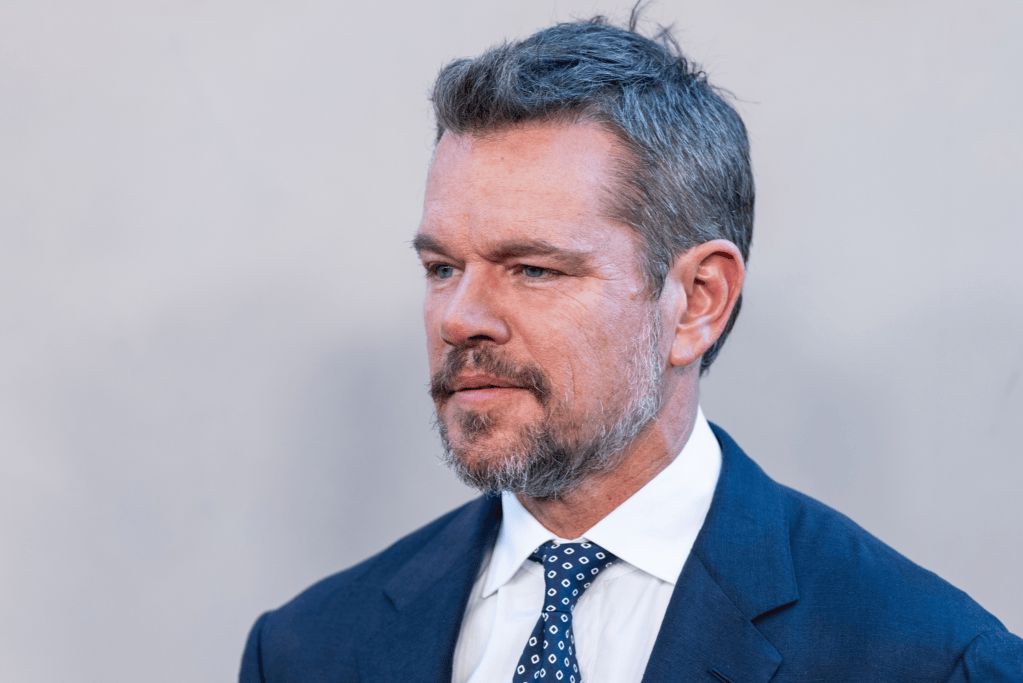
Oscar-winning actor Matt Damon, still basking in the worldwide success of the Christopher Nolan film “The Odyssey” (which has crossed US$1.5 billion in global box office earnings), is heading to Abu Dhabi next month. The Hollywood star is all set to be a part of the 2026 UN Water Conference, co-hosted by the UAE and Senegal in the capital city from December 8-10, which aims to accelerate global progress toward achieving the United Nations Sustainable Development Goal 6 (SDG 6) on clean water and sanitation.
Damon’s involvement comes courtesy his work at Water.org, a global nonprofit organization co-founded alongside social entrepreneur Gary White in 2009. Water.org leverages innovative financing models, particularly microfinance, to expand access to safe water and sanitation for underserved communities worldwide. Over the past 17 years Damon and White have steadily built a model that has facilitated over 21 million microloans and helped approximately 95 million people across the world gain access to safe water and sanitation. The duo also went on to establish WaterEquity, an impact investment manager dedicated to mobilizing private capital to address the global water crisis.
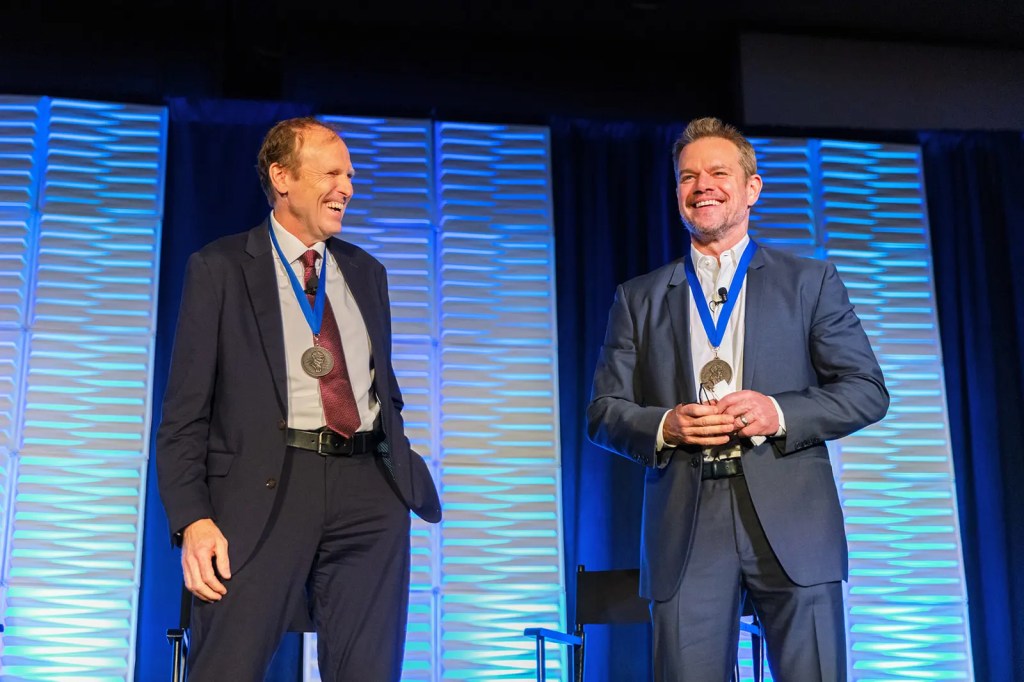
Earlier this month, many across the world were introduced to Damon’s sustainability-related endeavors when he appeared on an Instagram reel by American social media content creator Ted Zhar, in the latter’s widely popular “What do you do for a living?” street interview series. In it, the actor credits Bangladeshi economist and Nobel laureate Professor Muhammad Yunus and his microcredit model for inspiring the creation of Water.org.
Indeed, Professor Yunus is widely recognized as a pioneer of modern microfinance, having founded Grameen Bank in 1983 to provide small loans without collateral to low-income individuals, particularly women, to help them start businesses and earn a living.
Damon’s revelation, however, brought to the forefront of the conversation a topic that is perhaps not discussed as much as it should be within the context of water sustainability and access: the role of innovative financing models in addressing the global water crisis. Interestingly, it is at this very intersection of finance and water sustainability that Water.org’s work is increasingly aligning with the UAE’s own ambitions to advance global water security.
And already, the US-headquartered organization has been quietly making inroads within the UAE’s sustainability ecosystem. In June this year, Water.org partnered with the Abu Dhabi-based Global Climate Finance Centre (GCFC) to launch the Water Finance Framework, which draws on an analysis of 192 projects across 40 countries to help identify the most suitable financing mechanisms for different water-related projects. Then, in October 2026, Water.org also participated in the inaugural UAE Water Finance Leaders Forum, convened by the UAE Ministry of Foreign Affairs to explore ways to mobilize private and institutional capital, improve the financial viability of water projects, and facilitate greater collaboration across the global water finance ecosystem.
The UAE’s ambitions at the intersection of finance and water sustainability, however, extend much further. In February 2024, the country launched the Mohamed bin Zayed Water Initiative to accelerate technological innovation in addressing global water scarcity, with its first major project being a US$150 million investment backing the XPRIZE Water Scarcity competition. Meanwhile, the Abu Dhabi Fund for Development’s (ADFD) Abu Dhabi Global Water Platform aims to mobilize $2 billion in funding between 2026 and 2030, with ADFD itself pledging $1 billion, to improve water security for 10 million people worldwide.
The country’s banking sector is also increasingly recognizing the opportunities within water finance. In September this year, First Abu Dhabi Bank (FAB) announced an AED100 billion ($27.2 billion) blue finance target for 2026-2035, while also becoming the first financial institution in the Middle East and North Africa to sign the United Nations Sustainable Blue Economy Finance Principles.
Now, the efforts being undertaken by the UAE government, its financial and development institutions, as well as organizations like Water.org, have perhaps never been more imperative or urgent. According to a joint report released by the World Health Organization (WHO) and UNICEF in August 2025, one in four people globally –or 2.1 billion people– still lack access to safely managed drinking water, while 3.4 billion lack safely managed sanitation and 1.7 billion lack basic hygiene services at home. The disparities are particularly evident in the world’s least developed countries, where people are more than twice as likely to lack basic drinking water and sanitation services compared to those in other countries.
Alarmingly, the report also warns that, at the current pace of progress, achieving universal access to safely managed water and sanitation services by 2030 is increasingly out of reach.
Financing, of course, is not the only avenue through which the global water crisis can be addressed. Technological innovation, policy reforms, infrastructure development, and behavioral changes all have significant roles to play.
What, then, makes innovative financing models particularly compelling as a means of addressing the crisis, and why could they prove instrumental in scaling existing solutions?
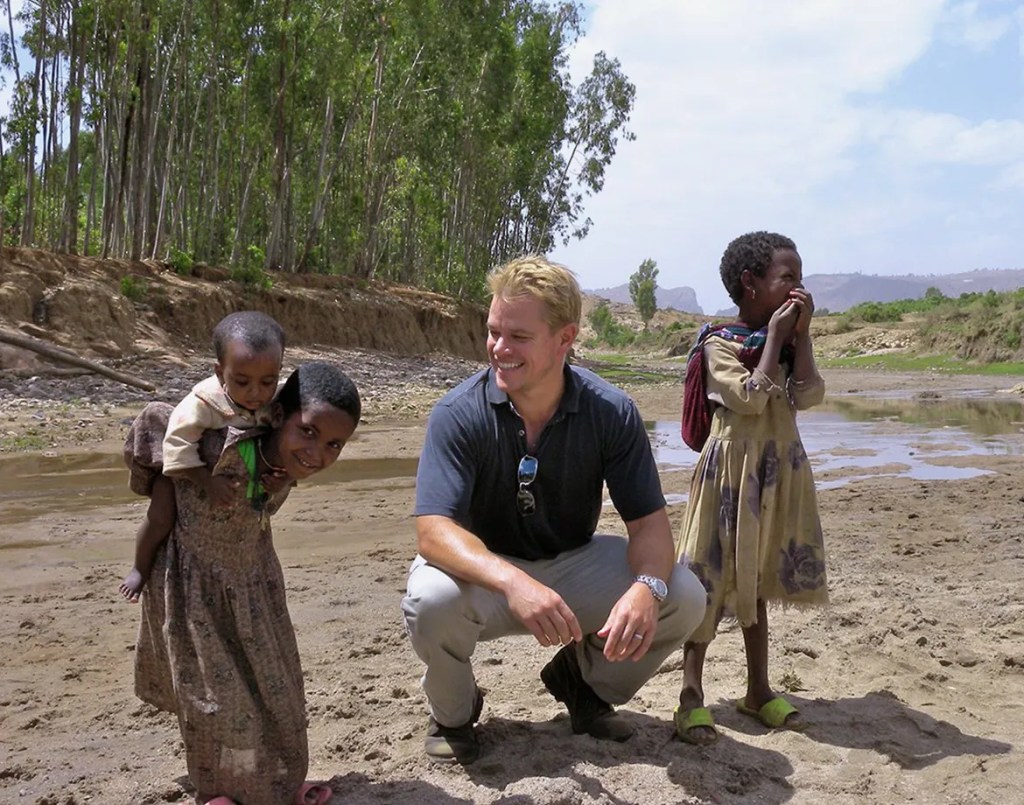
For many underserved communities, the challenge lies not necessarily in the absence of water and sanitation solutions, but in the inability to afford them. Water.org’s microfinance model is a case in point: by breaking down the upfront costs of installing household water connections or sanitation facilities into manageable repayments, the organization has demonstrated how access to capital can translate into access to basic necessities. According to Water.org, its network of more than 163 partners worldwide has mobilized US$8.6 billion in capital for water and sanitation loans, with its WaterCredit initiative recording a 98% repayment rate globally. The organization also notes that borrowers are willing to repay loans at market interest rates because the cost of living without improved water and sanitation is often higher. These figures highlight how financing water accessibility can present an opportunity to generate both financial returns and social impact.
On a larger scale, innovative financing mechanisms can also help water technology businesses commercialize their solutions, attract private investment into water infrastructure, and enable governments and development institutions to make better use of available capital. The opportunity, therefore, lies not in positioning finance as an alternative to technological innovation or infrastructure development, but as an enabler of both.
It is perhaps fitting, then, that the upcoming UN Water Conference in Abu Dhabi will, for the first time, feature a dedicated interactive dialogue on “Investments for Water” – an indication of the growing recognition that addressing the global water crisis is as much a financing challenge as it is an environmental one.
As a nation that has established itself as a hub for fintech innovation, hosted COP28, and is now accelerating its ambitions in global water security, the UAE is well positioned to bring the worlds of finance and water sustainability closer together. Water.org’s expertise in this space, coupled with the global visibility Damon brings to the cause, could well serve as a catalyst for further collaboration and investment.
RELATED: The Human Capital Question: Can Businesses Achieve Sustainability Goals Without Investing In People?
Oscar-winning actor Matt Damon, still basking in the worldwide success of the Christopher Nolan film “The Odyssey” (which has crossed US$1.5 billion in global box office earnings), is heading to Abu Dhabi next month. The Hollywood star is all set to be a part of the 2026 UN Water Conference, co-hosted by the UAE and Senegal in the capital city from December 8-10, which aims to accelerate global progress toward achieving the United Nations Sustainable Development Goal 6 (SDG 6) on clean water and sanitation.
Damon’s involvement comes courtesy his work at Water.org, a global nonprofit organization co-founded alongside social entrepreneur Gary White in 2009. Water.org leverages innovative financing models, particularly microfinance, to expand access to safe water and sanitation for underserved communities worldwide. Over the past 17 years Damon and White have steadily built a model that has facilitated over 21 million microloans and helped approximately 95 million people across the world gain access to safe water and sanitation. The duo also went on to establish WaterEquity, an impact investment manager dedicated to mobilizing private capital to address the global water crisis.
Earlier this month, many across the world were introduced to Damon’s sustainability-related endeavors when he appeared on an Instagram reel by American social media content creator Ted Zhar, in the latter’s widely popular “What do you do for a living?” street interview series. In it, the actor credits Bangladeshi economist and Nobel laureate Professor Muhammad Yunus and his microcredit model for inspiring the creation of Water.org.

Aalia Mehreen Ahmed • Senior Features Editor, Entrepreneur Middle East
Entrepreneur Staff
Senior Features Editor at Entrepreneur Middle East and host of Anchored Echoes, with nearly seven... Read more