Architects Of Trust: Charbel “Charles” Dersahakian
The Judgment Call: How CVML’s Charbel “Charles” Dersahakian turns legal opinions into decisions clients can live with
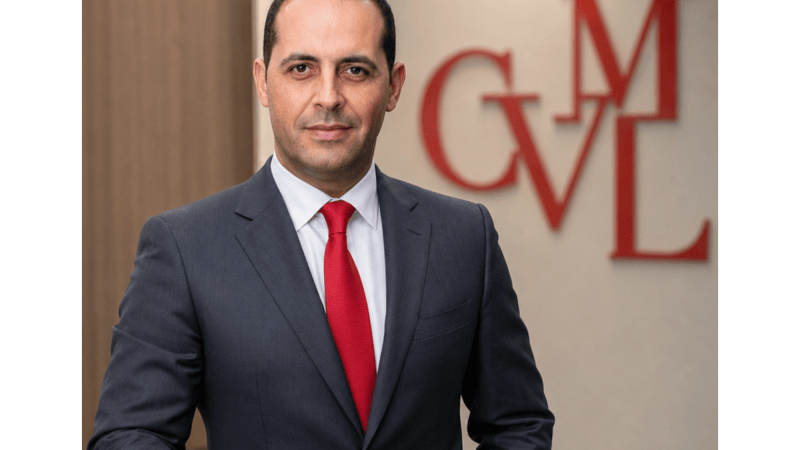
CHARBEL “CHARLES” DERSAHAKIAN
You're reading Entrepreneur Middle East, an international franchise of Entrepreneur Media.
Charbel “Charles” Dersahakian, Managing Partner of CVML, builds his practice on advice a client can act on, structures that survive disagreement and the willingness to question what only appears credible.
Ras Al Khaimah Investment Authority. Unilever. TECOM Investments. Charbel “Charles” Dersahakian has held senior legal roles at all three, alongside more than two decades in the UAE legal market, which means he has worked on several sides of the decisions he now advises on. Today, he is Managing Partner of CVML, the independent firm founded in Paris in 2003 and established in the Dubai International Financial Centre since 2011.
That background has left him impatient with advice that catalogs every danger but offers no direction. Government taught him to consider the precedent a decision creates; multinational business sharpened his attention to execution. Private practice brings both perspectives to someone who needs to act. And in his written responses for Architects of Trust, he draws the distinction bluntly: “a legal opinion can be correct and still leave the client exactly where you found them.”
His task, as he describes it, is to identify the exposure, explain what can be protected and recommend a course, while making the remaining uncertainty clear. The advice may enable a transaction. It may also require telling a powerful client that a legal victory would carry an unacceptable commercial cost. What matters is what happens after the meeting, when the client must live with the decision.
The gap between legal possibility and commercial preparedness is especially visible when investors enter the UAE. Dersahakian sees the speed of incorporation mistaken for evidence that the harder questions have been settled. “Dubai’s efficiency is occasionally mistaken for permission to skip the thinking,” he says. A license, in his account, leaves much to resolve about ownership, permissions, employment and disputes, and a successful overseas business model still needs examination in its new setting.
He applies a similar test to legislation, drawing on his experience contributing to laws and regulations. Here, credibility emerges through administration: who interprets a provision, how an approval is obtained and whether a refusal can be challenged. He describes the hypothetical absurdity of an approval requiring a document that nobody has authority to issue (drafting, in other words, must account for the whole process). His measure of a credible framework is whether an investor without privileged access can obtain a clear answer, rely on it and challenge it fairly.
Who Owns Saturday Morning?
Inside a company, deferred decisions create their own vulnerabilities. Founders can spend weeks negotiating percentages while leaving control largely unexplored: who appoints directors, who authorizes payments and who can prevent a decision simply by refusing to attend a meeting. “At incorporation, ‘later’ sounds like a date,” Dersahakian notes. “In a dispute, it becomes an invoice.”
His concern extends to equity awarded for contributions that never materialize, and to essential assets held outside the company seeking investment. A founder may personally own the intellectual property, or an affiliate may hold a critical contract. By the time an investor asks what is being acquired, the ownership structure can expose a gap between the company on paper and the business everyone thought it contained.
Franchise relationships bring another version of that gap. A brand expects investment and adherence to its system; an operator expects exclusivity and room to exercise local judgment. Both may leave the same meeting satisfied without sharing the same understanding. Dersahakian starts by asking what each believes the other has promised, then works through territory, online sales, expenditure and the economics of expansion. Renewal and exit deserve attention while enthusiasm is still high. His question is deliberately concrete. “If the partnership ends on Friday, who owns Saturday morning’s problems?” he asks.
In a family business, the assumptions can be older and harder to expose. Running the company may be understood as a claim to inherit it. Equal treatment may be confused with equal voting rights. A founder may regard an instruction given years earlier as a settled succession plan. Dersahakian argues that those expectations need to be heard, including the sacrifices that shaped them, before the structure can be addressed.
Then the discussion turns practical. Who can act if the founder cannot? How does a family member leave without destabilizing the business? Separating ownership, management and income can accommodate different needs without diminishing anyone’s importance.
His own firm faces a related question about authority: will a managing partner support a lawyer whose sound advice displeases a valuable client? Dersahakian says challenge must follow careful analysis and an understanding of the commercial objective, but escalation should not turn a sound conclusion into a more convenient one. Leadership, in his account, must recognize judgment and early warnings alongside the fees a lawyer brings in.
No Artificial Liability
Artificial intelligence gives that responsibility a new setting. Before discussing CVML’s Legal Eye on AI, Dersahakian credits the team who write the articles and keep him informed. His own starting point is accountability. “Artificial intelligence does not come with artificial liability,” he says. A board approving a system that influences consequential decisions, then, needs to establish who owns those decisions when the system gets something wrong.
He wants directors to look beyond a demonstration or an average accuracy score. How was the system tested against the people it will affect? Where do its errors fall? What happens when a supplier changes the model? The data deserves equally close examination: where it came from, who can access it and whether the business is entitled to use it for the intended purpose.
Human oversight, he argues, also needs substance. A reviewer must have the competence, time and authority to disagree with the output. People affected by a decision need a way to seek an explanation or challenge an outcome. Monitoring, escalation and the ability to suspend a system are all part of the operating arrangements he would expect a board to examine.
Behind those questions lies his broader concern about the next five years: technology is lowering the cost of appearing credible. He describes a business environment in which convincing documents, corporate identities and even video interactions can be fabricated. In his view, the speed of regional commerce makes verification more consequential. The appearance of a complete transaction can no longer carry the weight of proof that its participants and substance are genuine.
That changes what he believes clients will value in a lawyer. Many already arrive with research, proposed solutions and references to provisions they think apply. The professional contribution moves toward testing the evidence, examining the structure and standing behind the reasoning, while still stating plainly what remains uncertain. It is a demanding proposition for legal advisers, and Dersahakian puts the commercial implication forcefully. “We have spent the last few decades selling hours,” he says. “The next few years will force us to sell certainty.”
Charbel “Charles” Dersahakian, Managing Partner of CVML, builds his practice on advice a client can act on, structures that survive disagreement and the willingness to question what only appears credible.
Ras Al Khaimah Investment Authority. Unilever. TECOM Investments. Charbel “Charles” Dersahakian has held senior legal roles at all three, alongside more than two decades in the UAE legal market, which means he has worked on several sides of the decisions he now advises on. Today, he is Managing Partner of CVML, the independent firm founded in Paris in 2003 and established in the Dubai International Financial Centre since 2011.
That background has left him impatient with advice that catalogs every danger but offers no direction. Government taught him to consider the precedent a decision creates; multinational business sharpened his attention to execution. Private practice brings both perspectives to someone who needs to act. And in his written responses for Architects of Trust, he draws the distinction bluntly: “a legal opinion can be correct and still leave the client exactly where you found them.”

Entrepreneur Middle East Staff
Entrepreneur Staff