Architects Of Trust: Clifford Chance
Before the Capital Moves: How Clifford Chance turns solar parks, blue bonds and buyouts into deals investors can sign
Mohammed Al-Shukairy
You're reading Entrepreneur Middle East, an international franchise of Entrepreneur Media.
Clifford Chance, present in the UAE since 1975, advises the lenders, issuers and buyers whose agreements let regional businesses and investors commit capital.
A 1.8GW solar plant. A US$100 million blue bond. A Singapore-headquartered buyer entering the UAE’s company formation market. Over roughly ten months between March 2024 and January 2025, Clifford Chance announced its role on all three. A power plant’s capacity fits into a single number, but the agreements that make it financeable are far harder to sum up. Before lenders commit, they need a workable account of how a project will be built, how it will earn revenue and what happens if those expectations aren’t met. Much of the legal work happens in that gap between an investment proposition and a decision to fund it.
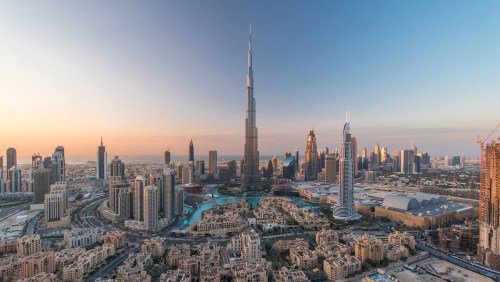
Take the 1.8GW sixth phase of Dubai’s Mohammed bin Rashid Al Maktoum Solar Park. In March 2024, the firm announced that it had advised the syndicate of banks backing Masdar’s team in reaching financial close. Its account identified separate finance, construction and hedging workstreams, drawing on lawyers in Abu Dhabi, Dubai and London. In other words, a single project can need several bodies of legal expertise working in step.
The firm’s presence in the UAE dates to 1975. Its Abu Dhabi and Dubai offices are part of a wider international network serving financial institutions, companies and government entities. In Saudi Arabia, its joint venture is AS&H Clifford Chance, a separately constituted and independently managed law firm. That distinction matters: a shared name doesn’t erase the legal structures through which advice is actually delivered.
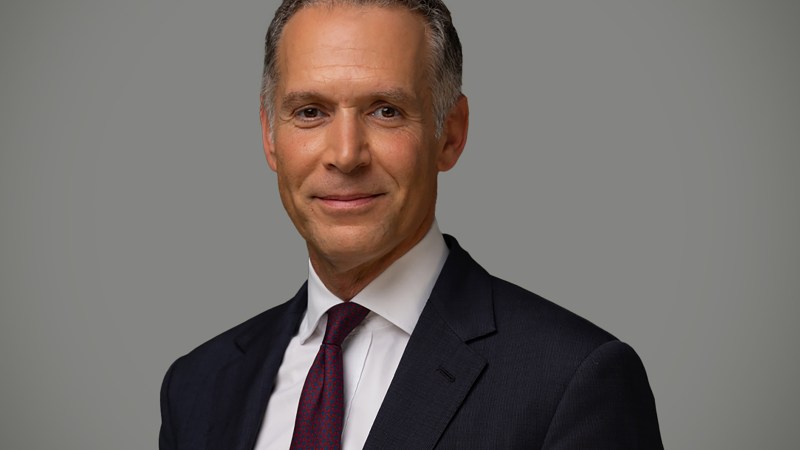
Among the figures associated with the regional practice is Dubai-based managing partner Mohammed Al-Shukairy, whose experience spans takeovers, mergers and capital raising in London and the Middle East. He joined Clifford Chance in London in 2002 and relocated to Dubai in 2011, the year he became a partner. That career path mirrors the link between international financial markets and regional business that runs through the firm’s work.
Blue Bond, Clear Terms
Financing mandates also put lawyers close to the question of what investors are actually being promised. In December 2024, Clifford Chance advised DP World on a US$100 million blue bond intended to fund projects connected with maritime transport, ports and the marine environment. DP World’s own announcement identified a five-year term and a 5.25% coupon. The legal team was led by Stuart Ure, identified in the firm’s announcement as its Head of Middle East Capital Markets.
The deal brings together two propositions: a financial instrument with defined payment terms, and a stated environmental purpose for the money raised. For an investor, understanding how those two relate is part of evaluating the investment. Of course, announcing a sustainable financing doesn’t by itself establish the environmental results of the projects it supports. That makes precision in describing eligible activities and financing commitments an important part of the story.
A different kind of coordination came in January 2025, when Clifford Chance announced its advice to Singapore-headquartered business services platform Ascentium on the acquisition of Virtuzone. The transaction brought an international buyer into the UAE company formation and corporate services market. Led by corporate partner Deniz Tas, the firm’s team combined UAE corporate and real estate lawyers with tax expertise in London and compliance specialists in Singapore.
When the Company Builders Get Bought For entrepreneurs, the transaction has a particular resonance. The businesses that help founders set up companies face questions of ownership, expansion and cross-border investment themselves. In the Virtuzone deal, company formation, compliance and international dealmaking all meet in the same story. For a founder considering an exit, a purchase like this extends well beyond negotiating a sale agreement into the different legal requirements surrounding the business.
The firm’s more recent analysis looks at how infrastructure itself is changing. A June 2026 briefing, following an event held with the International Project Finance Association, examined the delivery of smart cities. It argued that interconnected transport, utilities and digital services need clear governance and payment arrangements if they are to attract long-term private investment. The challenge, in this account, is getting the different systems to work together.
That ties straight back to the commercial purpose of legal advice. When several parties share responsibility for an asset or service, the boundaries between their obligations start to carry real consequences. A financing structure has to stay intelligible to those providing capital, while the underlying contracts need to make sense to those delivering the project. Ambiguity at that junction can turn into a business problem long after the original transaction has closed.
Lenders on a solar park, an issuer on a bond, a buyer on an acquisition: three seats at three different tables, each with its own client interests. If the smart-city argument is right, the next mandates will put even more parties around the same table, and the terms they sign will have to hold for all of them.
“Financing mandates also put lawyers close to the question of what investors are actually being promised.”
Clifford Chance, present in the UAE since 1975, advises the lenders, issuers and buyers whose agreements let regional businesses and investors commit capital.
A 1.8GW solar plant. A US$100 million blue bond. A Singapore-headquartered buyer entering the UAE’s company formation market. Over roughly ten months between March 2024 and January 2025, Clifford Chance announced its role on all three. A power plant’s capacity fits into a single number, but the agreements that make it financeable are far harder to sum up. Before lenders commit, they need a workable account of how a project will be built, how it will earn revenue and what happens if those expectations aren’t met. Much of the legal work happens in that gap between an investment proposition and a decision to fund it.
Take the 1.8GW sixth phase of Dubai’s Mohammed bin Rashid Al Maktoum Solar Park. In March 2024, the firm announced that it had advised the syndicate of banks backing Masdar’s team in reaching financial close. Its account identified separate finance, construction and hedging workstreams, drawing on lawyers in Abu Dhabi, Dubai and London. In other words, a single project can need several bodies of legal expertise working in step.

Entrepreneur Middle East Staff
Entrepreneur Staff