Architects Of Trust: Habib Al Mulla And Partners
All in the Family: How Habib Al Mulla and Partners is giving continuity a legal form
Habib Al Mulla And Partners
You're reading Entrepreneur Middle East, an international franchise of Entrepreneur Media.
In May 2025, Sharafi Group Investments entered a new chapter as a family enterprise. Habib Al Mulla and Partners announced that it had registered the company under the UAE’s family companies legislation. The Ministry of Economy subsequently included Sharafi among the first businesses admitted to its unified registry, naming the firm’s Alia Al Mulla in its account of the milestone.
A family business can build considerable value through relationships, experience and the authority of its founders, but preserving that value across generations means making decisions about ownership and responsibility explicit. Legal structure gives those decisions a form that can outlast the people making them.
Built Alongside the Institutions
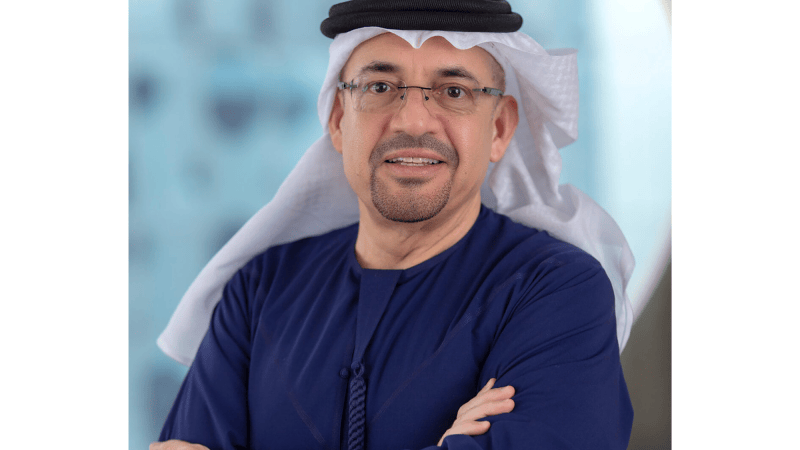
Founded in 1984, Habib Al Mulla and Partners has grown up with a country that keeps adapting its commercial institutions. Its founder, Dr. Habib Al Mulla, combines private practice with a history of legislative and public service. His professional biography records work on the legal framework establishing the Dubai International Financial Centre, as well as service on the Federal National Council and its legislative and economic committees.
There is a regulatory chapter too. The Dubai Financial Services Authority’s own records identify him as its former chairman; its 2007 annual report records the end of his term in June that year. That places the practice’s history squarely in the period when Dubai was building institutions to serve an international financial market.
His academic path runs through the UAE University, Harvard Law School and the University of Cambridge. In practice, his work includes arbitration and giving expert evidence on UAE law before foreign courts and international tribunals. Such assignments demand more than familiarity with legal provisions: they require explaining how a domestic system works to decision-makers whose own legal assumptions may be different.
Across the wider firm, dispute resolution remains a central area of practice alongside corporate, banking and other commercial work. That pairing is a natural one. A carefully drafted agreement cannot eliminate disagreement, but it can reduce uncertainty about what was intended and which responsibilities were accepted.
Continuity, Registered
The Sharafi registration brings that thinking into the family enterprise. In its announcement, the Ministry set out the registry’s place within a framework addressing matters including share transfers, valuation and continuity between generations. Its account also identified Alia Al Mulla as head of the firm’s Family Business Restructuring Division. Here, the firm’s advisory work meets the practical rollout of a national framework for family enterprise.
And the stakes go beyond formal compliance. Family members may sit in the same enterprise as owners, executives or beneficiaries, with different expectations in each role. Spelling out those expectations is part of preparing the business for future decisions. Registration provides the framework (the quality of governance depends on how the family uses it over time).
Of course, not every client is an established family group. In September 2025, Emirates NBD announced a memorandum of understanding with Habib Al Mulla and Partners in support of Project 54. The initiative was designed to provide legal support to 54 Emirati small and medium-sized enterprises, with the bank’s National Digital Talent Incubator contributing participating startups. The partnership also envisaged guidance on compliance requirements and help with banking access, linking legal preparation to the practical demands of starting a business.
For a founder, legal advice early in a venture can shape decisions that become expensive to revisit later. The division of ownership, the terms of a partnership and the treatment of obligations to customers or suppliers all influence how a company can grow. Project 54 moves those questions closer to day one of the entrepreneurial journey.
Then there is the classroom. In 2025, Habib Al Mulla Academy announced a legal research and writing competition with LexisNexis and Saint Joseph University Dubai, conducted mainly in Arabic. Its emphasis on research and clear argument targets the skills through which legal knowledge is tested, explained and passed on. It is a distinct initiative, connected to the practice through its founder’s wider professional activity.
A family registry, an SME program and a writing competition may look like three different stories. They are really one: continuity at every level, from the institutions that govern a market to the companies operating within it and the lawyers who will interpret its rules next. For Habib Al Mulla and Partners, the job is handing accumulated experience to whoever takes the responsibility on next, whether that is the next generation of a family business, an Emirati founder or a law student writing in Arabic.
In May 2025, Sharafi Group Investments entered a new chapter as a family enterprise. Habib Al Mulla and Partners announced that it had registered the company under the UAE’s family companies legislation. The Ministry of Economy subsequently included Sharafi among the first businesses admitted to its unified registry, naming the firm’s Alia Al Mulla in its account of the milestone.
A family business can build considerable value through relationships, experience and the authority of its founders, but preserving that value across generations means making decisions about ownership and responsibility explicit. Legal structure gives those decisions a form that can outlast the people making them.
Built Alongside the Institutions

Entrepreneur Middle East Staff
Entrepreneur Staff