Architects Of Trust: Muhammad Tariq
From the Bar to the Business: How InZone Group’s Muhammad Tariq is teaching founders what comes after incorporation
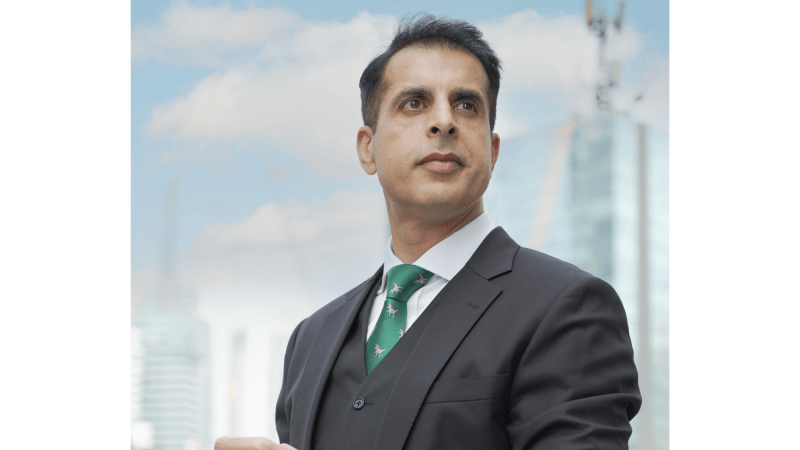
MUHAMMAD TARIQ
You're reading Entrepreneur Middle East, an international franchise of Entrepreneur Media.
Muhammad Tariq, Founder and CEO of InZone Group, draws on his experience as a lawyer and entrepreneur to help founders establish strong legal foundations and develop the skills to grow their businesses.
When Muhammad Tariq swapped legal practice for entrepreneurship, he discovered how much he still had to learn. “When I transitioned from being a lawyer to becoming an entrepreneur myself, I had to learn how to sell, market, build a product, create systems and build teams,” he says. Legal expertise had given him a view of the structures businesses needed, but running one demanded capabilities he had to develop himself.
The road to that point was a long one. Born in Kamalia, Pakistan, Tariq studied law in the UK and was called to the Bar at Lincoln’s Inn before practicing in Pakistan and moving to Dubai in 2007. He later founded Legal Inz, followed by corporate services firm InZone Group, where he serves as Founder and CEO. The lessons of that transition now inform both the advice he gives and the direction in which he wants to take InZone Group.
A System of Systems
In his written responses for Architects of Trust, Tariq describes a business as “a system of systems.” The product sits within an organization that needs cash flow, people, customers and a workable legal framework. His own transition made the connections between those demands personal. He had to learn how they functioned together, and he wants founders to recognize them before gaps begin to constrain their businesses.
The original motivation for InZone Group came from a problem he had encountered as a lawyer: entrepreneurs could move quickly into a venture without understanding whether its foundations would support it. Some chose a setup on price alone. Others entered partnerships on the strength of friendship, leaving their rights and expectations undocumented. Tariq wanted to bring greater clarity to those early decisions.
His concern is the distance between launching an idea and building something capable of lasting. A founder may know the product intimately while giving less thought to ownership arrangements or the structure a future investor might require. For Tariq, examining those questions is part of taking the idea seriously.
That said, he recognizes the pressure to get started cheaply, particularly when funding is scarce. Yet his advice begins with the business the founder hopes to build: its market, people, activity and ambitions. “Ultimately, the decision should not be driven by cost alone,” he says. It is a perspective shaped by someone who has had to make commercial choices himself, as well as advise others on their consequences.
“I have always believed that Dubai itself thinks and behaves like an entrepreneur,” Tariq says. He sees InZone Group as a reflection of that spirit: Dubai creates opportunities for businesses to start and grow, while his firm helps entrepreneurs establish themselves and navigate what comes next. He also points to a shift in the founders choosing the UAE. Faster, more affordable setup and a growing network of incubators, accelerators and funding opportunities have made the country accessible to a broader range of entrepreneurs. Increasingly, he says, younger founders are choosing it as a base from which to build international businesses.
That optimism comes with a wish list. Tariq wants stronger incubation and funding opportunities, and a greater role for universities in encouraging students to pursue ideas of their own. His interest is in the environment around the founder: the knowledge, relationships and support that help an ambition become a functioning business.
Teaching the Founder’s Trade
Education is central to the next phase Tariq describes for InZone Group. Through his Think and Grow 10X podcast, he explores business and leadership with other entrepreneurs.
Within InZone Group, he says the skills he had to learn as a founder—from sales and marketing to building systems and teams—now inform support offered to clients beyond incorporation. He wants to deepen that work by helping entrepreneurs understand how to run and scale their businesses, giving them practical tools and guidance, and creating communities where they can learn from one another.
He applies that emphasis internally, too. Tariq says his team is trained to think like entrepreneurs, understand their difficulties and take a genuine interest in the businesses they advise. A recommendation should follow an understanding of the founder’s plans. And as tax and compliance questions become more prominent, he wants his advisers to initiate those conversations even when a client has not yet recognized the need.
Tariq expects AI and automation to make research, documentation and routine processes faster. “Whatever can be automated will be automated,” he says. The adviser’s role remains essential where a business’s circumstances require judgment. Preparing a shareholders’ agreement, for example, involves understanding each shareholder’s needs and complementary skills, alongside the business’s expansion plans and funding requirements. Producing the document is only one part of that work.
His answer to automation, then, places more weight on the adviser’s ability to understand the person across the table. It mirrors what becoming a founder taught him: knowing the technical answer is one part of the work; understanding the enterprise around it takes a broader set of skills.
For Tariq, the next chapter brings his legal and entrepreneurial experience together. He wants InZone Group to help founders establish their businesses correctly, then support them with the knowledge, tools and community they need to grow. Education extends that role beyond the initial setup, while the legal foundations remain part of what allows a business to pursue its ambitions. As he puts it: “A business starts with potential.”
Muhammad Tariq, Founder and CEO of InZone Group, draws on his experience as a lawyer and entrepreneur to help founders establish strong legal foundations and develop the skills to grow their businesses.
When Muhammad Tariq swapped legal practice for entrepreneurship, he discovered how much he still had to learn. “When I transitioned from being a lawyer to becoming an entrepreneur myself, I had to learn how to sell, market, build a product, create systems and build teams,” he says. Legal expertise had given him a view of the structures businesses needed, but running one demanded capabilities he had to develop himself.
The road to that point was a long one. Born in Kamalia, Pakistan, Tariq studied law in the UK and was called to the Bar at Lincoln’s Inn before practicing in Pakistan and moving to Dubai in 2007. He later founded Legal Inz, followed by corporate services firm InZone Group, where he serves as Founder and CEO. The lessons of that transition now inform both the advice he gives and the direction in which he wants to take InZone Group.

Entrepreneur Middle East Staff
Entrepreneur Staff