Five Ways Web3 Will Bring Us Closer Together
It is imperative that these virtual places are empowered with solutions for digital accountability, reality and human empathy at their core.

Shutterstock
Opinions expressed by Entrepreneur contributors are their own.
You're reading Entrepreneur Middle East, an international franchise of Entrepreneur Media.
Web3 is the new frontier for the internet and for human communication. While some may refer to this next generation as the metaverse, what we’re experiencing is a transformative shift from isolated experiences as users of social media and 2D internet pages, to real experiences of togetherness in immersive 3D environments.
At The TMRW Foundation, an enterprise I founded in 2017, we believe that real human presence should be at the forefront of this shift. It is imperative that these virtual places are empowered with solutions for digital accountability, reality and human empathy at their core. To this end, we’re creating the Internet of Life – and here are five ways Web3 will bring us closer together:
1. Powerful, practical solutions for daily life In this shift, both public and private services, along with the people they serve, are positioned to benefit from groundbreaking new ways of interacting in a more meaningful, virtually real, and secure way. Let’s consider the example of telemedicine. 3D environments provide endlessly enhanced options for healthcare service provision, while offering previously unparalleled accessibility that proves crucial for patients of diverse needs. There is a genuine desire and profound need for seamless services of this kind that are powered by Web3.
A 2020 doctoral thesis by Dr. Shaikha Abdulkarim Abdool -who is now the head of the Data Science and Informatics Section at the UAE Ministry of Health and Prevention (MOHAP)- found that, from a survey of more than 300 people in the UAE, 71% agreed there is a need for telemedicine, and 76% said telemedicine would be useful. The study also showed that nearly 68% agreed telemedicine would provide improved access to healthcare, while the biggest concerns in using telemedicine were security (53%) and reliability (51.5%).
With powerful Web3-enabled services, patients can be assured of enhanced security features that can be trusted, and, with ever-improving telecommunications infrastructure in the region, reliability will no longer be a hinderance to innovation. Admittedly, not every kind of medical care can be done over the internet, but international studies by J.D. Power in the US found that the preferred reasons for using telemedicine were for prescription refills, reviewing medication options, discussing test results, and for mental health treatment.
Simply put, 3D internet environments can enable better, more convenient, and cost-effective experiences. Government administration, banking and financial services, education, real estate, entertainment, gaming, healthcare and other social applications can all benefit from a real-life-focused, immersive, and trustworthy Web3 infrastructure. At The TMRW Foundation, we have developed proprietary technology to underpin that infrastructure, which we call RealityOS.
Related: Boomtown On The Blockchain: Where Old-School Finances Meet The Wild West Of Web3
2. Encourages inclusivity and human togetherness A healthy future for Web3 is one that is accessible, regardless of where in the world you are, what your background or bank balance is, or your personal identity. Bringing people together helps make the world a better place, but global digital inclusion is reliant on the technologies that people have access to.
Browser-based solutions provide the easiest way to ensure that as many people as possible can be a part of the positive change promised by the internet’s next evolutionary stage. It’s equally important that creators, developers and businesses can contribute, making open-access platforms that encourage the community-driven development essential for success.
The inventor of the World Wide Web, Sir Tim Berners-Lee, envisioned the internet to be open, and to serve humanity. To date, that vision has struggled, but there is hope that Web3 can finally bring about a more positive digital reality.
Related: From Ethereum to Consensys: Joseph Lubin’s Visionary Journey
3. Bridging the knowledge gap combining the powers of Web3, augmented reality (AR), and artificial intelligence (AI) The rapidly developing relationship between AI, AR, and Web3 has incredible potential to provide people with an entirely new way to access information and build knowledge. And this recent accessibility and its ability to provide information quickly and intuitively represents another step in the evolution of the internet.

Cevat Yerli (centre), who recently invested in European firm SuperGears Games, pictured here with founders Yasin and Yakup Demirden.
Source: TMRW Foundation
The original iterations of the web allowed us to access any information from anywhere, but a certain level of expertise and time was needed in order to locate it. Combining Web3 and AI further democratizes access to knowledge, while building potential for stronger human connections. Adding AR to the equation means that expansive fields of knowledge can be used to broaden the human experience.
That’s a powerful path for the future. It is exponentially broadening our horizons every day, helping us learn and explore. A Web3 shaped by the values of the Internet of Life will forge genuine human relationships, through the power of technology, across a broader spectrum of society than previously imaginable. A whole new way of working, living, and playing has arrived that will foster collaborations, new inventions, and unforeseen modes of operation.
Related: Navigating The Regulatory Maze: Crypto’s Road To Legitimacy
4. The power of reality vs. escapism and digital avatars Of the many ways to approach and build Web3 experiences, the most impactful will be those which place security, trust, and comfort at their core. One important aspect of this is true, real-time 3D presence, as opposed to engaging with others hidden within unrealistic but entertaining digital avatars. Countless studies show that trust drops significantly when avatars are not based upon a true likeness (Frontiers In Virtual Reality, 2022).
As evidenced by bad actors -trolls and worse- across the internet’s recent history, behaving without accountability for one’s true self can have dire ramifications for the enjoyment and safety of others. While building this new future for the internet’s next big revolutionary shift, we must avoid the mistakes of the past by accounting for who people truly are, and encouraging real, life-like interactions as a crucial part of protecting and safeguarding the internet for generations to come. Non-realistic avatars, though, will still have their very important role in entertainment and gaming industries.
5. Reconnect with family and friends The interconnected 3D environments of the Internet of Life can help bring people anywhere in the world closer, to experience life-like togetherness.
The Middle East has a high expatriate population, and many of us don’t get to spend enough face-to-face time with our loved ones. Through the realistic environments of the next generation of the internet, we will be able to enjoy genuine human bonds and experiences with family and friends.
Further, we will be able to host our friends and families from anywhere in the world in our own “virtual twin” homes or interesting local spaces. That will provide comfort, encourage positive mental health, and allow us to share real emotions and reaffirm bonds with those that matter to us most, whilst enabling them to explore remote cultures and spaces from abroad, virtually.
Related: With Web3, We Can Build The World We Want To Live In
Web3 is the new frontier for the internet and for human communication. While some may refer to this next generation as the metaverse, what we’re experiencing is a transformative shift from isolated experiences as users of social media and 2D internet pages, to real experiences of togetherness in immersive 3D environments.
At The TMRW Foundation, an enterprise I founded in 2017, we believe that real human presence should be at the forefront of this shift. It is imperative that these virtual places are empowered with solutions for digital accountability, reality and human empathy at their core. To this end, we’re creating the Internet of Life – and here are five ways Web3 will bring us closer together:
1. Powerful, practical solutions for daily life In this shift, both public and private services, along with the people they serve, are positioned to benefit from groundbreaking new ways of interacting in a more meaningful, virtually real, and secure way. Let’s consider the example of telemedicine. 3D environments provide endlessly enhanced options for healthcare service provision, while offering previously unparalleled accessibility that proves crucial for patients of diverse needs. There is a genuine desire and profound need for seamless services of this kind that are powered by Web3.

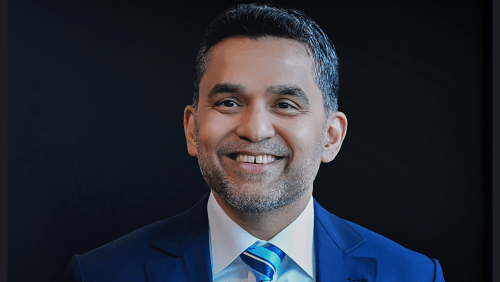
Cevat Yerli is the founder and CEO of The TMRW Foundation. Founded in 2017, The... Read more