The Tech Innovation Forum 2026 Recap: Joelle Mardinian, Founder and CEO of Joelle Group, on Growing a Beauty Empire in the Region
At the Tech Innovation Forum 2026, media personality and entrepreneur Joelle Mardinian reflected on nearly two decades of building Joelle Group and the costly lessons that changed how she thinks about growth.
Disclosure: Our goal is to feature products and services that we think you'll find interesting and useful. If you purchase them, Entrepreneur may get a small share of the revenue from the sale from our commerce partners.
You're reading Entrepreneur Middle East, an international franchise of Entrepreneur Media.
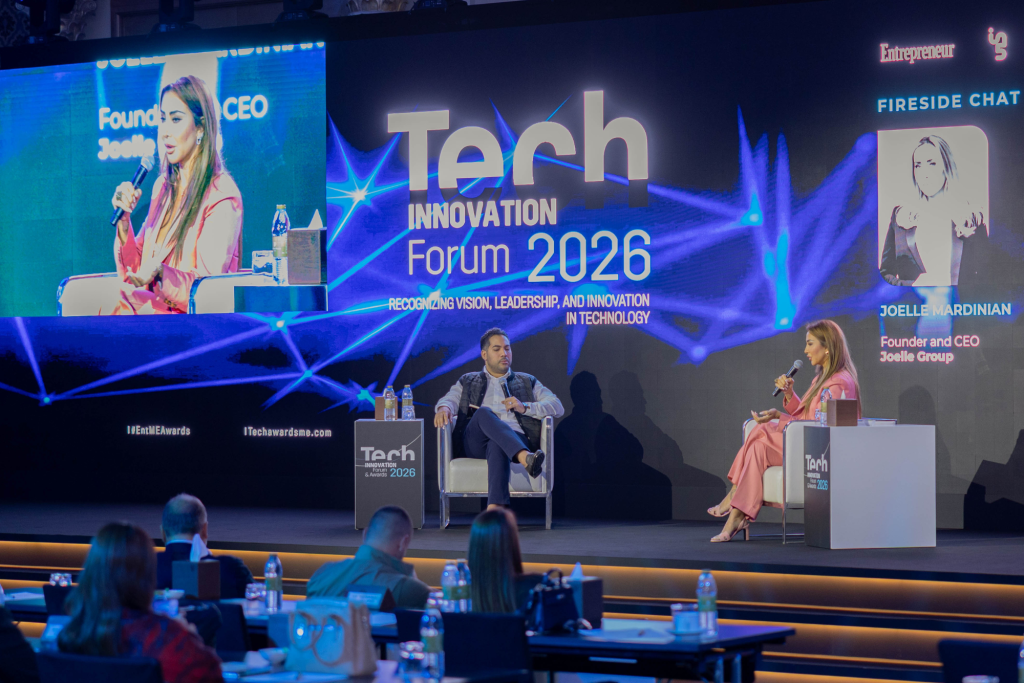
At Entrepreneur Middle East‘s Tech Innovation Forum 2026, Joelle Mardinian, founder and CEO of Joelle Group, reflected on what it has taken to turn her television career into a regional beauty and wellness business, pointing to trust, choosing the right partners, and a direct relationship with her audience as some of the factors that have shaped the company over nearly two decades.
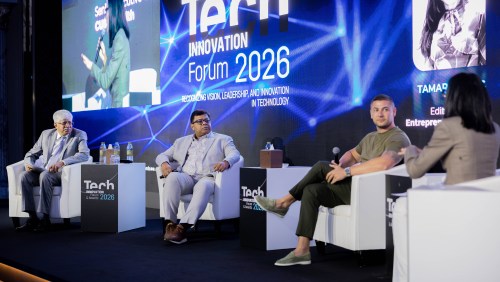
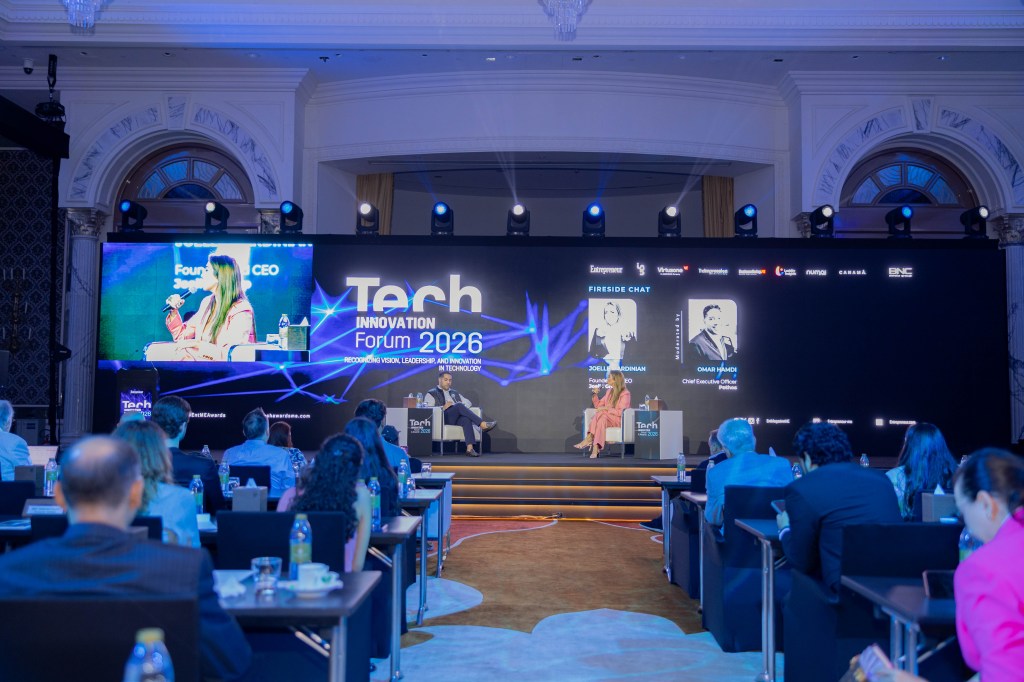
In a fireside chat moderated by Omar Hamdi, founder and CEO of Pathos, Mardinian traced that journey from opening her first salon to expanding across the region, while speaking openly about the financial mistakes, investment decisions, and failed expansion that changed the way she runs the business today.
“I want people to know it wasn’t like a magic stick that got me to where I am today. It’s a lot of hard work,” Mardinian said. “There were a lot of ups and downs. Yes, I failed in many projects because I should have done things differently.”
“Why I’m still growing is because of, I think, my honesty, the followers that I have, and the hard work that I put into reaching my followers every single day,” she added. “So I’m very serious about my connection with my audience.”
Mardinian is the entrepreneur behind Joelle Group, the beauty and wellness conglomerate spanning Maison de Joelle, Clinica Joelle, and Joelle Paris. Her public profile first grew through “Joelle,” the makeover television show she hosted on Saudi-headquartered MBC, before she went on to build businesses across salons, cosmetic treatments, and beauty products. She has also brought audiences closer to her personal and professional life through her Shahid reality series “Joelle Unfiltered.”
But entrepreneurship, Mardinian said, was not initially the plan. After moving to Dubai in 2004, she approached MBC with the idea of working on a makeover program and soon found herself hosting the No.1 female show on the channel with an audience of 120 million. As she worked around makeup, hair, and fashion on screen, viewers increasingly began associating the services and transformations they were seeing with her personally, which became a business opportunity.
“It wasn’t my decision to become an entrepreneur,” she said. “I took advantage of a situation.”
After four years on TV, Mardinian recalled receiving offers from people interested in opening a salon under her name. At the same time, she was conscious that a television career could be temporary and saw the business as a way to create something that could give her greater control over her future.
“I was scared that one day, this opportunity would be taken away from me,” she said. “So, I had to think: how can I secure myself to do something that, just in case the channel decided they didn’t want me anymore, I can still survive?” And in 2008, Mardinian founded Maison de Joelle, growing it into a regional network of 13 salons and eventually expanding into Clinica Joelle and other businesses across the region.
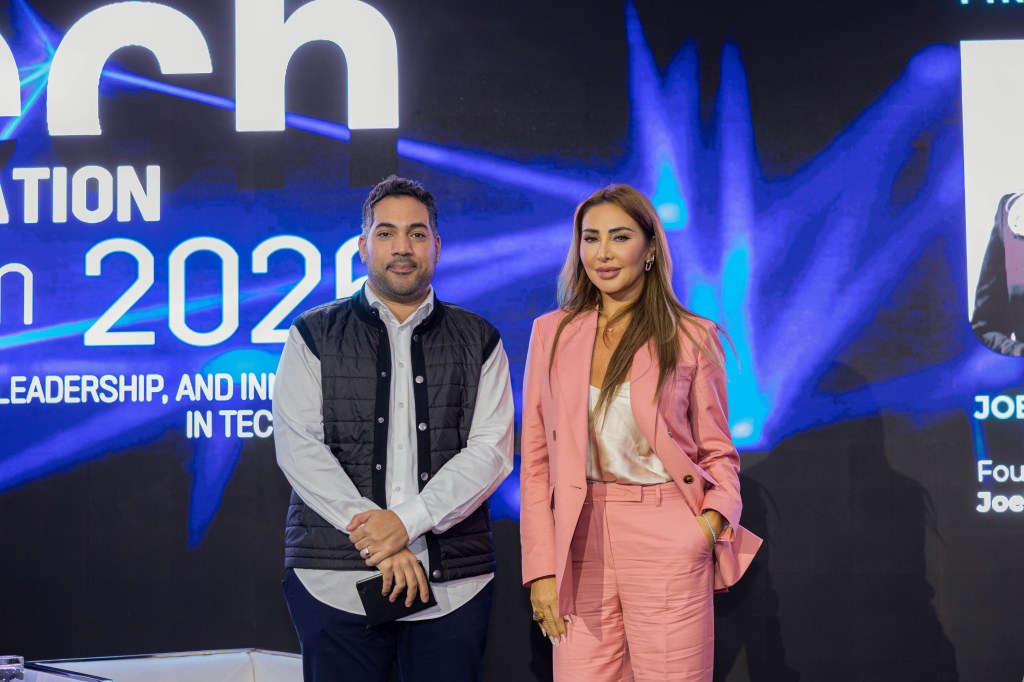
Despite that growth, Mardinian still sees room for an investor who can help accelerate the business beyond what they can achieve alone. “I hope one day, we do get an opportunity where an investor will come in and say, you know what, there’s so much potential, not just in this person as a celebrity or as an entrepreneur who already proved herself, but in this sector,” Mardinian said, pointing to the scale of the global beauty industry.
“But here, I have to do this, we have to do this as myself and my team and my husband, on our own,” she said, while contrasting her experience with celebrity-backed businesses in the US, UK, and Europe, where investors and experienced teams are often brought in to help build the brand. “We’re succeeding, of course, but not at the rate that I would like it to be.”
Her first salon had opened with the backing of a silent investor, whose support she said was essential to getting started. But looking back, Mardinian believes one of her early mistakes was treating that relationship primarily as a source of capital rather than seeking stronger guidance in the areas of business she did not yet understand.
“I wish now, looking back, I had asked more of this partner for guidance, especially in accounting,” she said. “I was robbed a lot throughout my career because I was concentrating too much on growing the business, expanding. I was concentrating a lot on the branding, the marketing, the PR, the social media, and I was neglecting the accounts.”
“So I lost a lot of money, and that’s something I say I failed at, but I learned very quickly from my own mistakes. But I think if I had smart money where a partner was more involved in the business and took that part from me, the operation part, then I would have avoided those big mistakes that I had to learn from.”
“I think smart money is so important,” she said. “I had an entrepreneurial mind and a will, and I was fearless, but I didn’t have the know-how on how to run a safe business.”
When her first investor later needed his money back, Mardinian said she took loans from two banks to repay him. She then continued financing growth with her own money.
That lesson became even more apparent when Mardinian and her husband chose to expand Clinica Joelle directly into Saudi Arabia. With a substantial audience in the Gulf and her television career established on MBC, she felt confident about the market and wanted to retain more of the potential returns by opening the operation themselves rather than franchising it.
“My husband and I, we got greedy,” Mardinian said. “We said Saudi Arabia is my market.”
The venture ultimately resulted in significant losses, and Mardinian said she now believes franchising would have been the better route. “We partnered with someone that didn’t put money in, but we had to partner because of the way that’s how business was supposed to be done at the time, and we lost it all. So, we lost everything. That’s another lesson.”
“It’s smart money, but they’re opening doors to those people in those industries. That’s why each person chooses an industry that they know they can actually impact,” she added.
Rather than distancing herself from those setbacks, Mardinian has made them part of the way she talks about entrepreneurship. “I love transparency,” she said. “I’m here just to advise people so they don’t have to go through the same mistakes that I did. So one thing: don’t get greedy in business.”
Her openness also extends to how she has built and maintained her relationship with the audience behind her businesses. For Mardinian, visibility has never been something to take for granted simply because her name is already known. She argued that even the world’s largest brands continue advertising because staying familiar to consumers requires constant presence.
“Those huge brands, do they need us to know who they are? But they want to keep on reminding us they are still there. And that’s what I do on my platforms. I take that so seriously.”
With more than 50 million monthly views on Instagram and some Snapchat videos reaching up to 20 million views a day, Mardinian said she continues to invest time in her social platforms because of the role they play in supporting her businesses.
“I have my own media. And that’s something a lot of people didn’t understand at the beginning. When I first started in 2013, I knew that those platforms were going to help me a lot,” she said. “They’re going to help me give the messages that I wanted to my audience, directly to my audience, not through other channels. So I was never worried about being transparent.”
Authenticity has also become central to how Mardinian connects with her audience, with less polished and more relatable content helping her maintain that relationship.
“All businesses have to have a human touch, especially for me. I’m much more convinced when I like a brand, when I feel that brand is super authentic and is reaching out to everybody. It’s not a stuck-up brand.”
Mardinian said that the human element extends beyond communication and into Joelle Group itself, which continues to operate with the mentality of a family business and places as much emphasis on how customers feel as on the products, equipment or services they receive, particularly in beauty where clients may come to a clinic or salon for deeply personal reasons.
Asked how she sees technology interacting with the human side of beauty, Mardinian acknowledged some concern about how far artificial intelligence and robotics could eventually develop, while recognizing that AI is already influencing her sector.
“Honestly, AI scares me a little bit, like where it’s going to get to in the future. I’m so scared of robots. I’m so scared of what robots can do to us because they’re becoming so intelligent,” she admitted. “But of course, in our business and the beauty industry, they’re using a lot of AI in developing products. Our industry is moving so fast.”
As AI and other technologies increasingly shape product development and drive advances in beauty and longevity, Mardinian sees them creating new possibilities in an industry that has evolved significantly since she opened her first salon in 2008.
RELATED: The Recap: Entrepreneur Middle East’s Tech Innovation Awards 2026