Who Really Controls James Bond? Robert Pattinson, Amazon, and Hollywood’s Creative Dilemma
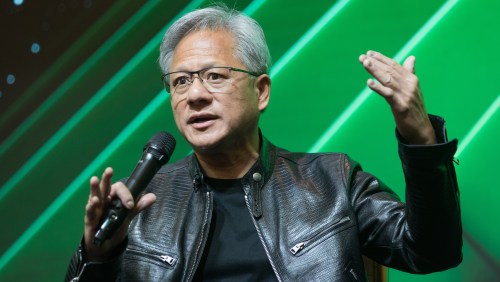
With Jeff Bezos reportedly playing a hands-on role in casting Robert Pattinson as the next James Bond, Amazon’s US$8.45 billion acquisition of MGM (and unverified reports that Pattinson was paid US$1 million just to audition) have brought the intersection of corporate capital and creative independence into the spotlight. But what do past multibillion-dollar media acquisitions reveal about the delicate balance between corporate ambitions and artistic freedom, and what can Amazon learn from their successes and failures as it ushers in a new era of 007?
You're reading Entrepreneur Middle East, an international franchise of Entrepreneur Media.
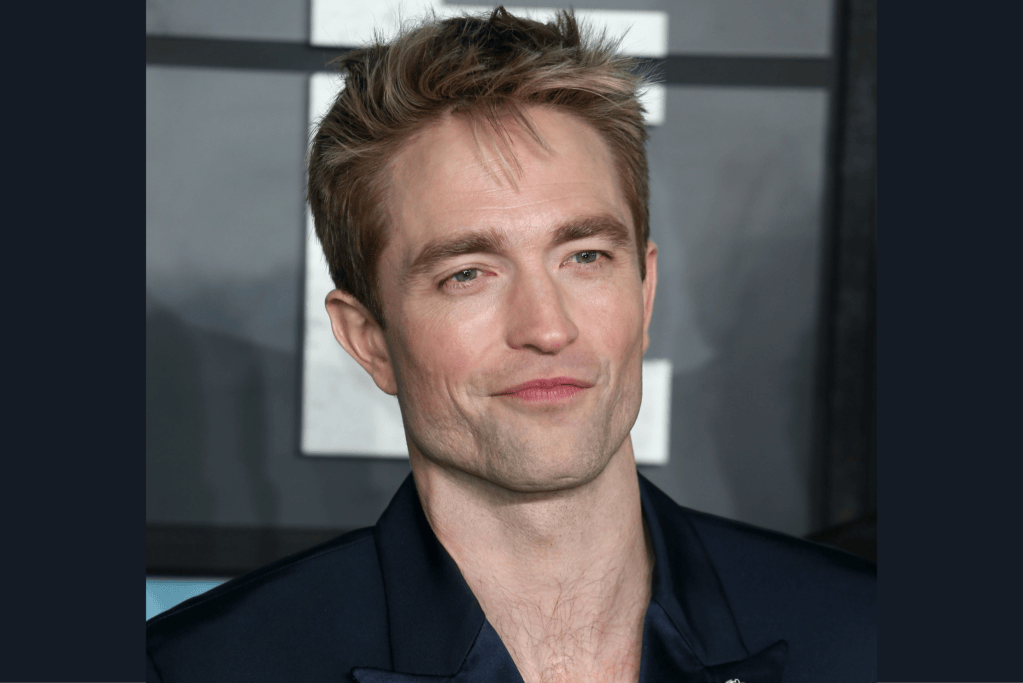
When British actor Robert Pattinson was announced as the new face of popular fictional spy James Bond earlier this week, it evoked effervescent online reactions ranging from supportive to vitriolic, with indecision and everything in between (as someone who has been a fan of Pattinson since 2005, I was certainly among the elated lot). But beyond the expected drama that comes with a new “007” announcement lies a much more complex web of business decisions that ultimately led to this casting: a domino effect that began when e-commerce giant Amazon acquired Metro-Goldwyn-Mayer (MGM), whose extensive catalog spans over 4,000 films and 17,000 television episodes, including iconic franchises and titles such as James Bond, Rocky, Creed, Legally Blonde, Vikings, and The Handmaid’s Tale, for US$8.45 billion in 2022. It was a move that ultimately led to Amazon founder Jeff Bezos being “heavily involved” -as per his own admission at Semafor’s Silicon Valley & The World this month- in finalizing the actor who would take on the coveted role.
So how does the founder and executive chair of a tech giant corporation with seemingly no background in acting or production get to have a hand in the creative process of an entertainment studio?
The cogs in that complicated wheel were set in motion first in October 2023, when Amazon Studios was rebranded as Amazon MGM Studios, consolidating the two companies’ film and television operations.
However, despite acquiring MGM, Amazon did not gain creative control over the James Bond franchise in particular until February/March 2025 – when Amazon MGM Studios announced a joint venture with Barbara Broccoli and Michael G. Wilson, whose family had overseen the franchise since 1962, granting Amazon full creative control over future Bond productions, including casting, direction, and storytelling, while Broccoli and Wilson retained co-ownership of the intellectual property.
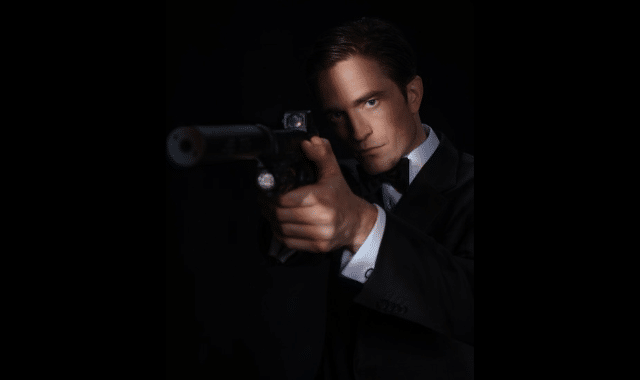
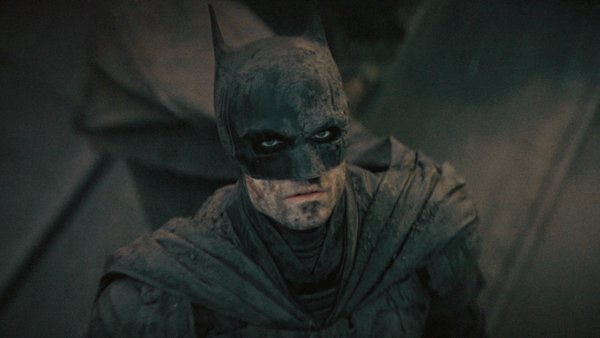
Now, as per some news reports, none confirmed by Amazon MGM, Pattinson was paid a substantial fee to simply audition for the role. While the actor’s bankability -following the box office successes of The Batman (2022), Tenet (2020), and The Drama (2026), as well as his other critically acclaimed performances in independent movies like The Lighthouse (2019) and The Devil All the Time (2020)- cannot be ignored or disputed, the overall transition does raise a question about major media acquisitions: does owning valuable intellectual property not necessarily entail having the authority to determine its creative future?
The answer perhaps lies in all the other times the entertainment industry has witnessed the loss of artistic decision-making in the aftermath of a major corporate acquisition and/or merger.
Take, for example, Disney’s acquisition of Lucasfilm, the production company founded by filmmaker George Lucas, for approximately US$4.05 billion, which ultimately allowed the entertainment giant to gain control of the renowned Star Wars franchise. Lucas later voiced his dissatisfaction with Disney’s creative approach, particularly its decision to move away from his original vision for the sequel trilogy. Speaking at the 2024 Cannes Film Festival, he recognized Disney’s efforts but admitted that “a lot of the ideas… got lost” following the acquisition. BUt despite these differences, Lucas has spoken positively about some of Disney’s subsequent productions and acknowledged that he no longer has creative authority over the franchise.
In 2022, following the US$43 billion WarnerMedia–Discovery merger, the newly formed Warner Bros. Discovery introduced major cost-cutting measures, including the cancellation of the US$90 million DC film Batgirl while it was still in postproduction. The decision, reportedly influenced by financial considerations and a shift in corporate strategy, drew criticism across Hollywood. In an interview with The Hollywood Reporter in December that same year, co-director Adil El Arbi said, “You’ve got to imagine, we’re two fanboys, and for one second we were in the Batman universe, following in the footsteps of Zack Snyder and Christopher Nolan, and then it was just like we woke up and it was a dream.” His co-director Bilall Fallah added that they would still consider working with Warner Bros., but “on the condition that the movie comes out.”
At the crux of it, the controversy highlighted how corporate restructuring following a merger and acquisition (M&A) can sometimes override creative investments, even after millions have been spent on production. However, such decisions do not always come in the aftermath of an M&A.
Take, for example, Marvel Studios’ long-delayed Blade reboot, starring Mahershala Ali, which officially was shelved in 2026 after years of development setbacks, despite no comparable corporate restructuring triggering the decision. A decision that led Marvel Studios president Kevin Feige admitting to feeling “like a gigantic loser and failure,” it highlights that commercial priorities and creative ambitions are at loggerheads on a much larger scale in Hollywood filmmaking.
After all, not every major entertainment acquisition has resulted in the same fallout or loss of creative ambitions or vision. In 2006, Disney acquired animation studio Pixar for approximately US$7.4 billion, while retaining key members of its creative leadership, with Ed Catmull and John Lasseter taking on senior roles across both studios. The arrangement helped preserve Pixar’s creative culture while allowing Disney to benefit from its storytelling expertise and animation technology. Pixar subsequently delivered major commercial successes, including Toy Story 4 (2019), which grossed over US$1 billion worldwide, while Disney Animation experienced a creative resurgence with films such as Tangled (2010), Frozen (2013), Zootopia (2016), and Moana (2016). Although these successes cannot be attributed solely to the acquisition, the deal does stand out as an important example of how retaining creative leadership while leveraging corporate resources can benefit both companies.
All of these examples, although widely different in their outcomes, equally demonstrate that acquiring intellectual property and successfully managing its creative future are two different challenges – especially when working with well-loved and renowned characters and franchises. For Amazon, Pattinson’s household name status as well as the involvement of director Denis Villeneuve, best known for his prolific work on Arrival (2016) and the Dune films; screenwriter Steven Knight; and producers Amy Pascal and David Heyman provides an opportunity to combine corporate resources with established filmmaking expertise.
However, the appointment of acclaimed creatives alone does not guarantee their artistic independence.
The more pressing question is how much authority Amazon will allow them to exercise over the franchise’s direction. For a character that has been globally loved and revered across generations, the creative pursuits for its first rendition in a sans-Broccoli-family setting will perhaps come with more pressure than a new Bond announcement generally comes with. Will this be a calculated gamble that pays off, or will the spy’s “license to kill” eventually expire? Only time will tell.
When British actor Robert Pattinson was announced as the new face of popular fictional spy James Bond earlier this week, it evoked effervescent online reactions ranging from supportive to vitriolic, with indecision and everything in between (as someone who has been a fan of Pattinson since 2005, I was certainly among the elated lot). But beyond the expected drama that comes with a new “007” announcement lies a much more complex web of business decisions that ultimately led to this casting: a domino effect that began when e-commerce giant Amazon acquired Metro-Goldwyn-Mayer (MGM), whose extensive catalog spans over 4,000 films and 17,000 television episodes, including iconic franchises and titles such as James Bond, Rocky, Creed, Legally Blonde, Vikings, and The Handmaid’s Tale, for US$8.45 billion in 2022. It was a move that ultimately led to Amazon founder Jeff Bezos being “heavily involved” -as per his own admission at Semafor’s Silicon Valley & The World this month- in finalizing the actor who would take on the coveted role.
So how does the founder and executive chair of a tech giant corporation with seemingly no background in acting or production get to have a hand in the creative process of an entertainment studio?
The cogs in that complicated wheel were set in motion first in October 2023, when Amazon Studios was rebranded as Amazon MGM Studios, consolidating the two companies’ film and television operations.

Aalia Mehreen Ahmed • Senior Features Editor, Entrepreneur Middle East
Entrepreneur Staff
Senior Features Editor at Entrepreneur Middle East and host of Anchored Echoes, with nearly seven... Read more