How Distell Is Helping the Seafood Industry Measure Freshness Without Guesswork
Fish only a few hours from capture can still age quickly if they’re poorly stored, while some fish sold as fresh may already have been frozen. Traditional checks of look, smell, and touch rely on experience and leave no evidence. Chemical analysis is more precise, but it takes time, often requires sending samples away, and destroys the sample tested. These gaps are the problem Distell’s instruments are designed to address.
Distell
You're reading Entrepreneur Middle East, an international franchise of Entrepreneur Media.
Fish is one of the most perishable foods, and buyers, processors, and retailers need to know how much usable life a catch has left. A label saying “fresh” can’t tell them how the fish has been handled since it was caught. Global edible aquatic food loss and waste totalled about 23.8 million tonnes in 2021, equal to 14.8% of all aquatic food produced that year, according to a 2024 World Economic Forum analysis. Better information on quality could help reduce some of this loss.
Fish only a few hours from capture can still age quickly if they’re poorly stored, while some fish sold as fresh may already have been frozen. Traditional checks of look, smell, and touch rely on experience and leave no evidence. Chemical analysis is more precise, but it takes time, often requires sending samples away, and destroys the sample tested. These gaps are the problem Distell’s instruments are designed to address.
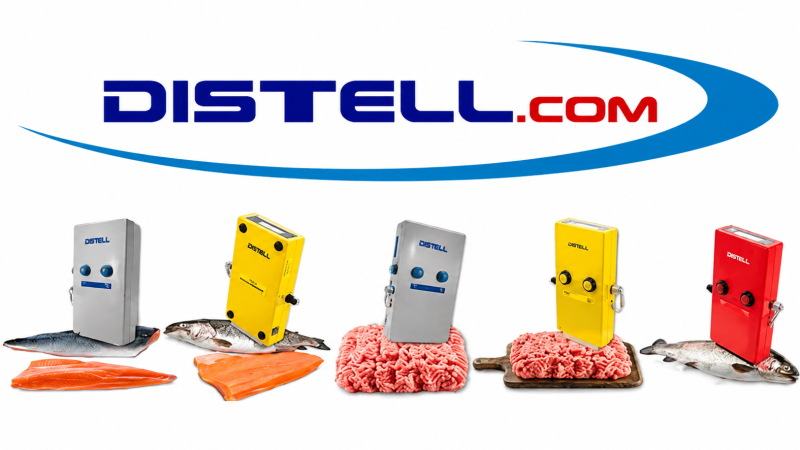
John Litster, business development manager at Distell, a UK-based manufacturer of testing instruments for fish and meat, says the company makes the Torrymeter, which measures fish freshness, and a range of fat meters for fish and meat. The instruments are used by processors, retailers, food inspectors, fish farmers, laboratories, and researchers through a network of agents and distributors worldwide. The Torrymeter traces back more than 30 years to work with the Torry Research Station in Aberdeen, which gave it its name. Distell designs and manufactures the meters and their software in-house.
The operator places the Torrymeter on the fish and receives an instant reading on an internationally recognised freshness scale. It can indicate whether fish has previously been frozen, which shortens its remaining shelf life. A printed reading gives buyers and inspectors a record, rather than relying on judgement alone. “Looking at it, smelling it, and touching it doesn’t give you evidence,” Litster says. “A reading does. You can show in black and white how fresh that fish is.”
The fat meters come in two models: a larger FM-692 and a smaller FM-992, used on both fish and meat. Unlike lab analysis, the sample stays intact, and the meters can be used on live fish. Salmon and tuna farmers can check fat content and growth without killing valuable fish. Some markets prefer leaner fish, while others value a higher fat content. “Tuna is a very valuable fish. You don’t want to kill one just to take a sample,” Litster says. “With the fat meter, farmers can check how it’s developing and put it back.”
The meters come in a carry case and can be used in labs, on production lines, on boats, or in the field. Readings are stored on the device and can be downloaded to the customer’s own systems, without paying to retrieve data from the cloud or relying on an internet connection.
Distell provides a standard meat and fish calibration list; however, there is the option for the customer to create their own custom calibration for their specific product. It can also enhance an existing calibration, specific to their local area and environment. Distell recommends returning the meter kit for annual servicing to ensure the accuracy of the meter’s calibration.
According to Litster, health inspectors in the Middle East bought a large number of meters to check fish on sale at market stalls. He acknowledges that the instruments represent a significant upfront investment, though he believes they can pay for themselves compared with regular laboratory testing. Readings also depend on correct use and annual recalibration. “It does seem like a high cost at first,” Litster says. “But if you’re regularly sending samples to a lab, there’s a cost to that too, and you’re waiting for the result.”
The Middle East is a particular focus for Distell. Hot climates speed up spoilage, which makes accurate freshness measurement more important. Fish is also a major part of diets across the region, creating strong demand for quality checks. Distell has sold into the region before, and Litster is focused on rebuilding its presence there. “In hotter countries, fish that isn’t stored properly spoils much faster,” Litster notes. “That’s where having a proper gauge really matters.”
For buyers, processors, and inspectors in warm climates, instant, recorded readings can turn a judgment call into a documented decision about how quickly fish needs to be sold or processed.
Fish is one of the most perishable foods, and buyers, processors, and retailers need to know how much usable life a catch has left. A label saying “fresh” can’t tell them how the fish has been handled since it was caught. Global edible aquatic food loss and waste totalled about 23.8 million tonnes in 2021, equal to 14.8% of all aquatic food produced that year, according to a 2024 World Economic Forum analysis. Better information on quality could help reduce some of this loss.
Fish only a few hours from capture can still age quickly if they’re poorly stored, while some fish sold as fresh may already have been frozen. Traditional checks of look, smell, and touch rely on experience and leave no evidence. Chemical analysis is more precise, but it takes time, often requires sending samples away, and destroys the sample tested. These gaps are the problem Distell’s instruments are designed to address.
John Litster, business development manager at Distell, a UK-based manufacturer of testing instruments for fish and meat, says the company makes the Torrymeter, which measures fish freshness, and a range of fat meters for fish and meat. The instruments are used by processors, retailers, food inspectors, fish farmers, laboratories, and researchers through a network of agents and distributors worldwide. The Torrymeter traces back more than 30 years to work with the Torry Research Station in Aberdeen, which gave it its name. Distell designs and manufactures the meters and their software in-house.

Entrepreneur Middle East Staff
Entrepreneur Staff