UAE Emerges as Key Connector Economy in Global Trade, DMCC Report Finds
The report also found that global trade is expected to remain resilient over the next two years but will operate under a different model shaped by artificial intelligence, tariff volatility, supply chain diversification and the global energy transition.
You're reading Entrepreneur Middle East, an international franchise of Entrepreneur Media.
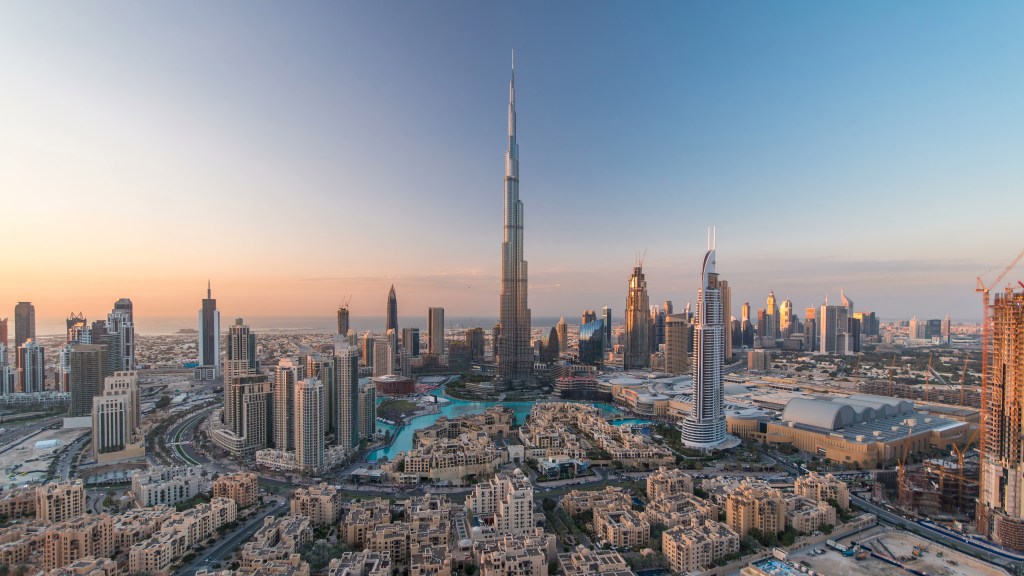
The UAE is set to play a larger role in global trade as businesses seek trusted connector economies that can help them navigate disruption, access high-growth markets, and build resilience across key trade corridors, according to the Future of Trade 2026 report launched by DMCC, an international business district in Dubai.
Titled “Rebuilding Through Rupture”, the report found that businesses are planning for prolonged uncertainty, with more than 80% of surveyed respondents expecting slow and uneven trade growth over the next one to three years. Only 4% said they expected a best-case growth scenario.
According to the report, South-South trade now accounts for about 35% of global trade, exceeding North-North trade flows at around 25%. The shift is driving growth along trade corridors linking Asia, the Middle East, Africa and Latin America.
The UAE was identified as one of several “connector economies” that facilitate trade across different regions and economic blocs, noting that the country ranked among the world’s five largest recipients of greenfield investment in 2024.
It also cited that the UAE retained second place globally in DMCC’s 2026 Commodity Trade Index, behind the United States. The index assessed commodities hubs based on factors including taxation, regulation, trade facilitation, geographic location and commodities resources.
In a report from WAM, UAE Minister of Foreign Trade Dr. Thani Bin Ahmed Al Zeyoudi commented: “DMCC said the UAE offered the most competitive corporate tax regime among the 10 leading commodities hubs assessed and continued to perform strongly despite pressures on global energy and shipping routes.
“As the global trading system is reshaped by disruption, new corridors and the rapid rise of technology-enabled trade, businesses are increasingly seeking trusted, well-connected economies from which to navigate change and reach new markets.”
The UAE has anticipated these shifts through a long-term strategy built on openness, connectivity, diversification and investment in infrastructure, with our Comprehensive Economic Partnership Agreement program expanding access to the world’s high-growth markets.”
The report also found that global trade is expected to remain resilient over the next two years but will operate under a different model shaped by artificial intelligence, tariff volatility, supply chain diversification and the global energy transition.
Among those forces, AI is emerging as one of the strongest drivers of trade growth. AI-related goods accounted for about 15% of global trade volume but contributed 43% of global trade growth during the first half of 2025, according to the report.
It furthered that trade across 100 AI-related product categories reached US$1.92 trillion during the same period, increasing by more than 20% year-on-year. By comparison, non-AI goods recorded growth of less than 4%.
However, the report said the growth of AI-related trade will depend not only on software development but also on access to infrastructure such as semiconductors, data centers, power supplies, cooling systems, and logistics networks.
In trade finance, the report said the UAE was among a small group of jurisdictions, alongside Singapore, Hong Kong and the United Kingdom, that have introduced or are developing regulatory frameworks for stablecoins. It also cited the country’s participation in the mBridge cross-border central bank digital currency project.
The report also noted that the UAE’s trade finance gap remains minimal, compared with an estimated global trade finance gap of US$2.5 trillion.
On energy, the report described a shift in the global energy transition toward competition for industrial advantage and access to critical minerals. It identified the UAE as a growing hub for processing and trading critical minerals used in clean energy technologies, supported by investments across the supply chain and access to renewable and nuclear energy sources.
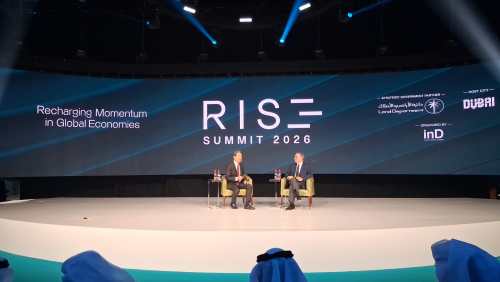
DMCC released Future of Trade 2026 report during an event in Dubai attended by government officials, business leaders and trade experts. Now in its sixth edition, the biennial report is based on 12 roundtable discussions involving more than 200 policymakers, executives and trade specialists, as well as a survey of more than 130 businesses and trade practitioners.
RELATED: UAE Trade Hits US$1.6Trillion; Enters Global Top 10 Exporters for the First Time: WTO Report
The UAE is set to play a larger role in global trade as businesses seek trusted connector economies that can help them navigate disruption, access high-growth markets, and build resilience across key trade corridors, according to the Future of Trade 2026 report launched by DMCC, an international business district in Dubai.
Titled “Rebuilding Through Rupture”, the report found that businesses are planning for prolonged uncertainty, with more than 80% of surveyed respondents expecting slow and uneven trade growth over the next one to three years. Only 4% said they expected a best-case growth scenario.
According to the report, South-South trade now accounts for about 35% of global trade, exceeding North-North trade flows at around 25%. The shift is driving growth along trade corridors linking Asia, the Middle East, Africa and Latin America.

Entrepreneur Middle East Staff
Entrepreneur Staff