A Need And Opportunity For A Change in How We Design Urbanized Ways of Living
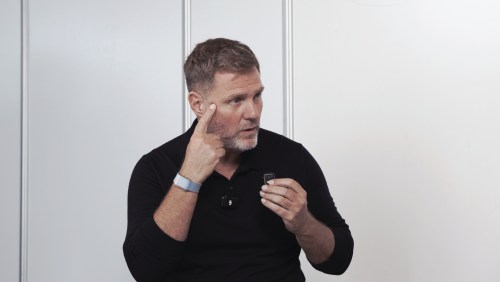
Architect Marek Tryzybowicz has spent more than 35 years working on large-scale urban projects across Europe, Asia, India, Middle East, and the US. His argument is that the response to these pressures cannot be to keep refining the same model. It has to be a different conceptual road.
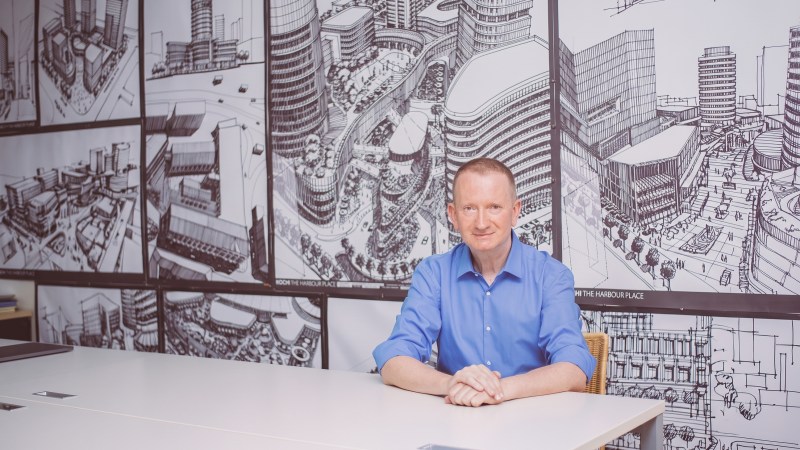
Marek Tryzybowicz
Opinions expressed by Entrepreneur contributors are their own.
You're reading Entrepreneur Middle East, an international franchise of Entrepreneur Media.
Climate change is no longer a future scenario. It is a present and escalating condition, and it is reshaping where and how people can live. The pressures are visible in demographic shifts, in displacements, and in the growing difficulty of sustaining elementary human life conditions that were considered stable in the past.
The scale of the problem is documented. According to the UN-Habitat World Cities Report 2026, up to 3.4 billion people lack access to secure, safe, and adequate housing, including more than 1 billion living in informal settlements. Cities are expected to absorb an additional 2 billion residents by 2050. The housing being built now will determine whether those people live in functioning settlements or in conditions that reproduce the same failures.
Architecture, engineering, and urban planning may have not adjusted to this shift yet. The professions continue to recycle models that were developed over the centuries, in a different climate, under different assumptions about resources, supply chains, and population movement. Those models may still serve existing cities, where incremental improvement is the right approach. However, they are not adequate for securing the existential quality of life.
The emissions math makes the point concrete. The UN Environment Programme reports that buildings and construction account for around 37% of global CO2 emissions and nearly 50% of global material extraction. Half of the buildings that will exist in 2050 have not yet been built. The decisions that determine whether these build structures are part of the problem or part of the solution are made at the design stage, not after.
Architect Marek Tryzybowicz has spent more than 35 years working on large-scale urban projects across Europe, Asia, India, Middle East, and the US. His argument is that the response to these pressures cannot be to keep refining the same model. It has to be a different conceptual road.
That journey of what he proposes is what he calls the Integrated Living Environmental Model (ILEM). The proposal is not a building type or a master plan template. It is a way of organizing an urbanized form around the systems that keeps it feasible and alive. Food production. Energy generation and storage. Water access. Resources management and their circularity systems. Instead of importing essentials from distant supply chains, this new organised human settlement/a new form of a city, produces and manages the necessary life existentials within its own boundaries.
The model’s physical form is as important as its underlying philosophy. Rather than relying on conventional high-rise buildings or sprawling urban development, it proposes horizontally layered structures, which he calls “landscrapers,” integrating these structures within its natural landscape. These environments would bring together water systems, renewable energy, food production, waste management and green infrastructure within a connected framework. As Tryzybowicz explains, the aim is not to create another monument to architecture or technology, but to demonstrate a “tangible, scalable alternative to conventional known urban formats” designed around the essentials of human life.
The potential value of this approach becomes particularly clear in regions where resources are scarce and conventional development is expensive or difficult to sustain. It also responds to supply-chain vulnerabilities exposed in recent years, by reducing reliance on distant sources for essential resources. The goal is not self-sufficiency for its own sake, but to reduce the number of points at which a settlement can fail.
What separates this approach from conventional planning is its starting point. The focus shifts from designing individual buildings and monuments to designing integrated environments that prioritize human life. Tryzybowicz argues that the built environment should serve people, and that the disciplines that shape it, architecture, engineering, real estate, and the humanistic tradition, should be combined rather than separated. He says, “technical expertise and commercial practicality is an integral essential component to make it a practical solution and realistic, rather than being a barrier. All the aspects have to be balanced out and in sync in order to implement this formula.”
Designing and developing a new model has historically been difficult. That is changing. Tryzybowicz describes artificial intelligence as an ‘exoskeleton’ for human capability. It extends what a person can do without removing the steering wheel from the person from the process. Software and digital-twin technology make it possible to simulate and parametrically evaluate how a settlement would function under different population, climate, and natural locations before even contemplating for the construction process. A small team can explore a wider range of configurations, test assumptions and proposed design solutions at the early conceptual phase, rather than delaying the issues to the subsequent design development and construction stage of the process.
He is direct that the tools are enablers, not substitutes. AI should enhance human expertise, not replace it. The knowledge to steer it remains the controlling input. “All of these life essentials are parametrically linked, providing an interactive experience. This allows decision makers to evaluate, take control and adjust to their needs on a conceptual level, almost on their own,” Tryzybowicz says. “Then they own the vision. This is a new concept, it is a decision making tool, for easy evaluation of any specific conditions for the land to be developed. The purpose of it is to create a new relevant urbanized way of living.”
What Tryzybowicz argues is that the implementation problem is not technical. It is institutional. New settlement models require various layers of political will, long-term investment, and public consent. They also require to move beyond architectural circles and into the rooms where decisions about land, capital, and policy are actually made.
He frames his own motivation in terms of what he calls giving rather than taking. After more than three decades of international practice, the Integrated Living Environmental Model is his synthesis of what he has seen work and what he has seen fail. It is not a business proposition. He says, “This is a clear proposition, offering a novatory, yet viable alternative for the creation of new human settlements within the near future.”
The future of architecture will not be defined by the buildings that get constructed. It will be defined by the quality of life those environments make possible. The tools exist. The knowledge exists. What is now needed is the collective awareness and the institutional support to put them to use.
Climate change is no longer a future scenario. It is a present and escalating condition, and it is reshaping where and how people can live. The pressures are visible in demographic shifts, in displacements, and in the growing difficulty of sustaining elementary human life conditions that were considered stable in the past.
The scale of the problem is documented. According to the UN-Habitat World Cities Report 2026, up to 3.4 billion people lack access to secure, safe, and adequate housing, including more than 1 billion living in informal settlements. Cities are expected to absorb an additional 2 billion residents by 2050. The housing being built now will determine whether those people live in functioning settlements or in conditions that reproduce the same failures.
Architecture, engineering, and urban planning may have not adjusted to this shift yet. The professions continue to recycle models that were developed over the centuries, in a different climate, under different assumptions about resources, supply chains, and population movement. Those models may still serve existing cities, where incremental improvement is the right approach. However, they are not adequate for securing the existential quality of life.