Architects Of Trust: EY
EY’s MENA practice treats the region’s capital markets as a test of trust, asking whether a company’s account of itself can stand up to scrutiny from people outside the business.
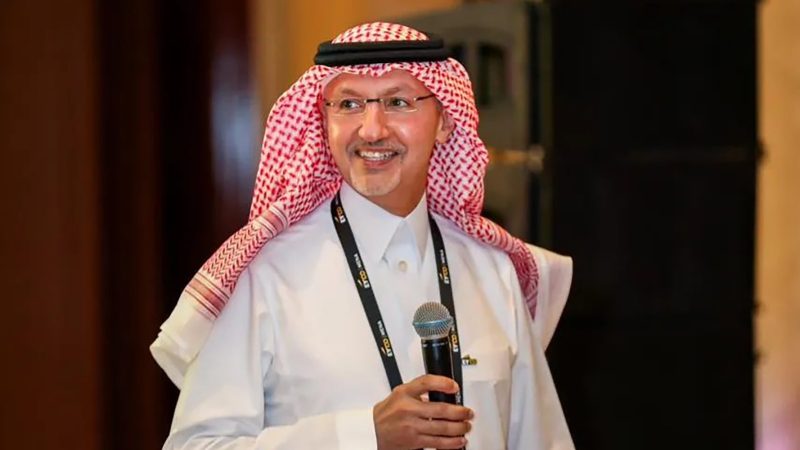
MENA Chairman and CEO, EY
You're reading Entrepreneur Middle East, an international franchise of Entrepreneur Media.
Forty-nine initial public offerings. US$7.3 billion raised. That was MENA’s IPO tally for 2025, according to EY’s MENA IPO Eye report for the final quarter of the year, and both the number of offerings and the proceeds were down on 2024. (Those figures describe the market, not EY’s own transaction record.) But behind every one of those listings sits the same question: can an investor believe what a company says about itself?
An investor buying into a company is buying a version of its future, and judging that future depends, in part, on how reliable the company’s account of its past is. Revenue, liabilities and management’s assumptions all feed into a decision made at a distance. That distance is exactly where audit and assurance earn their keep.
EY’s regional practice works right in that gap between enterprise and outside scrutiny. It is led by Abdulaziz Al Sowailim, MENA Chairman and CEO, who joined the firm’s Riyadh office in 1987. His official biography describes a practice spanning 26 offices in 15 countries, pairing a longstanding regional presence with an international professional services network. That scale brings a lot of markets into view. Still, the credibility of each individual engagement rests on the work behind each conclusion.
The 2025 Transparency Report of Ernst & Young Middle East’s Dubai Branch, covering the financial year ended June 30, 2025, offers a direct view. It lays out the processes behind audit quality, from engagement acceptance and professional consultation to monitoring and responses to inspection findings. It also sets out independence practices and the role of communication with audit committees. In other words, these are the mechanisms through which a professional judgment gets prepared, challenged and reviewed.
A company seeking outside capital has to present its financial information to investors whose interests and expectations reach well beyond the founding shareholders. That financial story has to be backed by records, repeatable procedures and people willing to question an attractive explanation. A familiar name on an audit report cannot stand in for those foundations. And independence means watching the relationships and services surrounding an engagement, as well as the conclusions within it.
EY brings both halves of that equation to the table: a regional footprint and capital markets research for context, and a published account of audit quality that brings the discussion back to practice. For a MENA company considering a listing, that puts the emphasis on reports whose readers can understand how the conclusions were reached.
Forty-nine initial public offerings. US$7.3 billion raised. That was MENA’s IPO tally for 2025, according to EY’s MENA IPO Eye report for the final quarter of the year, and both the number of offerings and the proceeds were down on 2024. (Those figures describe the market, not EY’s own transaction record.) But behind every one of those listings sits the same question: can an investor believe what a company says about itself?
An investor buying into a company is buying a version of its future, and judging that future depends, in part, on how reliable the company’s account of its past is. Revenue, liabilities and management’s assumptions all feed into a decision made at a distance. That distance is exactly where audit and assurance earn their keep.
EY’s regional practice works right in that gap between enterprise and outside scrutiny. It is led by Abdulaziz Al Sowailim, MENA Chairman and CEO, who joined the firm’s Riyadh office in 1987. His official biography describes a practice spanning 26 offices in 15 countries, pairing a longstanding regional presence with an international professional services network. That scale brings a lot of markets into view. Still, the credibility of each individual engagement rests on the work behind each conclusion.

Entrepreneur Middle East Staff
Entrepreneur Staff