What Kind Of Trader Are You? An Introduction To Trading Behaviors
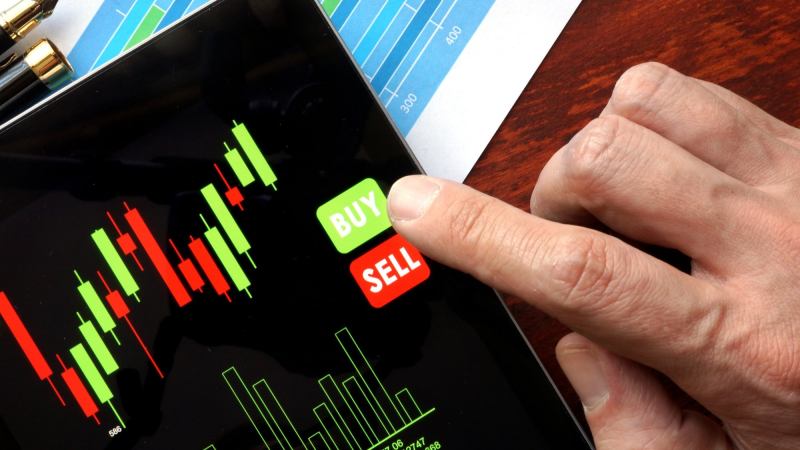
Trading behavior, or how investment decisions are made, is a topic that fascinated academics, performance coaches, and psychologists for many decades.
Shutterstock.com
Opinions expressed by Entrepreneur contributors are their own.
You're reading Entrepreneur Middle East, an international franchise of Entrepreneur Media.
Trading behavior, or how investment decisions are made, is a topic that fascinated academics, performance coaches, and psychologists for many decades. Can we identify how traders behave, fit them into categories, and differentiate them? How does one’s character, emotions, and mental state influence trading decisions? Buying and selling: are they only attributed to experience, knowledge, and skill, or is there something more? How do we understand what it takes to be successful in trading? I am going to explore all of these topics in this article.
If you are new to trading and you’re only just starting your trading journey, you will automatically be categorized as a first-time trader, or a so-called newbie. If you fall in this category, knowledge and education are very important for you, since you will somehow need to justify your choices, and also convince yourself that you’re making the right decisions when picking what kind of trades you will place. This will allow you to be less scared and more confident when entering trades and capturing opportunities. You should train your state of mind to spot trends, and reduce emotions such as fear and greed, in order to allow yourself to pick potentially winning trades. The analysis will play a big part in your winning strategy, and you should try not to close winners early and run losses.
However, if we want to look at traders from a psychological perspective, and if we are to exclude the first-time trader category, then largely, we can safely assume that traders fit within five distinct categories. These include the traders that can time the market, the ones who can pick when to enter and exit trades, the fundamental traders who base their decisions on available market information such as news, the noise traders who mostly based decision on instinct, the sentiment traders who like to follow the crowd, and the momentum traders who can identify trends.
1. MARKET TIMER TRADERS If you fit in the market time trader category, you are trying to speculate on the asset’s direction in order to make a profit. When to enter, as well as when to exit your trade, will play a vital role for you. You will use economic trends or technical indicators to postulate the direction of future movements, but also allow yourself to take opposite trades to trends. You should try to balance holding times, since not all trades are short-term ones. You should be able to take longer-term decisions, and learn the importance of adverse movements due to fluctuations in the markets. You will most likely be a day trader who believes that timing the market is the right approach to having a profitable trading strategy.
2. FUNDAMENTAL TRADERS If you are a fundamental trader, your focus will be on different asset classes, and how they perform. You will try to find reasons to buy or sell an asset class, and indicate when the time is right to do so as well as why. A fundamental trader likes to do research, read the news, analyze markets and instruments, and forecast future asset performance. Daily, you will review your portfolio, assess your financial health, and stay alert regarding public announcements and performance indicators based on fact and logic, such as earnings numbers when it comes to stock trading. You will be prepared to do further analysis as well as to speculate on opportunities such as takeovers, acquisitions, or research for new reasons why prices should move.
Related: Reflections While #StayingHome: Evaluating The COVID-19 Pandemic’s Impact On An Asset Class
3. NOISE TRADERS Noise traders are mostly synonym to impulsive traders. If you are one, you will seek to make big wins without going the extra mile in verifying your claims. As an individual, you will be ready to take high levels of risk that can damage your wealth in anticipation of large wins. This is exactly why noise traders can be high-volume hitters that rely mostly on emotions and feelings, which can sometimes lead to irrational decisions. Most likely, you will try to identify underperforming assets hoping that they will increase and form trends in the near future, which you can benefit from.
4. SENTIMENT TRADERS The category of sentiment traders is an important one, since the decisions depend on understanding how the market players currently feel about the different assets. That feeling or attitude that investors and traders have about a particular instrument can lead the crowd to buy or sell at any given time. The feelings are driven by individual perception and available information, i.e. forums such as Reddit (GameStop), can contain information that would help validate their assumptions. If you are a sentiment trader, you likely make decisions based on the crowd mentality and the public’s notion. Hence, you will follow the crowd to find undervalued or overvalued opportunities that you can capitalize on.
5. MOMENTUM TRADERS The last category is momentum traders. This particular category is based on a trader’s ability to create a strategy that is based on technical information, hinting at the possibility of an asset rising or falling. Notably, momentum traders are known for their skill in understanding how markets operate. If you fit in this category, your decisions will most likely be informed, and you will have the ability to create thought-out strategies. Most momentum traders like to use tools and develop strategies based on hedging, risk assessment, and volatility timing.
I truly hope you enjoyed reading this article, and I hope that the different categories will help you better find your trading personality when you start or if you have already started your trading journey. If you’re new to all of this, you can begin your trading journey with my company, CFI, by visiting www.cfi.trade and opening a free, zero risk demo account with virtual funds. Alternatively, opening a live account can be done in a few easy and quick steps, and it will give you access to over 5000 trading instruments through Metatrader 5, one of the most powerful and widely used platforms in the world. Along the way, one of our dedicated account managers will be assisting you in this journey, in addition to having access to free daily webinars, personalized training, and a mobile platform for trading on the go, anytime and anywhere.
Related: A Cut Above: Hisham Mansour, Co-Founder And Managing Director, CFI Financial Group
Trading behavior, or how investment decisions are made, is a topic that fascinated academics, performance coaches, and psychologists for many decades. Can we identify how traders behave, fit them into categories, and differentiate them? How does one’s character, emotions, and mental state influence trading decisions? Buying and selling: are they only attributed to experience, knowledge, and skill, or is there something more? How do we understand what it takes to be successful in trading? I am going to explore all of these topics in this article.
If you are new to trading and you’re only just starting your trading journey, you will automatically be categorized as a first-time trader, or a so-called newbie. If you fall in this category, knowledge and education are very important for you, since you will somehow need to justify your choices, and also convince yourself that you’re making the right decisions when picking what kind of trades you will place. This will allow you to be less scared and more confident when entering trades and capturing opportunities. You should train your state of mind to spot trends, and reduce emotions such as fear and greed, in order to allow yourself to pick potentially winning trades. The analysis will play a big part in your winning strategy, and you should try not to close winners early and run losses.
However, if we want to look at traders from a psychological perspective, and if we are to exclude the first-time trader category, then largely, we can safely assume that traders fit within five distinct categories. These include the traders that can time the market, the ones who can pick when to enter and exit trades, the fundamental traders who base their decisions on available market information such as news, the noise traders who mostly based decision on instinct, the sentiment traders who like to follow the crowd, and the momentum traders who can identify trends.

Dr. Demetrios Zamboglou • CEO, BitDelta Group
Dr. Demetrios Zamboglou is Chief Executive Officer of BitDelta Group and a globally recognized fintech... Read more