From Healthcare to Healthspan: Why Longevity Will Reshape the UAE’s Healthcare Economy
Advances in diagnostics, biomarkers, artificial intelligence and digital health are creating new opportunities to understand health beyond individual symptoms.
Opinions expressed by Entrepreneur contributors are their own.
You're reading Entrepreneur Middle East, an international franchise of Entrepreneur Media.
For generations, healthcare has largely been built around treating illness: diagnosing a condition, providing treatment and helping patients recover. That model will always remain essential. But as people live longer, healthcare conversation is evolving. The question is no longer simply how long we live, but how long do we remain healthy, active and independent.
This is where healthspan becomes critical.
Lifespan tells us how long we live. Healthspan asks how long we remain healthy enough to enjoy those additional years. According to the latest available WHO estimates, life expectancy at birth in the UAE is 78.3 years, while healthy life expectancy at birth is 67.3 years. That represents an 11-year difference between lifespan and healthy life expectancy. It should not be interpreted as 11 years spent living with chronic disease, but it offers an important perspective on the opportunity to improve the quality of the years we gain.
This shift from lifespan to healthspan has significant implications for healthcare and for the wider economy.
The future of healthcare will increasingly move towards prevention, earlier intervention and continuous health management. Instead of waiting for symptoms to appear, healthcare providers will need to help individuals understand their health risks earlier and take action before conditions become more complex.
The case for starting early is particularly important. A study of young adults in the UAE found that both males and females spent around 80% of their waking hours sedentary. Based on daily step counts, 50% of male participants and 76.6% of female participants were classified as sedentary or low active. The study involved university students and is not representative of the wider UAE population, but it provides a useful reminder that the foundations of healthy ageing are established much earlier in life.
This is where technology can help transform healthcare.
Advances in diagnostics, biomarkers, artificial intelligence and digital health are creating new opportunities to understand health beyond individual symptoms. Increasingly, health information can be brought together to provide a more comprehensive view of an individual’s risks and needs, supporting earlier and more personalized interventions.
For healthcare providers, this means moving from an episodic model of care towards a more continuous relationship with individuals. A health check should not simply identify a problem; it should help inform what an individual can do next. Diagnostics should lead to meaningful action. Digital tools should complement clinical expertise. And personalized assessments should help people make better-informed decisions about their health.
Personalization will be particularly important because there is no single formula for healthy ageing. People of the same age can have very different lifestyles, health risks, genetic backgrounds and nutritional needs. Healthcare therefore needs to move beyond a one-size-fits-all approach towards models that recognize the individual.
This evolution also creates an important economic opportunity for the UAE.
Longevity sits at the intersection of healthcare, technology, wellness, research and business. As the focus shifts towards prevention and healthspan, demand will increasingly extend beyond traditional hospital-based services to include diagnostics, digital health, personalized healthcare, rehabilitation, nutrition, physical activity and other preventive services.
This opportunity is part of a broader global shift. The global longevity market is estimated at US$27.6 billion, reflecting growing interest in technologies, services and healthcare models focused on extending healthy years of life. For the UAE, this presents an opportunity to position itself within an emerging global longevity economy while building on its existing strengths in healthcare, technology and innovation.
The impact can extend into workplaces as well. Healthier populations can potentially remain active and productive for longer, creating opportunities for employers to think differently about employee wellbeing, preventive health and long-term workforce resilience.
The UAE is already taking steps towards building a broader longevity ecosystem. Dubai’s ambitions are supported by an established healthcare ecosystem, with approximately 5,800 licensed healthcare facilities across the emirate. This provides a strong foundation for the development of specialized services spanning preventive health, diagnostics, personalized medicine, rehabilitation and other areas of the emerging longevity ecosystem.
The approval of the Dubai Longevity Authority’s strategy and operating budget marks a move towards implementation, with a focus on healthspan, research, clinical trials, innovation and responsible regulation. The strategy targets annual growth of around 31% and aims to contribute more than AED35 billion to Dubai’s economy over the next decade. Against the backdrop of a growing global longevity market, these ambitions demonstrate Dubai’s intent to build longevity not only as a healthcare priority, but also as a significant economic and innovation opportunity.
These ambitions demonstrate that longevity is not simply a healthcare conversation. It is increasingly an economic and innovation opportunity that brings together science, technology, investment, regulation and healthcare delivery.
For this ecosystem to succeed, however, integration will be essential. Data must connect with clinical expertise. Innovation must translate into meaningful health outcomes. Technology must support, rather than replace, the relationship between people and their healthcare professionals. And wellness must remain grounded in evidence.
Perhaps most importantly, longevity should not be viewed as a conversation reserved for older people. It is a lifelong project. The choices made in our twenties and thirties can influence our health trajectory decades later, while prevention and early detection become increasingly important through midlife and beyond.
For healthcare organizations, this means rethinking the patient journey. For technology companies, it means developing solutions that are clinically meaningful and accessible. For businesses, it means recognizing the connection between healthier employees and sustainable productivity. And for individuals, it means taking a more proactive role in understanding and managing their health.
The next chapter of healthcare will therefore not be defined simply by how effectively we treat disease. It will also be defined by how successfully we help people avoid preventable illness, maintain independence and remain healthier for longer.
The opportunity for the UAE is to build an integrated longevity ecosystem where healthcare, technology, science and prevention work together.
Because the economic value of longevity will ultimately depend not only on the number of years we add to life, but on the health, productivity, independence and quality of those years.
The goal is not simply to live longer.
It is to live better for longer.
For generations, healthcare has largely been built around treating illness: diagnosing a condition, providing treatment and helping patients recover. That model will always remain essential. But as people live longer, healthcare conversation is evolving. The question is no longer simply how long we live, but how long do we remain healthy, active and independent.
This is where healthspan becomes critical.
Lifespan tells us how long we live. Healthspan asks how long we remain healthy enough to enjoy those additional years. According to the latest available WHO estimates, life expectancy at birth in the UAE is 78.3 years, while healthy life expectancy at birth is 67.3 years. That represents an 11-year difference between lifespan and healthy life expectancy. It should not be interpreted as 11 years spent living with chronic disease, but it offers an important perspective on the opportunity to improve the quality of the years we gain.

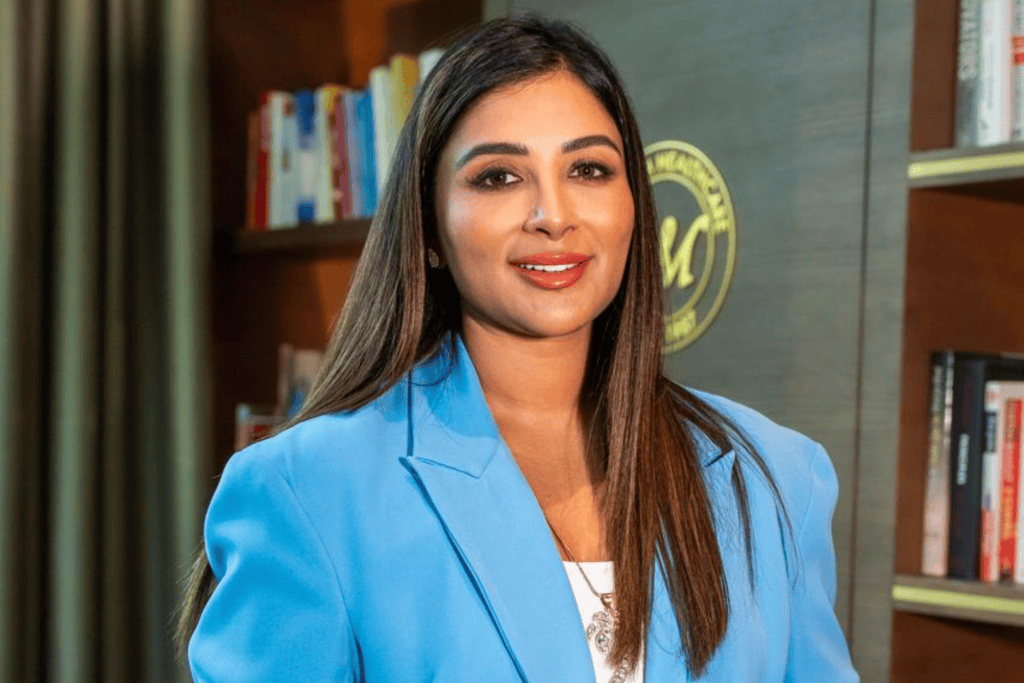
Alisha Moopen • Managing Director and Group CEO, Aster DM Healthcare
Alisha Moopen joined Aster DM Healthcare in 2013, initially serving as a director for GCC... Read more