IHLAD Convenes Global Experts on Healthy Longevity Medicine at Abu Dhabi Future Health Summit 2026
Discussions spanned artificial intelligence, genomics, precision medicine, healthy ageing, nutrition, sleep science and population health.
You're reading Entrepreneur Middle East, an international franchise of Entrepreneur Media.
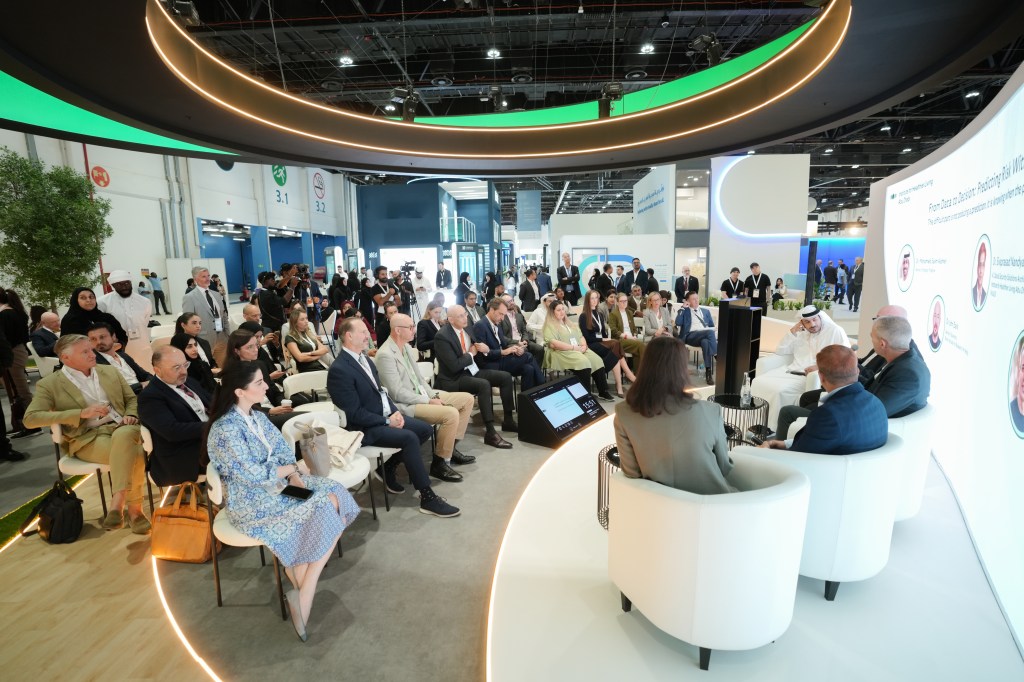
The Institute for Healthier Living Abu Dhabi (IHLAD), licensed by the Department of Health – Abu Dhabi as the world’s first specialized Healthy Longevity Medicine Center, has showcased its progress in advancing evidence-based Healthy Longevity Medicine, scientific research, and clinical innovation at the Abu Dhabi Future Health Summit 2026.
As a founding partner of Future Health – A Global Initiative by Abu Dhabi, IHLAD convened international researchers, medical specialists, policymakers, and healthcare innovators at ADNEC Centre Abu Dhabi from October 20-22 through a dedicated pavilion and three-day scientific program.
Under the Summit’s theme, “To Sense is to Predict”, discussions spanned artificial intelligence, genomics, precision medicine, healthy ageing, nutrition, sleep science and population health. The program addressed the potential of wearable technologies and artificial intelligence to identify emerging health risks, while emphasizing clinical validation and evidence-based decision-making.
Speakers included Dr. David Katz, Founding Director of the Yale-Griffin Prevention Research Center; Professor Andrea Maier, Co-Director of the Centre for Healthy Longevity at the National University of Singapore; Dr. Evelyne Bischof, Co-founder and President of the Healthy Longevity Medicine Society; and Dr. Rebecca Robbins of Harvard Medical School. They joined specialists from Singleron Biotechnologies and ŌURA, alongside Abu Dhabi’s health leaders and IHLAD’s scientific and clinical experts.
The program highlighted genomic research focused on Emiratis, the MBZUAI-led Human Phenotype Project, the Ramadan Health Study and the Culinary Medicine Study, alongside personalized lifestyle interventions informed by Abu Dhabi Public Health Centre’s Integrated Family Health Assessment System (IFHAS) screening program.
Discussions also covered guidelines for Healthy Longevity Medicine Centers introduced by the Department of Health – Abu Dhabi in collaboration with IHLAD and the Healthy Longevity Medicine Society.
IHLAD signed a Memorandum of Understanding with the UAE Integrative Medicine Council to advance research into integrative medicine, including selected Emirati Traditional Medicine practices. The collaboration will focus on evaluating safety and effectiveness and supporting the integration of validated approaches into healthcare.
The program also featured AD-Omics, IHLAD’s joint venture with Singleron Biotechnologies, which is developing single-cell multi-omics capabilities to support biological research and precision medicine.
“Abu Dhabi has recognized that the future of healthcare cannot be built on treating disease alone. It requires a shift towards understanding health earlier, predicting risks more accurately and translating scientific evidence into meaningful action,” said Allan Boston, Chief Operating Officer of IHLAD.
The Institute for Healthier Living Abu Dhabi (IHLAD), licensed by the Department of Health – Abu Dhabi as the world’s first specialized Healthy Longevity Medicine Center, has showcased its progress in advancing evidence-based Healthy Longevity Medicine, scientific research, and clinical innovation at the Abu Dhabi Future Health Summit 2026.
As a founding partner of Future Health – A Global Initiative by Abu Dhabi, IHLAD convened international researchers, medical specialists, policymakers, and healthcare innovators at ADNEC Centre Abu Dhabi from October 20-22 through a dedicated pavilion and three-day scientific program.
Under the Summit’s theme, “To Sense is to Predict”, discussions spanned artificial intelligence, genomics, precision medicine, healthy ageing, nutrition, sleep science and population health. The program addressed the potential of wearable technologies and artificial intelligence to identify emerging health risks, while emphasizing clinical validation and evidence-based decision-making.

Entrepreneur Middle East Staff
Entrepreneur Staff