Influence With Intention: Inside Rouhana El Hage’s Mission to Build a More Meaningful Creator Economy
An innate love for filmmaking and creating impact-oriented art led Rouhana El Hage to the US$252+ billion creator economy and, later, into MENA-based creator collaboration tech platform, Halo AI. Having been promoted as the firm’s Associate Partner, El Hage shares why content creators (especially micro creators) hold the power to create meaningful change across audiences.
You're reading Entrepreneur Middle East, an international franchise of Entrepreneur Media.
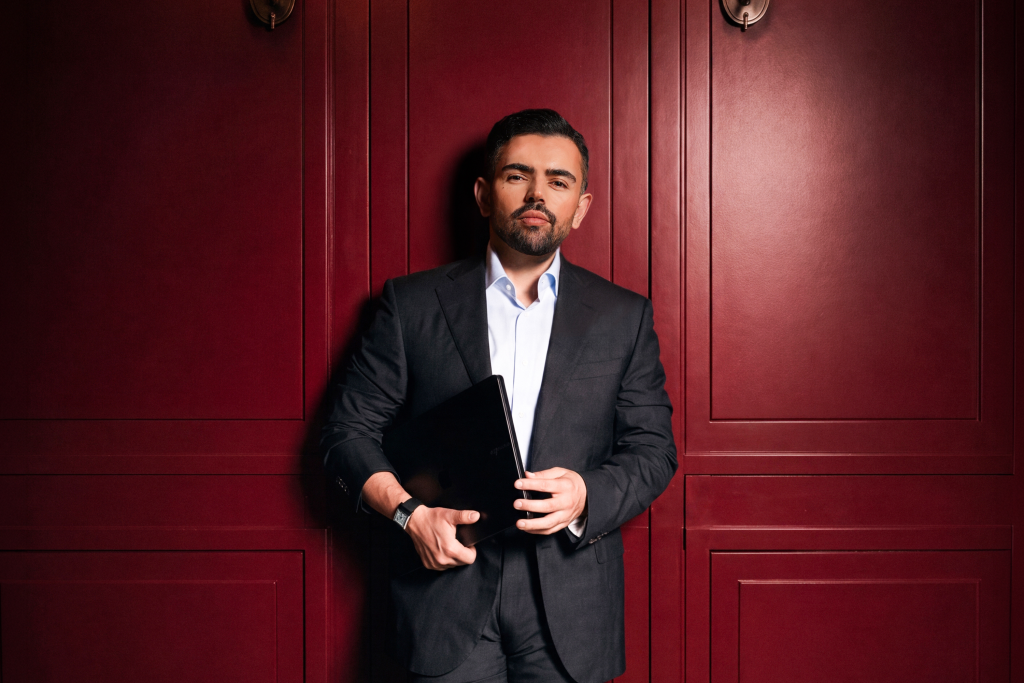
Fresh off his appointment as Associate Partner of Halo AI, a MENA-based agentic artificial intelligence (AI) platform for creator collaborations, in April 2026, Rouhana El Hage expresses a level of sensitivity that may not always be immediately ascribed to the glamorous and frenzied online creator economy that he is a part of. Indeed, there are a couple of moments —which will be revealed later in this piece— while describing his professional journey when El Hage’s eyes clearly well up and his voice gets hoarse with emotion (“I can’t believe I’ve cried during a business interview,” El Hage quips towards the end of our Zoom call in early June).
Having first joined Halo AI in early 2025 as its Social and Content Lead, El Hage notes that his move into Halo AI was an almost natural extension of a career spanning more than 16 years across filmmaking, publishing, and digital media, during which he has worked with name brands such as PlayStation, Samsung, Tiffany & Co., and Bulgari while leading major content initiatives across the GCC including for global publications like Harper’s Bazaar and Cosmopolitan.
“One thing I’ve learned throughout my career, working across different mediums and at different times, is how important it is to put on a producer’s hat,” he says. “When I studied film and worked in film, we had to produce a lot of things. A producer has to find solutions to everything. They need to be the person who says, ‘Yes, we can do it!’ Nothing can stop them from making the client happy, making everyone on set happy, and ultimately achieving the biggest goal, which is getting the job done. Looking back, I realized that putting on that producer’s hat became one of my greatest strengths. It taught me a lot. But another thing it taught me was agility. One of my mentors, who worked across lifestyle, fashion, influencer marketing, and gaming publications, explained to me how important it is to be agile and not become attached to a specific medium.”
The lessons El Hage accumulated throughout his career thus came to define how he approached the creator economy as well. “When I’m working with a brand or a creator, I don’t focus on which platform they’re on,” he declares. “I focus on how I can optimize them beyond the platform, because the platform could disappear tomorrow. The medium can change, be canceled, or evolve. It started with theatre, then came film, then television, then laptops, and now phones. It was never only about the medium itself. It was always about audience attention. That’s one of the most important things to understand, because today we live in a world where attention is one of the most valuable currencies.”
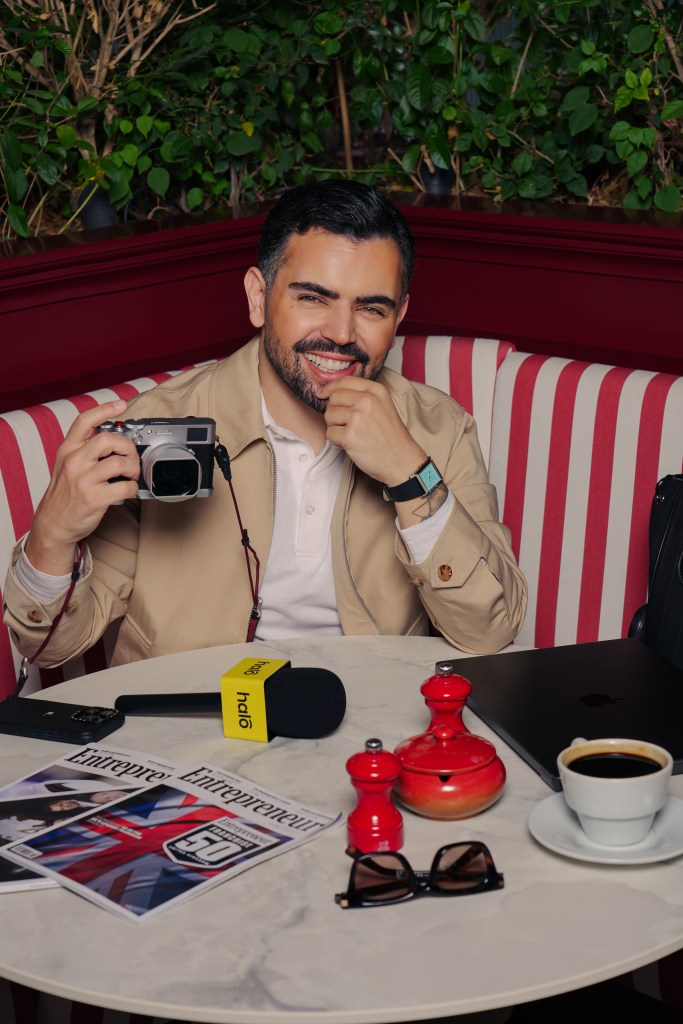
Today, as Associate Partner at Halo AI, El Hage has a hand in anything that helps the business grow, from shaping the company’s creator-first strategy, to leading community initiatives and how Halo AI participates in culture, and ensuring the platform remains a trusted partner to creators as it expands globally. Founded in 2024 by Vito Strokov, Rami Saad, and Alex Gadalin, and with offices in Saudi Arabia, the UAE, and the US, Halo AI helps big brands turn one-off creator posts into managed communities of thousands of micro and nano creators. Discovery agents watch and understand every creator post (what’s said, what products appear, what’s brand-safe) across millions of creators, so brands always know who to work with and what’s working. Halo AI then handles the busywork: matching, monitoring trends, flagging risks, all automatically. The result: brands run creator campaigns at scale for less, and creators get more partnerships and clearer ways to earn.
“I absolutely love the creative economy, and I understand where it is heading as a business,” he says. “There’s a lot of investment flowing into that space, and the global market value is projected to reach up to more than US$500 billion by 2027. So it’s a significant industry. Finding a place like Halo AI, a company that genuinely cares about creators, made me very happy. Personally, what drew me to Halo AI was the founders, Alex, Rami, and Vito. I was absolutely inspired by their backgrounds and by who they are as people. Learning from the right people makes your business journey more efficient and productive. Working with them has been incredibly inspiring. The values Halo AI holds for creators and brands alike are values I genuinely care about.”
The statistics El Hage shares are largely supported by industry research. A 2025 report by US-based market analysis platform Grandview Research shows that the global creator economy market size was valued at $252.3 billion in 2025 and is projected to grow from $310.4 billion in 2026 to $1,345.5 billion by 2033. Another study by India-based industry insights platform Precedence Research shows that the global creator economy is predicted to hit a whopping $2084.57 billion by 2035.
But there was a time when El Hage would’ve stayed as far away as possible from business numbers and monetary returns. “If nine-year-old Rouhana were sitting next to me right now, he would never believe that I’d become a businessman working in a commercial industry that generates money,” he admits. “He would never believe that I’m no longer solely the artist I thought I would be. When I was young, I wanted to do films. I wanted to be in front of the camera, tell stories, and most importantly, create art that inspires others. As a millennial growing up, there were many topics that simply weren’t discussed in traditional media. There were certain ideas around gender and identity that felt fixed, and I always felt art could help me express myself and create change in the world.”
All that changed for El Hage when he began his first full-time job at a digital company, where he recalls presenting “a very artistic idea” and receiving feedback that, at the time, questioned his core values.
“I walked into that interview wearing a tank top, my dad’s Rolex, and my hair in a wild bun because, at the time, I saw myself purely as ‘an artist,’” he says, drawing air quotes. “I shared my ideas, and my manager, who later became a mentor, said, ‘Rouhana, you’re not an artist. You’re here to make us money. You’re here to be commercial.’ The job was in digital content production, and she kept repeating, ‘Money. Say it after me—money.’ I was devastated at the time, because for someone who believes deeply in art, being called commercial feels like the biggest insult. But she was brilliant. She understood where the industry was heading. She told me digital was the future and that I’d be working with global brands. I remember thinking, ‘Yes, but I’m an artist. I want to make films that move people.’ Thankfully, I listened to her advice. The content performed incredibly well. We were reaching millions of viewers, the publication was thriving, and the numbers spoke for themselves. We were constantly receiving feedback about how much impact the content was having.”
That result led to an epiphany that would ultimately define El Hage’s career trajectory from that point forth. “I realized that yes, I’m an artist, and I refuse to lose that side of myself. But if one of my goals as an artist is to create change, then making a niche film that only a small audience sees at film festivals isn’t always the most effective way to do it. Through social media and digital platforms, I could reach the masses instead of the niche. I could reach people who may never have picked up a certain book or attended a film festival, but who still needed to hear those messages. People who were being bullied, misunderstood, or pushed into harmful ways of thinking. I realized that commercial content could still move people. It could still create change. And I say this with a lot of pride because it genuinely gives me goosebumps. We received countless messages from people telling us that our content helped them accept themselves, stand up to abuse, or get through difficult moments in their lives.”
It is here that El Hage begins to tear up visibly. “To me, that is art. It’s a form of art that people don’t talk about enough,” he continues. “Yes, it wasn’t a niche film or a painting in a gallery, and those things are wonderful. But my goal was always to create change. I was fortunate enough to see that change reflected not only in the data, but in the hearts of the people consuming the content. I still create. I still film. I’m a filmmaker, and I’ll never stop being one. That artistic side of me is still very much alive. The difference is that I now understand where it belongs in my life. And that evolution is what eventually led me to another passion that I deeply care about—the creator economy.”
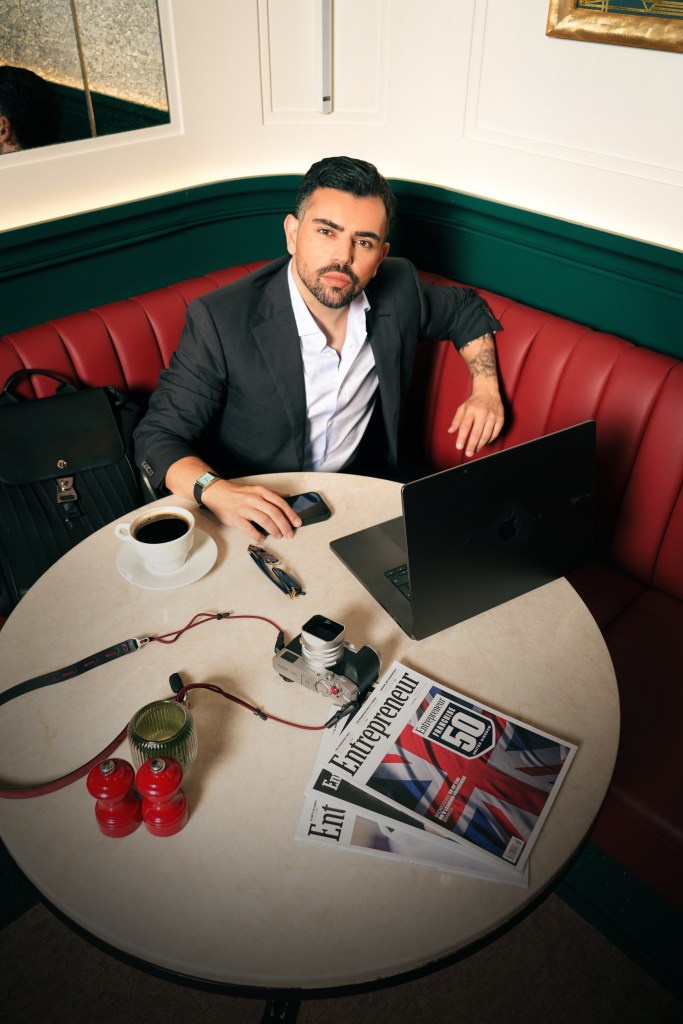
El Hage’s vision for the creator economy, however, didn’t stay limited to ensuring meaningful stories were being told — equally important to him was who got the opportunity to tell them. That sentiment is perhaps what solidified his decision to work with Halo AI, given the platform primarily works with nano and micro-influencers. “We focus a lot on microcreators because they often don’t have the same opportunities as larger influencers, despite being known to drive strong conversions for their scale,” he explains. “Mega influencers are important for positioning and brand association, but there’s also a significant and growing need for microcreators in the market. The challenge is that many talented microcreators don’t get consistent brand deals simply because they don’t know the right people. That’s unfair. With Halo AI, we’re able to help create ongoing opportunities for them.”
According to El Hage, one of the biggest challenges facing creators is that access to brand partnerships has traditionally depended on who they know, rather than how well they fit a particular brief — a bottleneck that Halo AI aims to address head-on. “With Halo AI’s matching technology, creators are connected to opportunities based on how well they fit the brief,” El Hage says. “We help creators get discovered by the brands they genuinely want to work with, and help brands discover creators they may never have found otherwise. Instead of wondering who to contact at a company like L’Oréal or Lipton, creators can access those opportunities directly through the platform. As creators secure more brand partnerships, they build credibility and strengthen their personal brand, which naturally creates even more opportunities for growth.”
El Hage adds that Halo AI’s work is deeply reflective of how the broader content creation industry has transformed over the last couple of decades. “There was a time when creation was controlled by a relatively small number of people in television stations and magazines,” he says. “They decided who got invited, who got opportunities, and which stories were told. Digital platforms changed that. Suddenly, we saw a shift in who gets to be seen, who gets to be heard, and who gets to shape culture. That’s one of the reasons I love the creator economy. If it’s done right, it has tremendous power to create change. That’s beneficial for people, creators, brands, and society as a whole.”
Indeed, Halo AI’s focus on empowering smaller creators is more timely than ever. Multiple studies have shown that owing to factors like more loyal audiences and greater perceived authenticity, creators with smaller followings are in demand now more than ever. A 2025 report by US-based Live Wire Weekly shows that micro creators often get 3-5x more engagement than big influencers, and that brand collaborations with them are affordable and often yield better ROI.
But El Hage notes that supporting creators isn’t just about helping them secure more opportunities; it’s also about ensuring those opportunities are fair. “One of our key strengths is transparency. Clients know exactly where they’re investing their money, and creators know exactly what percentage is being taken from their earnings. There are no hidden fees or surprises on either side. Too often in the industry, a creator might be told one thing and receive something entirely different, which ultimately hurts everyone involved. If a campaign underperforms because too much of the budget was absorbed by intermediaries, the creator often ends up taking the blame. That’s why transparency is so important to the creator economy, and it’s one of the things I love most about Halo AI—we’ve built that transparency into the platform.”
But beyond facilitating brand deals and visibility pushes, El Hage’s endeavors within the creator economy uphold a simple yet poignant idea: remembering the human being behind the work. That philosophy, he emphasizes, must extend beyond the creator economy and into the way organizations should approach leadership itself. “I once had a high-performing team member who suddenly started underperforming. Instead of immediately focusing on the work, I wanted to understand what was happening. I’ve always tried to create an environment where people feel comfortable speaking honestly. Eventually, that person opened up about something difficult they had experienced, and it became clear that the issue had very little to do with work itself. We spoke about it, we worked through it together, and they took meaningful steps to address it. Not only did they return to being highly productive, but they also went on to make a positive difference in other people’s lives.”
“When you’re hiring people, you’re hiring human beings,” he adds. “Sometimes performance issues aren’t about capability—they’re about what someone is carrying personally. As managers, our responsibility is to support people wherever possible. If someone is giving their time, energy, and expertise to help your organization succeed, they deserve to be heard.”
By remaining committed to this leadership style, as well as the artistic vision that has defined his career long before he even stepped into the creator economy, El Hage says that while he’s confident about the industry’s growth, collectively responsible efforts are required to ensure its full potential is unlocked. “The opportunity ahead is enormous, but responsibility must grow alongside it,” he declares. “We’re living in a time when misinformation, rage-bait content, and manipulated narratives can spread very quickly. That’s why internet literacy is becoming increasingly important. The creator economy has tremendous potential, and I’m excited to see how technologies like AI can help unlock even more opportunities for creators. But for that future to succeed, people also need a better understanding of how the internet works and how information is shaped online. If we can continue building with purpose, empathy, and responsibility, then I think the best days of the creator economy are still ahead of us.”
RELATED: Vir Das, Sharon King-Chai, Inua Ellams and Jennah Fakhouri on Authenticity in the Algorithm Age
Fresh off his appointment as Associate Partner of Halo AI, a MENA-based agentic artificial intelligence (AI) platform for creator collaborations, in April 2026, Rouhana El Hage expresses a level of sensitivity that may not always be immediately ascribed to the glamorous and frenzied online creator economy that he is a part of. Indeed, there are a couple of moments —which will be revealed later in this piece— while describing his professional journey when El Hage’s eyes clearly well up and his voice gets hoarse with emotion (“I can’t believe I’ve cried during a business interview,” El Hage quips towards the end of our Zoom call in early June).
Having first joined Halo AI in early 2025 as its Social and Content Lead, El Hage notes that his move into Halo AI was an almost natural extension of a career spanning more than 16 years across filmmaking, publishing, and digital media, during which he has worked with name brands such as PlayStation, Samsung, Tiffany & Co., and Bulgari while leading major content initiatives across the GCC including for global publications like Harper’s Bazaar and Cosmopolitan.
“One thing I’ve learned throughout my career, working across different mediums and at different times, is how important it is to put on a producer’s hat,” he says. “When I studied film and worked in film, we had to produce a lot of things. A producer has to find solutions to everything. They need to be the person who says, ‘Yes, we can do it!’ Nothing can stop them from making the client happy, making everyone on set happy, and ultimately achieving the biggest goal, which is getting the job done. Looking back, I realized that putting on that producer’s hat became one of my greatest strengths. It taught me a lot. But another thing it taught me was agility. One of my mentors, who worked across lifestyle, fashion, influencer marketing, and gaming publications, explained to me how important it is to be agile and not become attached to a specific medium.”

Aalia Mehreen Ahmed • Senior Features Editor, Entrepreneur Middle East
Entrepreneur Staff
Aalia Mehreen Ahmed is the Senior Features Editor at Entrepreneur Middle East. She is an... Read more