Beyond Beautiful Spaces: How Experience Design Is Redefining Hospitality
As summer travel draws to a close and clients return with higher expectations, visual grandeur alone is no longer enough. Hessa Alzimami shares six operational rules for mastering experience design to create world-class hospitality.
Opinions expressed by Entrepreneur contributors are their own.
You're reading Entrepreneur Middle East, an international franchise of Entrepreneur Media.
As late August arrives, a familiar shift takes place across the Kingdom. Clients return from their summer travels after experiencing some of the world’s leading hotels, private retreats, and hospitality destinations. They come back not only refreshed, but with higher expectations. Having experienced firsthand how the world’s best brands cultivate atmosphere, discretion, and effortless comfort, our clients return home with a heightened sensitivity to how spaces make them feel.
This seasonal shift coincides directly with the reawakening of Saudi Arabia’s event and business calendar in September. But as our market rapidly matures, the mechanics of standing out are changing. Attempting to appeal to the masses, or relying solely on superficial visual decor, is no longer a growth strategy. It is a fast track to diluting your brand and exhausting your resources.
Over the past eight years as the founder of Hessa Events, I have intentionally chosen a different path: to go deeper rather than broader. My work focuses exclusively on high-scale weddings, private celebrations, concerts, award shows, and cultural productions across Saudi Arabia. And at the core of it is a commitment to transforming static decor into functional, sensory, and active emotional design. Through executing more than 275 high-stakes events, one truth has become entirely clear to me: experience design, not visual decoration, is the true operational engine of modern hospitality.
For founders, venue operators, and business leaders looking to capture the market as we step into this upcoming season, I have mapped out how we move beyond beautiful spaces to engineer the invisible layers that truly define hospitality.
1. Learn to Read Beyond the Brief
A highly defined focus allows you to see straight through the surface of a standard client brief. In my industry, clients often request outcomes using abstract words like beautiful, private, original, or impressive. However, I quickly realized these words are merely a starting point. Beneath the visible request usually lies a deeper human need for discretion, emotional safety, cultural nuance, and absolute trust.
This is especially true as clients return from abroad, carrying unspoken comparisons between global hospitality standards and their expectations at home. When you serve a tight, specific audience, you begin to recognize behavioral patterns. You stop reacting to isolated customer requests and start building an institutional understanding of what your client actually values.
For any founder, this is a massive business asset. By defining your customer beyond basic demographics, you can shape your entire operational workflow around what makes them feel secure. Stop trying to read your client’s mind, and start learning to understand their silence.
2. Design Beneath the Visual Layer
In experience design, the trap is focusing solely on what is visually striking. The florals, the lighting, the grand installations. While these elements matter, they do not create a lasting emotional connection on their own. True design begins in the invisible layers. It dictates how a customer enters a space, where they pause, how their energy shifts, and whether a transition feels entirely natural.
Consider how the best global summer destinations operate: the experience is felt long before you reach the main setting. It exists in the transitions. In our practice, instead of allowing guests to walk directly into a bustling hall, we deliberately craft a quieter transition zone using low lighting, a signature scent, and the unhurried offering of traditional beverages. This intentionally shifts the guest from the outside world into the emotional rhythm of the event.
The Entrepreneurial Lesson: Whether you are building a fintech app, a physical luxury boutique in Riyadh, or a B2B service, your real value is built in the background operational layers. The customer may not immediately see them, but they will absolutely feel them.
3. Build Cultural Intelligence Into Your Architecture
In Saudi hospitality, the most critical layers are deeply cultural. Privacy, pacing, seating arrangements, and the specific etiquettes carry profound, unspoken meaning. Cultural intelligence cannot be treated as an afterthought or a superficial visual reference added at the end of a project. It must shape the architecture of your business from day one.
In my practice, this means mastering both international execution standards and local emotional codes simultaneously. The two should never compete. The strongest businesses meet a flawless global benchmark while remaining hyper-specific to the culture of the people they serve. Culture is the absolute foundation of client trust.
RELATED: Dubai’s Events Calendar One of the Busiest Worldwide, Officials Say
4. Master the Intelligence of Restraint
It is remarkably easy to become obsessed with flashiness. There is constant external pressure to make a product larger, louder, or more surprising, especially as a new season opens with high market energy. But experience has taught me that not every impressive experience is a good experience. An environment can be visually overwhelming and still leave the user feeling completely secondary.
When designing, I don’t ask how to make something look more spectacular. I ask what the environment needs to communicate. Does it need to feel warm, ceremonial, or intimate? Achieving this requires restraint, which I view as a premium form of design intelligence. Sometimes, a color must be softened. A transition must become subtle. A stunning element must be cut because it competes with the broader emotional goal.
The hardest part of leadership isn’t deciding what to include in your business; it is having the courage to decide what to leave out. Founders must have the confidence to say “no” to fleeting trends that dilute their core identity.
5. Protect Standards Over Passing Trends
Trends introduce temporary visual languages, but they are a terrible foundation for a sustainable business. Standards are what actually manufacture long-term market trust. In my work, our uncompromised standards include absolute discretion, cultural alignment, originality, and flawless execution.
Your visual output can and should evolve, but your operational standards must remain rigid. This is how a brand gains market credibility over time. A focused business does not need to repeat the same aesthetic across different clients; it simply needs to repeat the same depth of thought. Trends influence the minor details, but standards protect the entire enterprise.
6. Deploy the “Layering Method” and the Final 10%
This final principle forms the absolute crux of delivering modern hospitality. I view business execution through a “Layering Method”, i.e. stacking the emotional, spatial, sensory, cultural, and operational layers so they all point toward the exact same strategic direction.
Once those layers are set, you must obsess over what I call “the final 10%.” This is the grueling phase where the standard is aggressively protected. It is where transitions are smoothed out, tiny inconsistencies are corrected, unnecessary noise is deleted, and the entire customer journey is brutally audited from the client’s perspective.
Your business reputation is ultimately built in these quiet, hyper-detailed moments: the tone of a front-line team member, the precision of a project handover, or the care your company shows long after the final invoice is paid. The Layering Method aligns your business components, but it is your obsession with that final 10% that converts operational depth into an untouchable competitive advantage.
As late August arrives, a familiar shift takes place across the Kingdom. Clients return from their summer travels after experiencing some of the world’s leading hotels, private retreats, and hospitality destinations. They come back not only refreshed, but with higher expectations. Having experienced firsthand how the world’s best brands cultivate atmosphere, discretion, and effortless comfort, our clients return home with a heightened sensitivity to how spaces make them feel.
This seasonal shift coincides directly with the reawakening of Saudi Arabia’s event and business calendar in September. But as our market rapidly matures, the mechanics of standing out are changing. Attempting to appeal to the masses, or relying solely on superficial visual decor, is no longer a growth strategy. It is a fast track to diluting your brand and exhausting your resources.
Over the past eight years as the founder of Hessa Events, I have intentionally chosen a different path: to go deeper rather than broader. My work focuses exclusively on high-scale weddings, private celebrations, concerts, award shows, and cultural productions across Saudi Arabia. And at the core of it is a commitment to transforming static decor into functional, sensory, and active emotional design. Through executing more than 275 high-stakes events, one truth has become entirely clear to me: experience design, not visual decoration, is the true operational engine of modern hospitality.

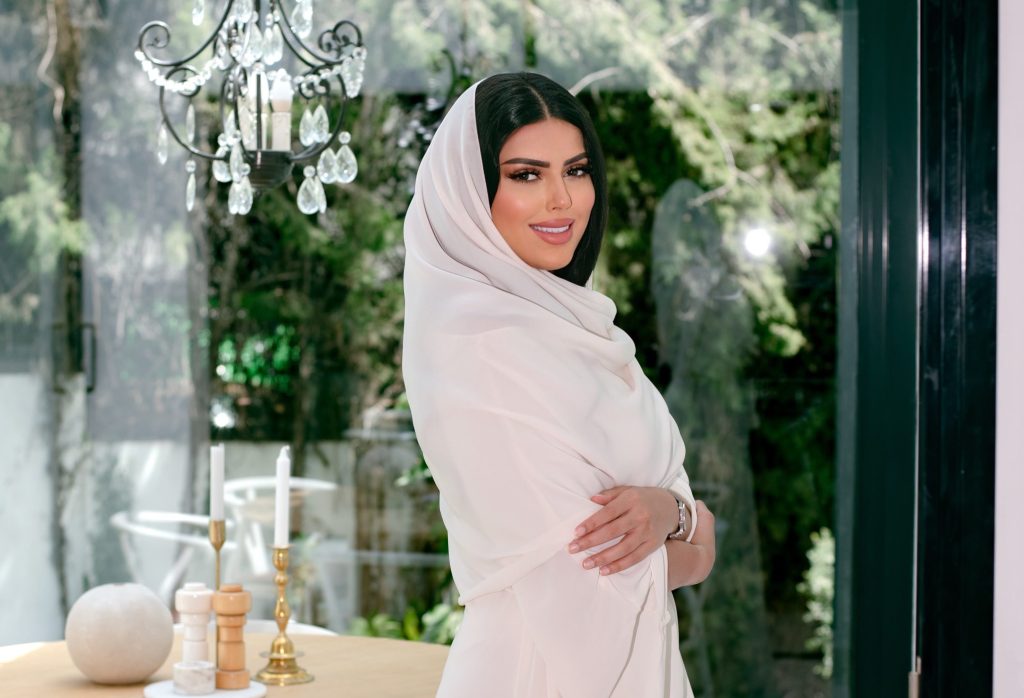
Hessa Alzimami • Founder, Hessa Events
Hessa Alzimami is an experience design visionary, cultural strategist, and the founder of Hessa Events,... Read more