Startup Spotlight: How AIRZAI’s Muneeb Mushtaq Envisions Scent and AI Shaping More Responsive Spaces
Scent is becoming smarter and more personalized as AI finds its way into homes, hotels, and wellness spaces.
Disclosure: Our goal is to feature products and services that we think you'll find interesting and useful. If you purchase them, Entrepreneur may get a small share of the revenue from the sale from our commerce partners.
You're reading Entrepreneur Middle East, an international franchise of Entrepreneur Media.
Picture arriving in Dubai after a long flight and stepping into a room that begins adapting to you before you have even touched a switch. As you settle in, the lighting begins to change, the temperature adjusts, the soundscape softens, and scent helps ease the transition from travel to recovery. Hours later, the same room shifts again to create conditions for sleep, before changing the following morning around energy and focus.
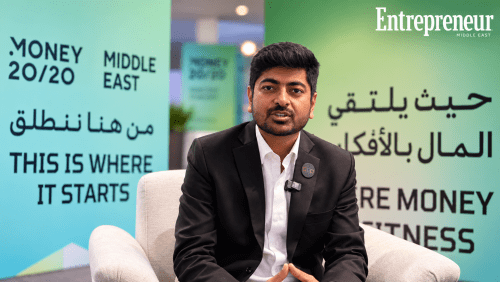
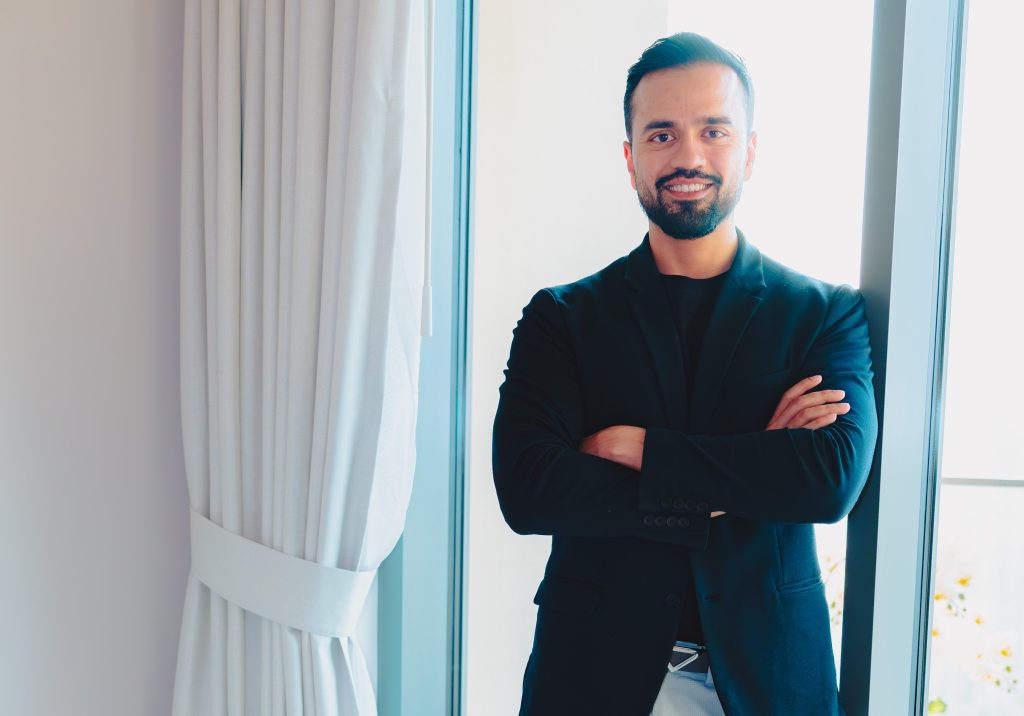
It is the kind of environment Muneeb Mushtaq, founder and Chairman of AIRZAI, a tech-fragrance company headquartered in Canada with operations in the MENA region, wants to help build. But he also believes that turning an ambitious vision into a viable business requires a much more focused starting point. For AIRZAI, that is scent.
After years in which consumers have been encouraged to monitor themselves through watches, rings, apps, sleep scores, and other health metrics, he believes there may be another opportunity in making the spaces around people more responsive to their needs.
“That’s the future that excites me. I believe we spent the last decade building technology that became extraordinarily good at measuring ‘the human,’” Mushtaq says. “The next opportunity is to make the environment around ‘the human’ more intelligent.”
This comes as the wellness industry explores a broader shift toward technology embedded within the environments people occupy. The Global Wellness Institute’s Touchless Wellness Initiative Trends for 2026 identifies “ambient wellness” and adaptive, individualized environments among emerging trends, pointing to intelligent systems and immersive spaces designed to support wellbeing with less direct intervention from the individual.
In a smart home, lighting, temperature, security, music and appliances could already be controlled through technology, but Mushtaq saw that scent had largely been left behind. “We started by asking: why can’t scent be intelligent, programmable and connected too?” he says.
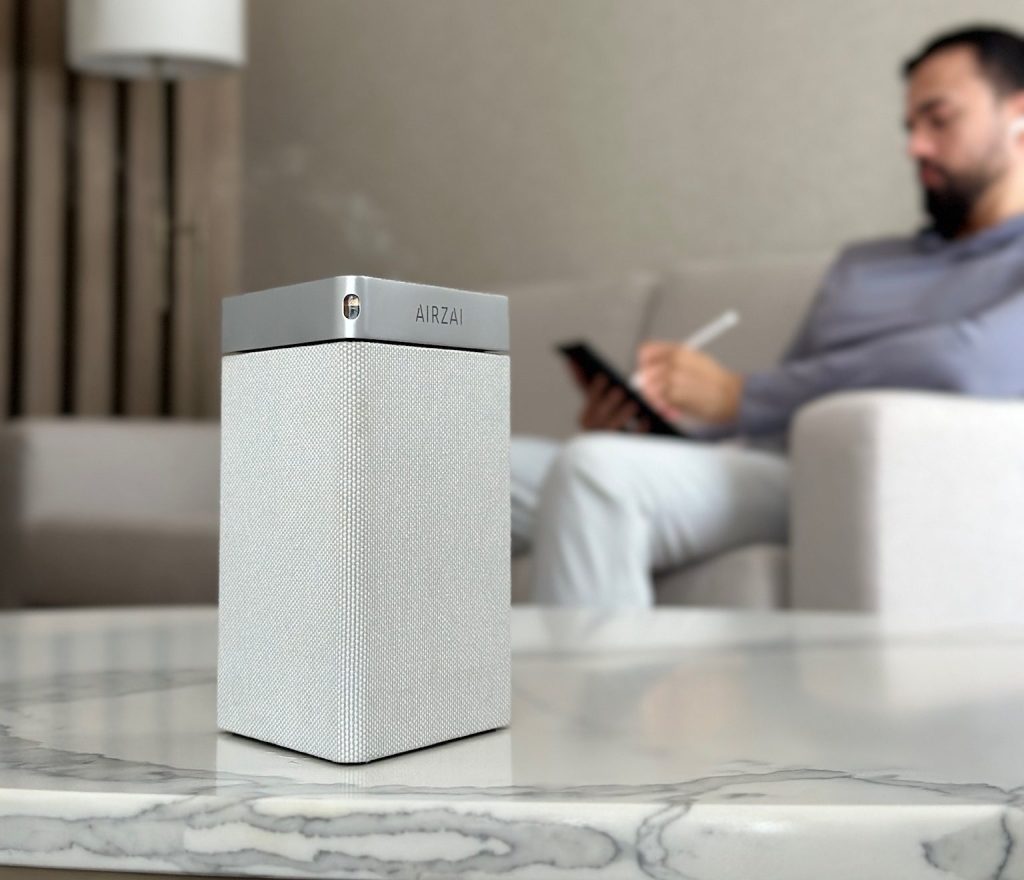
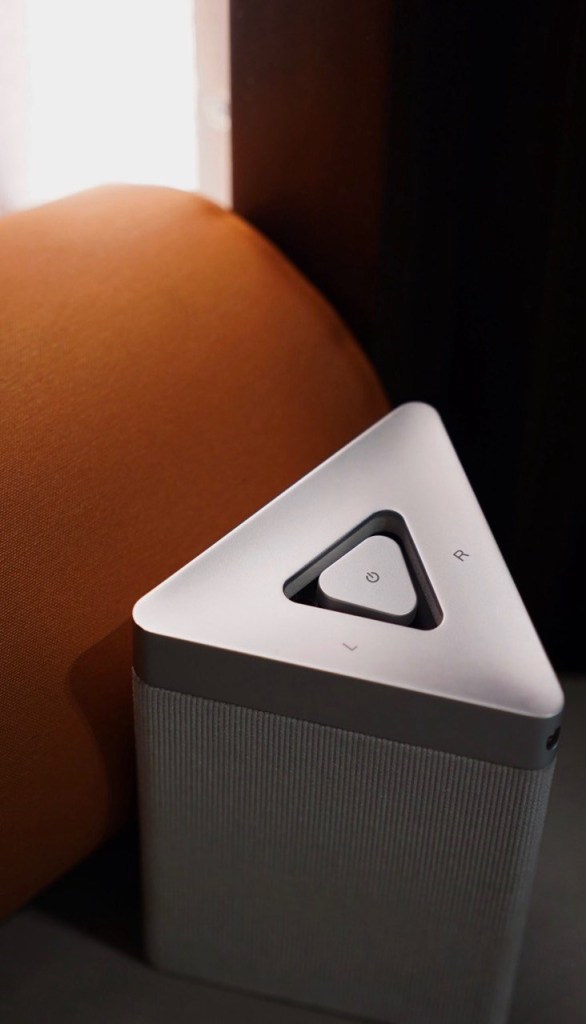
Founded in 2019, AIRZAI’s answer was a connected, waterless diffuser that uses fragrance pods designed around functional scents, including energy, focus, meditation, and sleep. The device connects to an app, while AI is used to learn users’ scent preferences and schedules over time.
But as AIRZAI went deeper into scent, neuroscience, and human behavior, the question began to change, Mushtaq recalls. What started as an attempt to make fragrance programmable became an exploration of whether the environment itself could contribute to how a person feels or performs.
With that, AIRZAI has used technologies including electroencephalography (EEG), galvanic skin response, and eye tracking to examine how scent relates to attention, arousal and emotional response, with some of its work independently studied at the University of Geneva in Switzerland.
“We didn’t want scent to be a nice idea, we wanted it to be measurable,” Mushtaq says. “AI is where it gets bigger. Most ‘smart’ environments don’t actually understand the person in them – a thermostat follows a setting; a diffuser follows a schedule.”
“We’re building the intelligence layer that connects context, preferences, and human signals to the environment itself. The goal is a space that doesn’t just take our commands, but understands the outcome we’re trying to reach and helps create the conditions for it,” he explains.
Today, AIRZAI is looking beyond connected devices to consumer technology and scent applications for hotels and wellness spaces. Drawing on his experience developing commercial partnerships across technology, entertainment, consumer brands and hospitality, including with Google and TripAdvisor, Mushtaq is applying the same partnership-led approach to AIRZAI’s growth.
“We’re working with hospitality and wellness partners and developing collaborations with branded hotel groups that we expect to announce as they become public,” he shares. “That is an important form of traction because the real test isn’t whether we can make another connected device. It’s whether sophisticated hospitality and wellness operators see sensory technology as valuable enough to integrate into the experiences they create for their customers.”
RELATED: UAE Hotel Revenues Hit AED49.2 Billion; Guests Reach Record 32.3 Million in 2025
As AIRZAI has grown, Mushtaq’s role has evolved to focus more on bringing together the people and organizations needed to move the company forward. “Some of our biggest opportunities have come from bringing together the right designers, researchers, investors, brands, cultural figures and commercial partners around one idea,” he says. “I’ve increasingly realized that one of my strongest roles as a founder is creating that alignment and turning it into something commercially meaningful.”
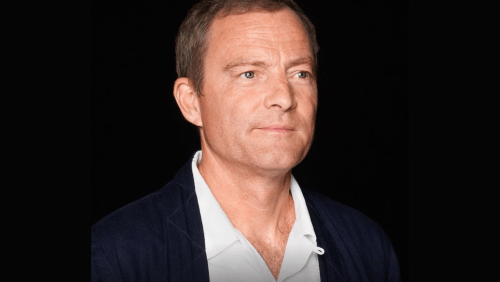
One example was bringing in industrial designer Fred Bould as AIRZAI’s chief designer. Bould’s work includes the Nest Thermostat, developed by Nest Labs, which Google acquired for US$3.2 billion. He helped shape AIRZAI’s scent system and brought together engineers with experience at Apple, Google, GoPro and Fitbit.
The company has since drawn backing from people across various industries, recently raising US$2 million from investors including artist-entrepreneur Drake and therapist and author Marisa Peer. “We’ve been fortunate to attract capital and people from very different worlds, including entertainment, technology, wellness and human performance,” Mushtaq says. “That diversity has always been as important as the capital itself.”
The funding is now going toward AIRZAI’s next stage, including technology and product development, further research, deployments across hospitality and wellness. Strategic partnerships are another priority as the company looks to bring its technology into hotels, clinics, residences, and other spaces.
Its expansion into Dubai brings many of those potential applications into a single market, particularly as the Dubai Longevity Authority, established by H.H. Sheikh Mohammed bin Rashid Al Maktoum, UAE Vice President, Prime Minister of the UAE and Ruler of Dubai, seeks to position the emirate as a global hub for regulated longevity, wellness, and advanced health care.
“Dubai gives us access to some of the world’s most ambitious hotel groups, developers, wellness concepts and longevity clinics,” he shares.
“It gives us an opportunity not just to talk about the future of intelligent environments, but to begin bringing those experiences into real physical spaces,” Mushtaq adds.
As AIRZAI moves into its next phase, Mushtaq is conscious of the gap between what he ultimately wants the company to become and what it can realistically build today. “The biggest lesson is that your vision can be broad, but your execution has to be focused,” he says. “Founders often see ten years into the future and want to build all of it immediately. But customers don’t buy a ten-year vision. They need a clear reason to care today.”
For AIRZAI, that means continuing to build from scent while working toward the more responsive environments Mushtaq envisions. “Personally, success would be knowing that I helped bring together the technology, partnerships, people and capital required to turn that idea into something people can actually experience.”
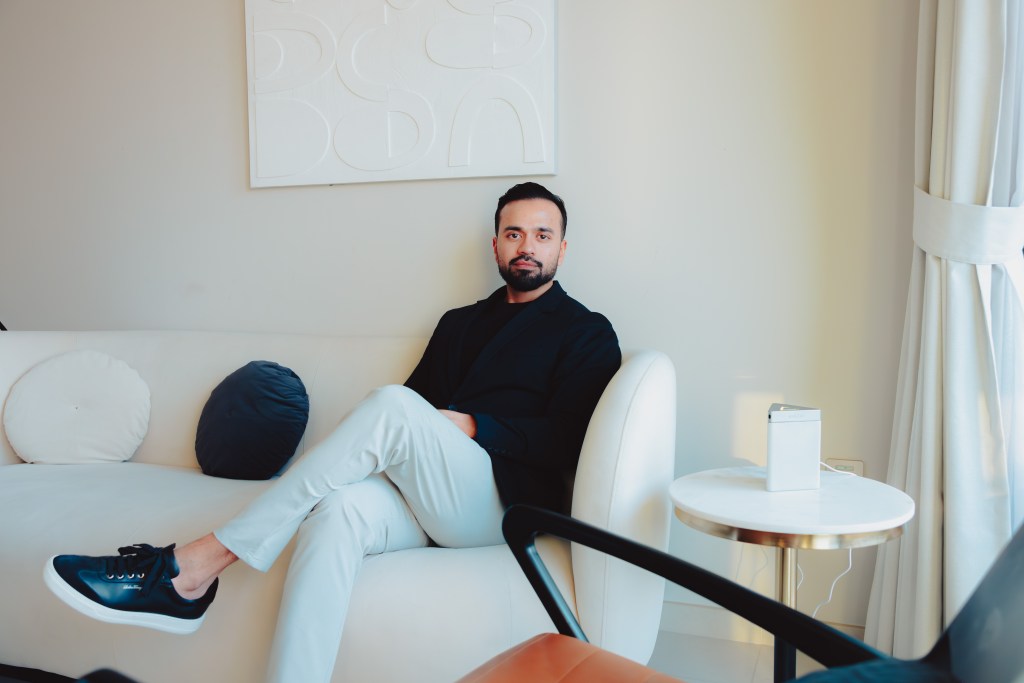
TREP TALK: Muneeb Mushtaq, Founder and Chairman of AIRZAI, on Building a Business in Wellness
Start with the human outcome, not the trend. “Don’t build something simply because AI, longevity or wellness is popular. Be very clear about what you actually want to improve for someone.”
Have a huge vision but a narrow entry point. “AIRZAI didn’t begin by trying to reinvent the entire environment. We started with one missing part of the smart home: scent.”
Build ecosystems, not just products. “Wellness increasingly intersects with science, technology, hospitality, culture and human behavior. The biggest opportunities often come from bringing the right people and organizations together around a shared objective rather than trying to own every piece yourself.”
Picture arriving in Dubai after a long flight and stepping into a room that begins adapting to you before you have even touched a switch. As you settle in, the lighting begins to change, the temperature adjusts, the soundscape softens, and scent helps ease the transition from travel to recovery. Hours later, the same room shifts again to create conditions for sleep, before changing the following morning around energy and focus.
It is the kind of environment Muneeb Mushtaq, founder and Chairman of AIRZAI, a tech-fragrance company headquartered in Canada with operations in the MENA region, wants to help build. But he also believes that turning an ambitious vision into a viable business requires a much more focused starting point. For AIRZAI, that is scent.
After years in which consumers have been encouraged to monitor themselves through watches, rings, apps, sleep scores, and other health metrics, he believes there may be another opportunity in making the spaces around people more responsive to their needs.

Kristine Erika Agustin • Junior Editorial Assistant, Entrepreneur Middle East
Kristine Agustin is a Junior Editorial Assistant at Entrepreneur Middle East, covering entrepreneurship and startup... Read more